

AI CERTS
4 months ago
Tianma-1000: China’s Autonomous Logistics Aircraft Takes Flight
Industry executives, investors, and regulators therefore watched closely for verifiable data and near-term plans. Meanwhile, international analysts compared Tianma to other heavy Unmanned Cargo projects emerging since 2024. Consequently, the maiden sortie offers a useful lens on where Autonomous Logistics Aircraft stand today. The following report breaks down the milestone, technology, market forces, and remaining hurdles.
Tianma Maiden Flight Milestone
Tianma-1000 completed its first flight at 10:32 a.m. local time. Developers reported stable telemetry, flawless autonomous takeoff, and a safe recovery after fifteen minutes. Moreover, the crewless ground station handled all mission phases through encrypted links. China Daily emphasized the sub-200-meter takeoff roll, a key requirement for plateau Air Missions. In contrast, earlier heavy drones needed longer runways, limiting deployment near mountainous communities. Consequently, provincial disaster agencies have already expressed interest in demonstration sorties.
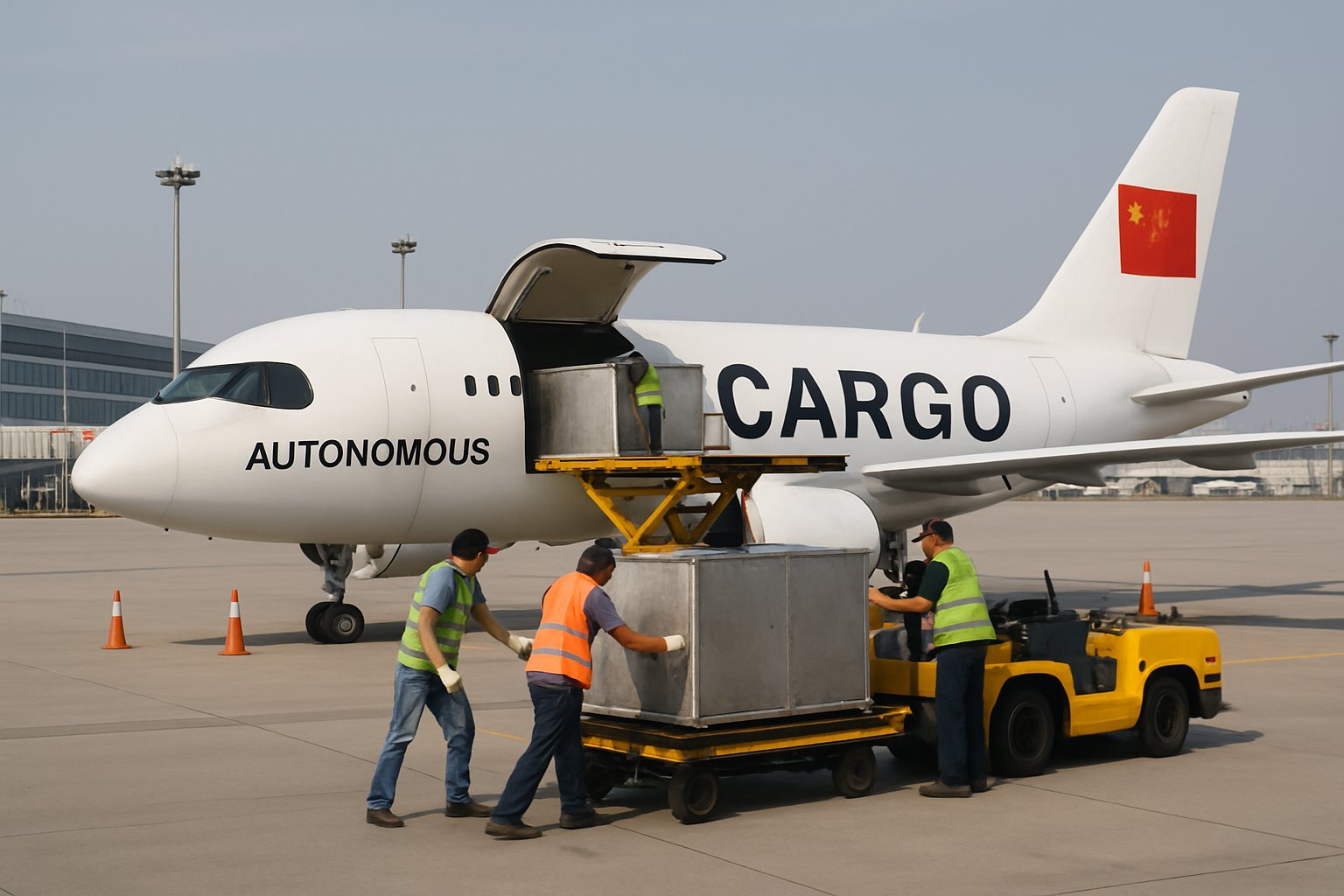
The successful sortie offers proof of concept but not yet commercial validation. Nevertheless, it cements China Tech headlines and supports strategic policy narratives. These early signals indicate potential yet also elevate expectations for rapid next steps.
Tianma’s first flight validated core flight controls and short field performance. However, sustained testing will determine operational readiness before wider Logistics deployment. Let us now examine the technical claims in detail.
Technical Specs And Significance
Developer data list a one-ton payload, 1,800-kilometer range, and 8,000-meter service ceiling. Furthermore, the autonomous loading bay can process containerized freight within five minutes. Such turnaround matters when medical Air Missions demand fast cycle times. Meanwhile, modular cabins allow either bulk cargo or precision airdrop assemblies. Consequently, the platform promises flexible tasking across humanitarian, mining, and e-commerce routes.
Energy efficiency also attracts attention. Norinco engineers cite composite wings and optimized turboprop mapping for fuel savings. In contrast, many legacy Unmanned Cargo planes burn more fuel per tonne-kilometer. Therefore, operating economics could beat small helicopters on long plateau hops. Yet, the numbers derive only from factory demonstrations, not independent audits. Therefore, the Autonomous Logistics Aircraft label conveys integrated sensing, navigation, and cargo handling autonomy.
The specification sheet showcases clear engineering ambition. However, external certification must corroborate every Autonomous Logistics Aircraft metric. With specs outlined, market forces deserve equal scrutiny.
Market Drivers And Context
China’s low-altitude economy reached roughly ¥500 billion by 2023. Moreover, CAAC projects ¥2 trillion by 2030, driven by drone Logistics corridors. Provincial governments consequently fund vertiports, sensor networks, and flight test ranges. Additionally, e-commerce platforms seek faster rural delivery options amid fierce competition. Meanwhile, emergency planners prioritize unmanned Air Missions after frequent flood and quake events.
Global investors track these signals despite opaque revenue models. Nevertheless, the promise of scale tempts venture capital toward China Tech aerospace start-ups. Consequently, Xi’an Aisheng secured fresh funding during Norinco restructuring rounds. In contrast, Western regulatory uncertainties slow similar projects despite comparable demand. Therefore, Tianma-1000 could enter domestic service sooner than foreign Autonomous Logistics Aircraft rivals. Each provincial plan lists at least one Autonomous Logistics Aircraft route as a flagship project.
China’s policy push, capital flows, and disaster needs form strong demand signals. However, scaling depends on solving persistent safety and regulatory gaps. Those challenges come next.
Challenges Facing Wide Adoption
Operating ton-class drones inside mixed airspace demands robust detect-and-avoid algorithms. Furthermore, fail-safe landing sites must exist along every corridor. CAAC therefore requires new BVLOS standards and ground control certification. Meanwhile, insurance underwriters seek actuarial data before pricing hull risk. Consequently, real deployments lag technological readiness.
Infrastructure funding represents another barrier. Provincial budgets cover vertiports, yet remote sites still lack power and broadband. In contrast, parcel trucks exploit existing road networks. Therefore, drones must deliver superior speed or cost savings to displace trucks. Additionally, geopolitical tensions may restrict foreign component supplies and limit export sales. Without proven Autonomous Logistics Aircraft safety records, insurers remain hesitant.
Technical hurdles, infrastructure gaps, and policy uncertainty still cloud mass adoption. Nevertheless, progress continues as competition heats up among Unmanned Cargo developers. Competition is the next focus.
Autonomous Logistics Aircraft Surge
Tianma-1000 joins a crowded slate of Chinese projects, including TP1000 and Tengden heavy lifters. Moreover, private firms demoed SA750U variants carrying three-ton loads during 2024 trials. Consequently, payload classes expanded rapidly within two years. Global competitors, such as Natilus, still await large-scale certification. In contrast, Chinese authorities streamline pilot Air Missions under provincial test zones.
Market analysts therefore predict double-digit growth for domestic Unmanned Cargo fleets through 2030. Meanwhile, CAAC outlines a phased roadmap that grants limited commercial payload licenses by 2027. However, industry groups warn about fragmented traffic management software. Professionals can enhance expertise through the AI Security Compliance™ certification for autonomous aviation safety. Such programs underline the skills gap facing emerging Autonomous Logistics Aircraft operations.
Competition accelerates technological gains and regulatory experiments. Yet, success hinges on coordinated standards across every Logistics corridor. Certification progress will shape forthcoming outlooks.
Next Steps And Outlook
Xi’an Aisheng plans extended endurance flights, cargo drop drills, and harsh-weather evaluations during 2026. Subsequently, the team will pursue civil airworthiness approval under new CAAC drone rules. Furthermore, provincial authorities may launch pilot Logistics routes linking Xi’an, Chengdu, and plateau towns. Meanwhile, Norinco’s supply chain group assesses export viability amid potential U.S. sanctions. Consequently, stakeholder coordination meetings will intensify during the second quarter. Success will establish the nation's first certified Autonomous Logistics Aircraft network.
Analysts recommend three milestones to watch.
- Full-payload range demonstration within six months.
- Experimental BVLOS permits covering interprovincial Air Missions.
- Signed service contract with a major logistics carrier.
Therefore, 2026 will reveal whether Tianma-1000 transitions from prototype to revenue service.
Upcoming tests and policy moves will clarify feasibility. However, only sustained performance will convince conservative Logistics buyers. The conclusion distills these insights.
Tianma-1000’s maiden sortie highlights China Tech determination to pioneer heavy Unmanned Cargo services. The design meets urgent plateau needs and aligns with expansive low-altitude policy goals. However, airworthiness, infrastructure, and business models still dictate adoption speed. Consequently, the coming test cycle will decide whether this Autonomous Logistics Aircraft leads a broader fleet revolution. Stakeholders should monitor certification updates, pilot routes, and cross-border component risks. Meanwhile, professionals eager to enter the field can build essential compliance skills today. Explore the earlier linked AI Security Compliance™ program and prepare for next-generation Air Missions. Industry momentum is rising; informed action will secure competitive advantage. Therefore, now is the time to evaluate strategies before drones reshape regional Logistics.
Disclaimer: Some content may be AI-generated or assisted and is provided ‘as is’ for informational purposes only, without warranties of accuracy or completeness, and does not imply endorsement or affiliation.


