

AI CERTS
2 months ago
Oncology AI Diagnostics: Sensor-Based Cancer Detection Advances
Consequently, they promise faster, less invasive Cancer Screening across populations. Investors notice the potential and market forecasts exceed one billion dollars by 2030.
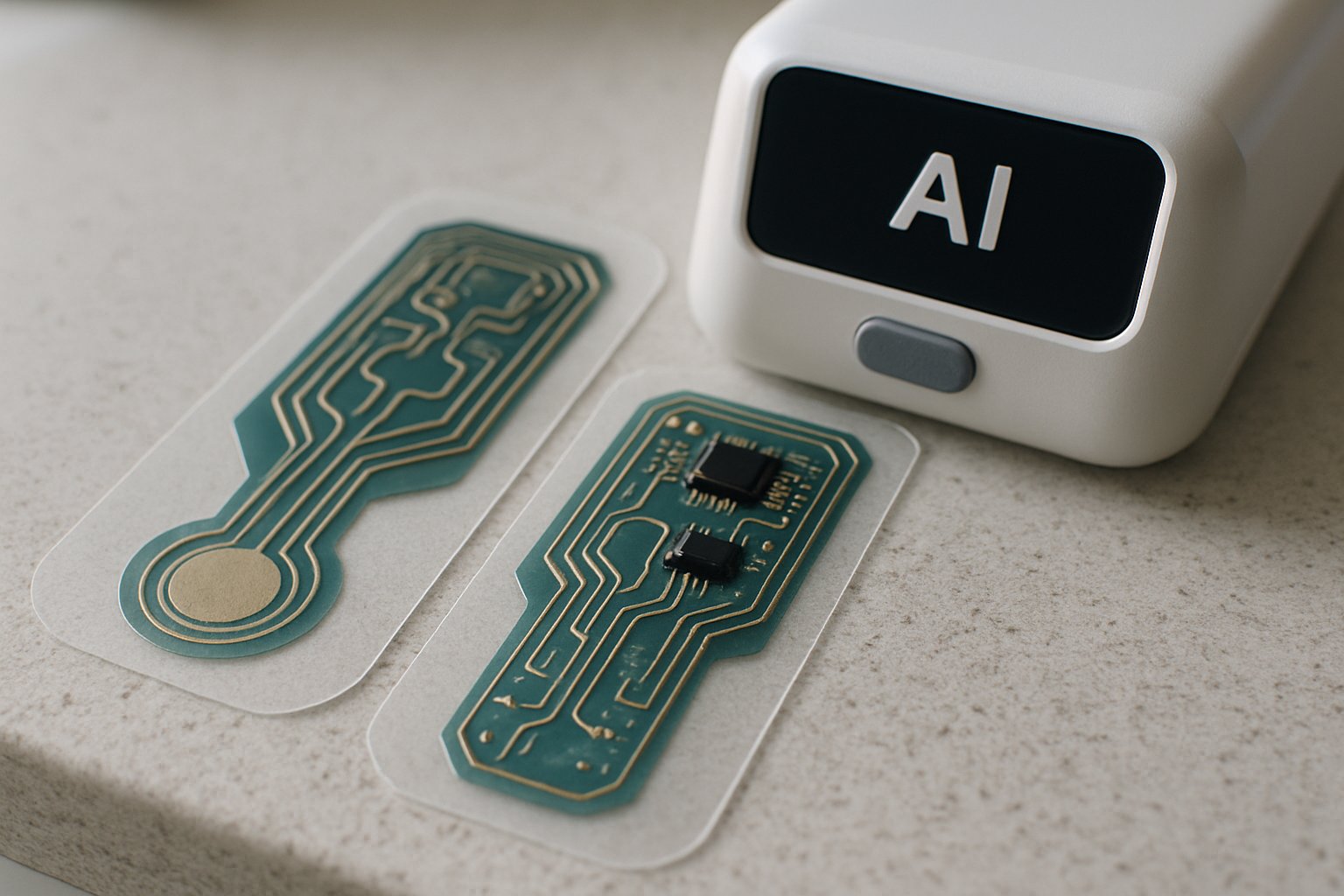
Several international consortia are pooling patient data to validate algorithms across demographics. Consequently, harmonized datasets aim to minimize bias and ensure reproducible performance. Moreover, prototypes from Korea, MIT Research teams, and startups measure femtogram DNA, volatile metabolites, or tactile anomalies. Nevertheless, evidence quality varies, and regulators demand rigorous validation before reimbursement. The article examines breakthroughs, hurdles, and strategic implications.
Global Market Momentum Grows
Grand View Research values AI cancer diagnostics at 268 million dollars in 2024. Moreover, the firm projects compound growth to almost one billion by 2030.
Regulatory progress fuels confidence. Guardant Shield secured FDA acceptance for blood-based colorectal Cancer Screening in 2024. Meanwhile, multiple imaging algorithms expanded clearances through 2025.
Investors regard sensors as low-capex compared with imaging hardware. In contrast, payers scrutinize long-term cost-effectiveness modelling.
Stakeholders group these developments within Oncology AI Diagnostics, seeing a pipeline now shifting from laboratories to hospital pilots. Consequently, payer discussions have intensified.
Market traction confirms broad commercial interest and rising capital flow. However, product categories differ widely in maturity. The next section explores sensor architectures driving that diversity.
AI Sensor Pipeline Overview
Sensor formats span plasmonic chips, Peptide Sensors, electrochemical arrays, and flexible magnetoelectric films. Each captures a unique biochemical or mechanical signature.
Machine learning models then classify patterns, creating Oncology AI Diagnostics outputs within minutes. Additionally, multimodal fusion improves tissue-of-origin accuracy.
Proteases released by early tumors cleave engineered peptides, generating optical signals that sensors quantify. In contrast, magnetic nanoparticles visualize tissue stiffness through wearables.
Collaborations between material scientists and bioinformaticians accelerate iteration cycles. Startups often license university patents to shorten timelines.
Researchers from Switzerland embed plasmonic antennas inside microfluidic cartridges. Moreover, cloud platforms streamline model updates as more samples accrue. Such feedback loops shorten discovery cycles.
Collectively, these modalities widen possible screening touchpoints while keeping sample volumes low. Nevertheless, blood tests currently lead clinical adoption. The following section reviews their status.
AI Blood Tests Advance
The Korea Institute of Materials Science demonstrated a plasmonic chip detecting methylated DNA at 25 femtograms per milliliter. Furthermore, its neural network achieved 99 percent accuracy on 60 colorectal samples.
Guardant's Shield test, another pillar of Oncology AI Diagnostics, delivered 83 percent sensitivity in a 20,000-patient study. Consequently, FDA acceptance paved the way for Medicare reimbursement.
MIT Research groups investigate Peptide Sensors for circulating Proteases, aiming to flag pancreatic lesions that shed little DNA. Early animal data show promising signal-to-noise ratios.
Stage-specific data show declining sensitivity below 50 percent for stage I tumors. Therefore, parallel biomarker panels are under exploration.
Guardant plans to examine Shield in average-risk populations aged 45-60. Meanwhile, GRAIL continues the PATHFINDER trial tracking downstream procedures. Policy makers watch these trials to adjust national guidelines.
Blood assays already fit established phlebotomy workflows and reimbursement structures. However, breath analysis could broaden reach further. The next section assesses that frontier.
Breath Analysis Potential Unfolds
Volatile organic compounds accumulate in exhaled air as tumors alter metabolism. AI models classify these compound spectra with growing precision.
One colorectal study reported 89.7 percent sensitivity and 0.91 AUC across 364 subjects. Moreover, such non-invasive sampling aligns with community Cancer Screening programs.
Dietary standardization protocols are under design to reduce confounding. In contrast, some teams use personalized baselines rather than population models. These methods could further improve specificity.
Sensor arrays now include nanomaterial coatings that boost selectivity. Researchers also deploy deep ensemble networks to reduce false alarms.
These breath platforms belong to the expanding Oncology AI Diagnostics family, yet they face confounders like smoking or diet. Therefore, large population trials remain essential.
Pilot data suggest breath tests can complement blood-based screens by capturing additional signals. Nevertheless, physical sensors worn directly on patients may offer constant monitoring. Let us examine wearables next.
Wearable Sensor Prototypes Emerging
IEEE researchers revealed a magnetoelectric patch imaging breast tissue without ionizing radiation. Additionally, an arXiv tactile glove localized simulated lumps with up to 95 percent accuracy.
Such devices integrate vibration data into Oncology AI Diagnostics workflows, generating alerts clinicians review remotely. Consequently, they promise equitable access in low-resource regions.
Data streams encrypt on device before transmission, protecting patient privacy. Startups integrate haptic feedback to guide self-exams in real time. Such features may raise user engagement and data quality.
Peptide Sensors embedded in sweat patches also quantify Proteases, extending biochemical monitoring beyond clinics. MIT Research collaborations are pursuing human trials by 2027.
Continuous sensing could shift detection from episodic testing to real-time surveillance. However, technical challenges persist. The following section details these obstacles and policy gaps.
Challenges And Next Steps
Early-stage sensitivity still varies, especially for stage I tumors with sparse biomarkers. Moreover, false positives trigger costly workups.
Regulators now demand transparent algorithms, bias assessments, and post-market surveillance within Oncology AI Diagnostics submissions. Consequently, vendors must invest in explainability.
Workforce readiness also matters. Professionals may deepen expertise through the AI Ethics Specialist™ certification, ensuring responsible deployment.
- Stage I sensitivity gaps across multi-cancer tests
- Data drift from demographic or device variability
- Reimbursement uncertainty for novel Peptide Sensors
- Equitable access to rural Cancer Screening services
Academic reviewers caution against premature mass deployment. Nevertheless, pilot programs can reveal implementation bottlenecks early. Cross-disciplinary task forces therefore recommend staged rollouts.
Addressing these issues will decide whether sensor platforms achieve widespread impact. Therefore, strategic guidance is required, as summarized next.
Conclusion And Future Outlook
Oncology AI Diagnostics now span blood, breath, and wearable solutions, each advancing along distinct evidence curves. Moreover, sensor miniaturization and cloud learning are accelerating trials.
Nevertheless, Oncology AI Diagnostics must prove mortality benefits, manage privacy risks, and integrate ethical oversight. Consequently, multidisciplinary collaboration remains crucial.
Healthcare leaders considering Oncology AI Diagnostics should prioritize rigorous validation and staff training. Additionally, obtaining recognized credentials such as the linked AI Ethics certification strengthens governance frameworks. Act now: pilot sensors, fund ethics training, and place your organization at the forefront of AI cancer care.


