

AI CERTs
3 months ago
AI Procurement Intelligence Platforms Transform Vendor Selection
Global procurement teams are experiencing a seismic data shift. GenAI now recommends suppliers before humans finish coffee. Consequently, AI Procurement Intelligence Platforms promise faster, smarter vendor decisions across complex categories. Analysts, vendors, and investors all signal rapid change, yet challenges remain. Moreover, new agentic assistants automate once-manual RFx steps. Coupa’s acquisition of Cirtuo exemplifies market momentum toward autonomous spend management. However, fragmented data, explainability gaps, and regulatory uncertainty hinder full benefits. This feature examines recent moves, market numbers, and risk factors shaping next-generation procurement. Readers will gain actionable insight to steer strategy amid accelerating platform consolidation. In contrast, traditional sourcing cycles appear sluggish when compared to AI-driven discovery engines. Therefore, sourcing leaders must grasp both promise and pitfalls before adopting these tools.
Market Growth Accelerates Rapidly
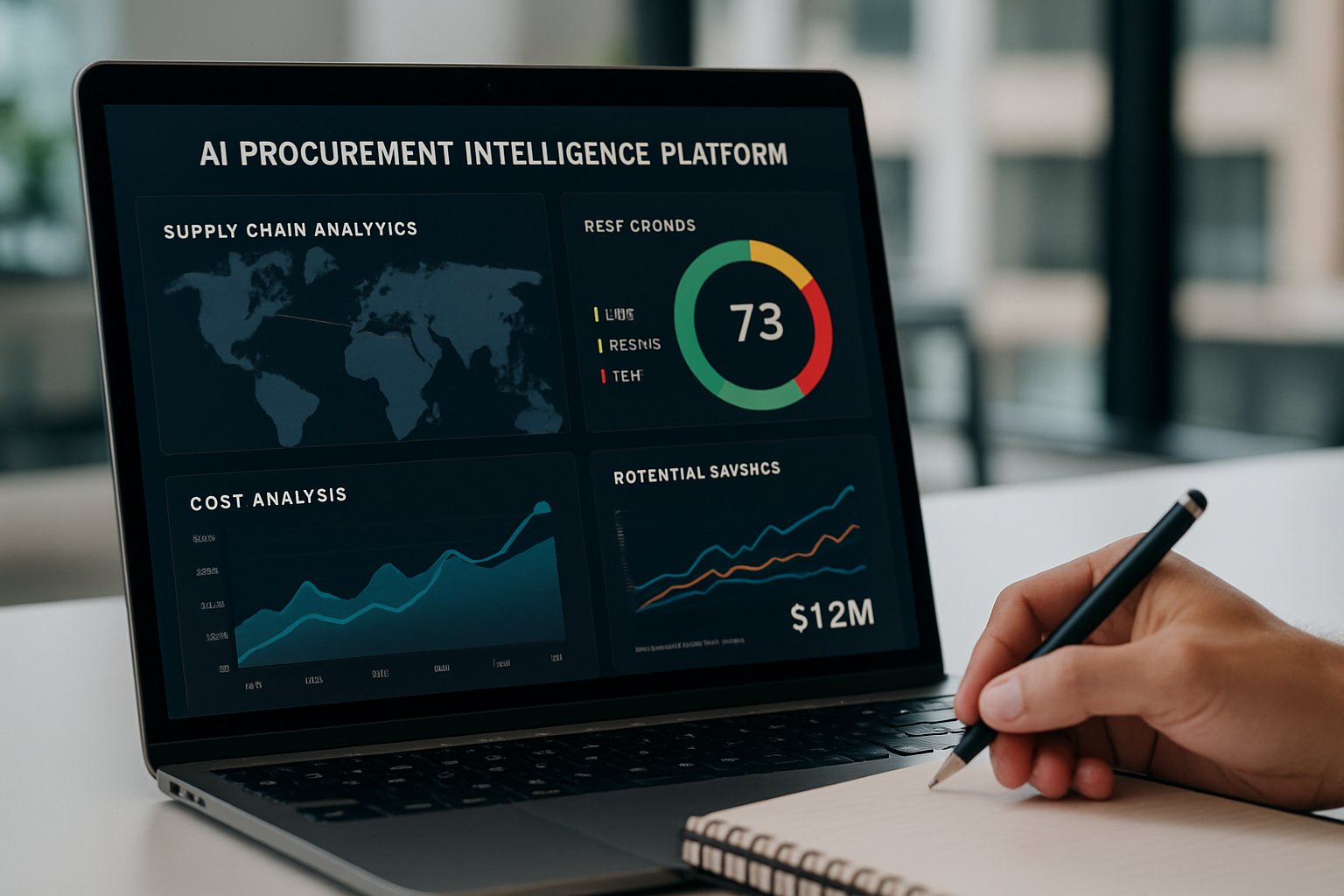
Research firms agree the procurement analytics market sits near $6 billion today and climbs fast. Mordor Intelligence projects a 24.4 percent CAGR through 2030. Precedence Research forecasts similar expansion, underscoring broad investor confidence. Furthermore, Fortune Business Insights places 2025 revenue within the same range.
Key growth signals include:
- Gartner expects 50% of contract management to be AI-enabled by 2027.
- Investor-backed startup Omnea closed a large Series B in 2025.
- Coupa claims multi-trillion spend datasets feed its recommendation models.
Therefore, AI Procurement Intelligence Platforms appear poised to capture expanding budgets for enterprise sourcing analytics.
These statistics confirm robust demand momentum. However, platform consolidation now reshapes competitive dynamics ahead.
Platform Consolidation Signals Shift
Coupa buying Cirtuo in May 2025 sent shockwaves across procurement suites. Subsequently, Scoutbee deepened SAP partnerships while hinting at further M&A. SAP, Oracle, and Ivalua all unveiled GenAI roadmaps during 2024-2025 conferences. Moreover, startups cluster around niche discovery or intake gaps, anticipating larger exits.
Consequently, decision makers increasingly prefer unified AI Procurement Intelligence Platforms over isolated point tools. Integrated suites promise seamless enterprise sourcing workflows and shared data models. Nevertheless, buyers worry about lock-in and pricing leverage after consolidation.
Vendor moves illustrate a race for scale. In contrast, data issues hamper flawless execution, as explored next.
Data Quality Roadblocks Persist
GenAI thrives on uniform, labeled, and current spend data. Yet most ERP landscapes remain fragmented with duplicate supplier records. Gartner analyst Kaitlynn Sommers warns that poor data drives inaccurate outputs. Additionally, Vishal Patel from Ivalua cites siloed systems as automation bottlenecks.
Moreover, unreliable data weakens supplier risk scoring models and breeds mistrust. Therefore, procurement leaders prioritise cleansing initiatives before large platform deployments. Some enterprises create central data lakes to feed enterprise sourcing dashboards.
Clean data underpins credible recommendations. Subsequently, AI agents attempt to bridge remaining manual gaps.
Emerging Agentic AI Assistants
Early agentic systems draft RFx documents, shortlist suppliers, and schedule evaluations autonomously. McKinsey reports pilots that cut sourcing cycle time by 90% for limited categories. Furthermore, Coupa positions its agents as extensions of autonomous spend management vision.
Nevertheless, AI Procurement Intelligence Platforms still limit agent autonomy to low-risk decisions. Explainability dashboards and human-approval gateways provide governance layers. Consequently, users maintain oversight while scaling efficiency. These agents can trigger supplier risk scoring workflows when anomalies appear.
Pilots prove time savings, yet autonomy remains bounded. Therefore, firms measure ROI closely before expansion.
Measuring Tangible Procurement ROI
Boards demand evidence beyond glossy demos. Procurement teams track time saved, contract leakage avoided, and risk incidents prevented. Moreover, some buyers benchmark spend coverage across tail suppliers.
Common KPIs include:
- Sourcing cycle duration reduction percentage
- Contract value leakage captured
- Supplier risk scoring accuracy improvements
- Enterprise sourcing automation rate
In many cases, AI Procurement Intelligence Platforms report double-digit savings within twelve months. However, Gartner cautions that uneven adoption dilutes headline gains. Consequently, continuous change management remains vital. Teams that master supplier risk scoring and enterprise sourcing analytics outperform peers.
Measurable gains convince CFOs to fund expansion. Meanwhile, risk and ethics questions still demand attention.
Governance, Ethics, and Risk
Public procurement rules require fairness and transparency in supplier choice. LLM recommendations raise bias, explainability, and data-protection concerns. Frontiers research shows historic data may marginalize smaller vendors inadvertently. Consequently, audit logs and bias tests become implementation prerequisites.
Additionally, AI Procurement Intelligence Platforms must document supplier risk scoring rationale for regulators. Security teams also encrypt tender data to prevent model leakage. Nevertheless, vendor lock-in could erode negotiation power over time.
Robust governance frameworks protect organizations and suppliers. Subsequently, leaders assess next steps for upskilling and certification.
Future Outlook And Actions
Analysts predict mainstream deployment of AI Procurement Intelligence Platforms within two years. Therefore, early movers can lock competitive advantage and negotiate favorable contracts now. Moreover, integrated enterprise sourcing workflows will mature as data standards solidify. Vendor roadmaps suggest deeper supplier risk scoring embedded into every sourcing action.
Practitioners should pilot limited categories, refine governance, and expand iteratively. Consequently, procurement skills must evolve toward data science and change management. Professionals can enhance expertise through certifications. Consider the AI+ UX Designer™ program to deepen AI literacy. In contrast, organizations ignoring AI Procurement Intelligence Platforms risk strategic stagnation. Subsequently, global supply challenges may intensify without AI Procurement Intelligence Platforms guiding decisions.
The future favors data-driven procurement excellence. Therefore, strategic calls now set the performance curve for years.
The market grows, platforms consolidate, and governance frameworks mature together. Data quality and ethical oversight remain critical success factors. Nevertheless, measurable ROI now convinces boards to accelerate adoption. Consequently, AI Procurement Intelligence Platforms stand poised to redefine supplier relationships. Precision risk analytics and automated enterprise sourcing will separate leaders from laggards. Visit our newsroom for ongoing coverage and explore the certification above to future-proof your career.


