

AI CERTs
3 months ago
How Autonomous Compliance Monitoring Engines Slash Audit Failures
Audit teams still dread year-end crunches. However, emerging Autonomous Compliance Monitoring Engines promise to change that cycle. These platforms blend agentic AI, continuous controls monitoring, and automated evidence capture. Consequently, enterprises report shorter preparation times, fewer findings, and quicker certifications. Yet independent validation remains limited, so technology leaders must weigh hype against measurable gains.
Autonomous Compliance Monitoring Engines
The core concept is simple. Engines run nonstop control checks, gather timestamped proof, and trigger remediation workflows. Moreover, AI agents map regulations to technical controls, draft narratives, and escalate anomalies. Therefore, teams move from periodic sampling to near-real-time assurance. In many cases, the engines integrate with cloud APIs, identity platforms, and ticketing systems.
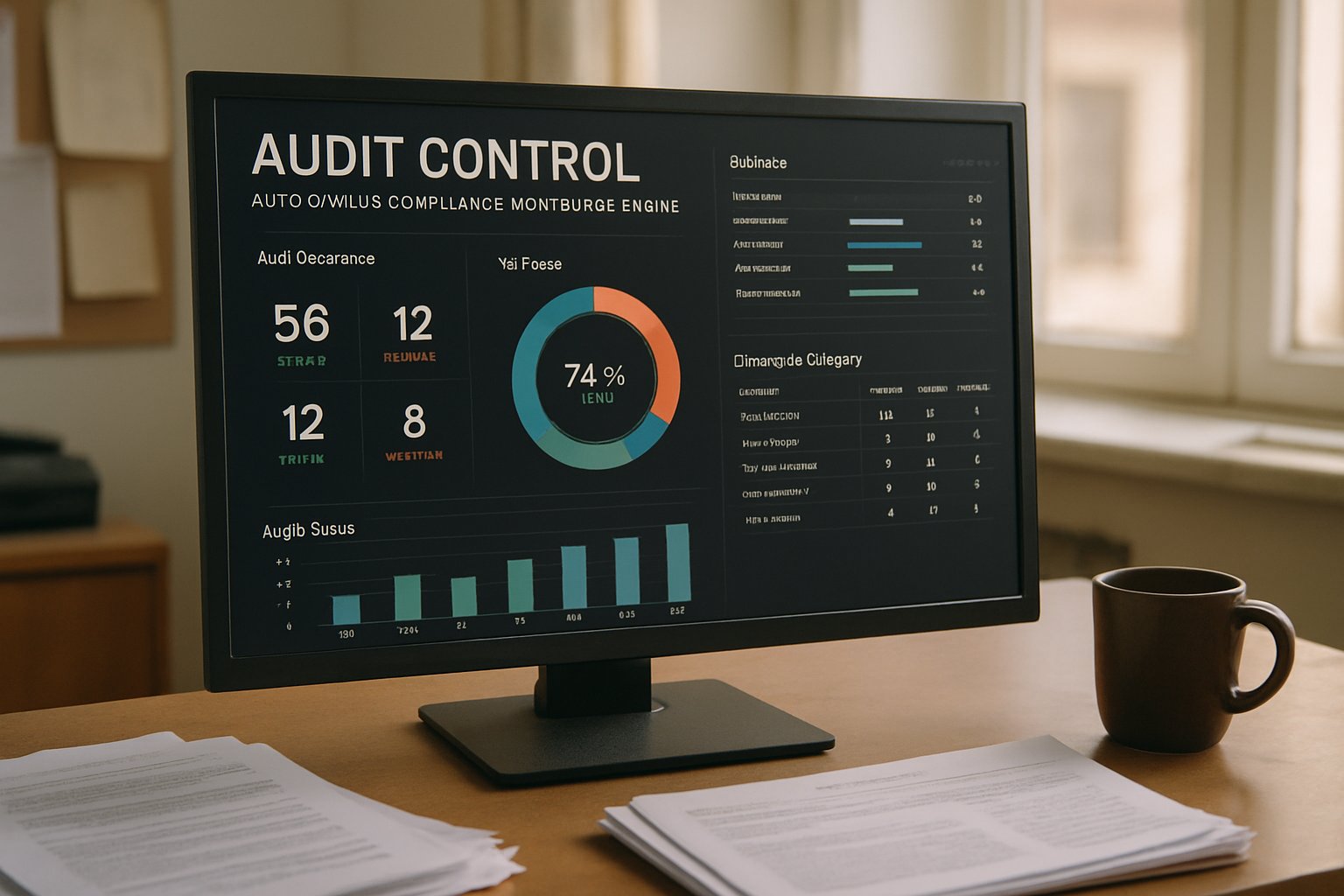
Those capabilities appeal to resource-strained compliance leaders. Consequently, interest has surged across finance, SaaS, and healthcare. Nevertheless, auditors still demand clear provenance and human oversight before fully trusting machine-generated evidence.
Market Forces Align Now
Several trends have converged. Firstly, venture-backed vendors such as Vanta, OneTrust, and RegScale shipped agentic features during 2024-2025. Secondly, analysts expect the eGRC software market to double by 2029. Furthermore, the shift toward cloud infrastructure amplifies control complexity, encouraging automation.
MarketsandMarkets projects the segment to hit USD 34.5 billion by 2029, growing 13.4% annually. Moreover, Grand View Research forecasts USD 135 billion for broader governance tooling by 2030. These projections suggest durable demand for Autonomous Compliance Monitoring Engines.
Technology Under The Hood
Continuous sensor feeds drive the engines. Additionally, AI agents orchestrate multistep tasks such as evidence collation and policy mapping. In contrast, legacy GRC suites rely on manual uploads and static spreadsheets. Key architectural pillars include:
- Event collectors that stream configuration and user activity data
- Rule engines codifying continuous controls for automatic testing
- Agentic workflows that draft reports and remediation tickets
- Immutable logs preserving audit trails for review
The architecture supports Chief AI Officer™-level governance expectations. Consequently, leaders can demonstrate robust oversight of both AI and security programs.
Reported Efficiency Gains Rise
Vendors trumpet eye-catching statistics. OneTrust claims 60% lower compliance effort, while RegScale cites 60% faster audit preparation. Meanwhile, Lunari reports a 68% workload reduction and 95% quicker violation detection. Although these numbers are vendor-supplied, they illustrate potential upside.
Key performance improvements commonly highlighted include:
- Audit preparation time cut by 40-90%
- Evidence collection workload reduced up to 85%
- Control drift detection accelerated from months to hours
- SOC or FedRAMP certifications completed several weeks sooner
Enterprises using Autonomous Compliance Monitoring Engines often confirm qualitative benefits. Nevertheless, auditors recommend baselining metrics before deployment to prove causality. These gains appear compelling. However, peer-reviewed studies remain scarce, so caution persists.
Regulatory Drivers Intensify Now
External pressure also propels adoption. The EU Digital Operational Resilience Act mandates ongoing ICT risk monitoring for financial entities. Additionally, the EU AI Act demands post-market surveillance for high-risk systems. Therefore, boards now expect regulatory automation that continuously demonstrates compliance.
Industry observers note similar momentum in the United States. NIST’s CA-7 control emphasizes continuous monitoring, echoing audit trends. Consequently, global firms pursue platforms offering built-in mappings to frameworks and automated gap analysis.
Those capabilities often rely on continuous controls libraries covering ISO 27001, SOC 2, and FedRAMP. Autonomous Compliance Monitoring Engines keep those libraries updated, reducing manual policy maintenance.
Remaining Risks And Limits
No solution is flawless. False positives and noisy alerts can overwhelm teams if tuning lags. Moreover, AI hallucinations may misclassify evidence, risking auditor rejection. In contrast, manual workflows, while slower, rarely invent data.
Data-protection concerns also loom. Continuous recording might capture personal information, triggering GDPR or AI Act scrutiny. Therefore, governance frameworks and access controls must accompany any regulatory automation rollout.
Finally, vendor lock-in worries CIOs. Switching engines may require migrating control libraries and integrations. Consequently, leaders should demand open APIs and exportable evidence formats when signing contracts.
These challenges underscore the need for disciplined implementation. Yet they do not negate the strategic value of Autonomous Compliance Monitoring Engines. Instead, they highlight diligence requirements before production rollout. Subsequently, best-practice guidance becomes essential.
Future Outlook And Actions
Market signals remain bullish. Furthermore, regulators increasingly favor near-real-time oversight, reinforcing platform relevance. Analysts expect double-digit growth as more sectors embrace continuous controls and regulatory automation.
Technology buyers should pilot solutions, collect baseline metrics, and involve auditors early. Professionals can deepen knowledge through the Chief AI Officer™ certification, gaining governance insight for AI-driven compliance stacks.
Consequently, organizations adopting Autonomous Compliance Monitoring Engines today can position themselves for faster audits and stronger risk postures tomorrow. Nevertheless, robust governance and independent validation will remain mandatory.


