

AI CERTs
4 months ago
How Logistics Route Intelligence Engines Slash Fuel and Emissions
Rising fuel prices and net-zero pledges are squeezing logistics margins worldwide. Consequently, carriers now view advanced routing algorithms as mission critical. Logistics Route Intelligence Engines use AI and operations research to squeeze unnecessary miles from daily schedules. These systems promise double wins: lower costs and verifiable emission cuts.
Recent field results support the hype. UPS reports its ORION platform eliminates 10 to 14 miles per driver each day, avoiding 100 million miles annually. Meanwhile, telematics vendors such as Samsara showcase mid-double-digit fuel reductions across diverse fleets. Furthermore, market analysts expect the route-optimization software segment to surpass $20 billion by 2030. Moreover, the analysis links sustainability AI initiatives to fleet optimization roadmaps that help enterprises meet emissions targets.
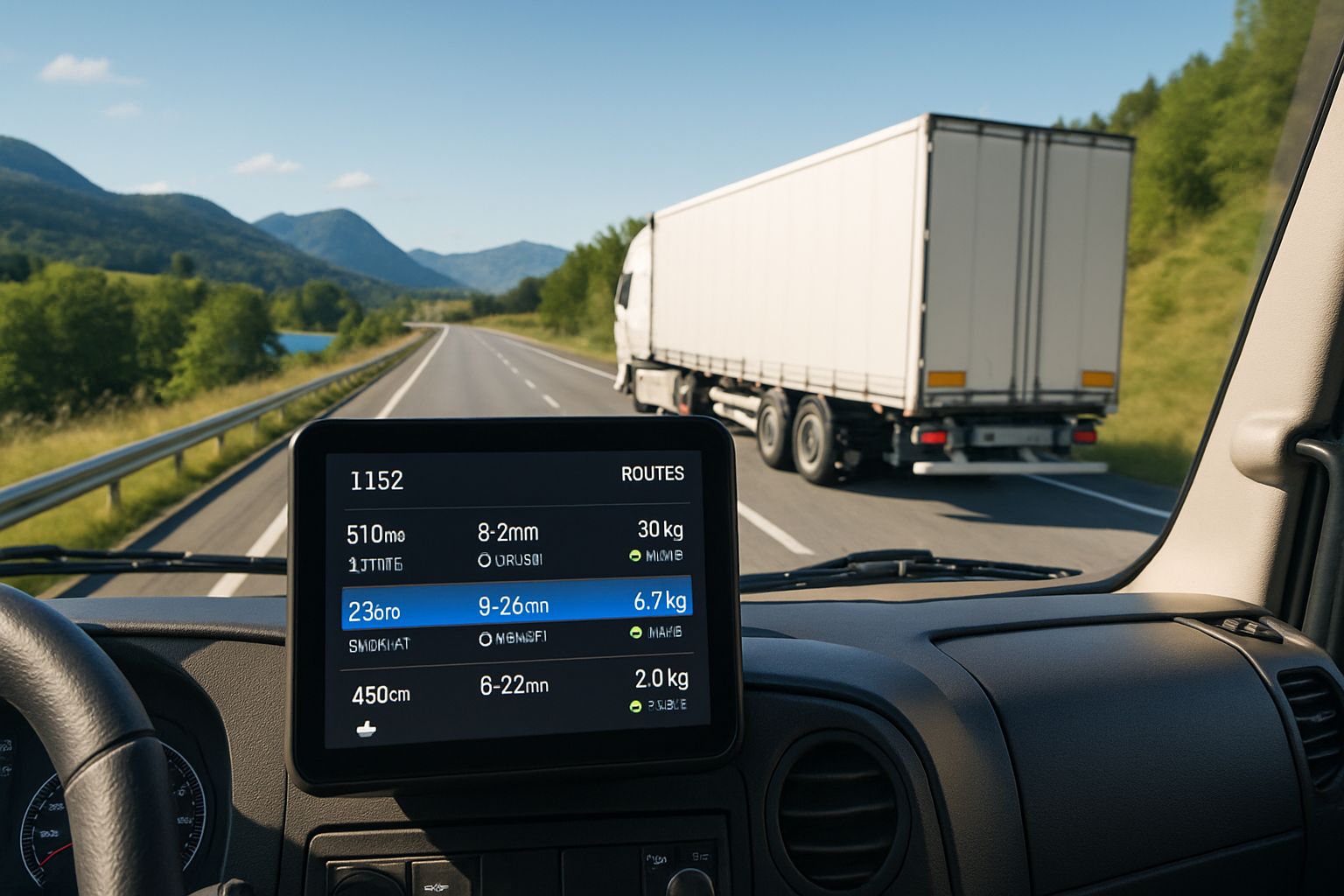
Drivers Behind Market Momentum
Fuel volatility remains a boardroom headache. Additionally, low-emission zones impose penalties for inefficient routes. These pressures push decision makers toward digital tools that yield quick, measurable returns. Market researchers at Grand View Research project 14 percent CAGR through 2030, reflecting that urgency.
Customer expectations escalate concurrently. Same-day deliveries tolerate little schedule slack, so dispatchers need real-time re-routing and predictive ETAs. Moreover, corporate sustainability AI dashboards demand hard numbers, not anecdotes. Logistics Route Intelligence Engines supply both, turning operational data into optimized dispatch plans and auditable carbon metrics.
Consequently, capital is flowing into routing start-ups and fleet platforms. These trends underscore rising momentum. However, proof of tangible savings matters more than marketing, which leads to the next focus: documented results.
Documented Fuel Savings Evidence
Empirical data shows material gains. UPS confirms its ORION engine avoids 10 million gallons of diesel yearly and prevents roughly 100,000 metric tons of CO₂. Meanwhile, retailer Sainsbury’s cut more than 142,000 gallons across four depots after deploying Paragon’s optimizer.
Key published case results include:
- 5-25 percent fuel and mileage reduction in Samsara customer pilots.
- 4.5 percent network-wide savings in NREL California routing study.
- $300-$400 million annual savings projected from full UPS rollout.
Furthermore, these outcomes stem from diverse fleet sizes and geographies, indicating broad applicability. Logistics Route Intelligence Engines often deliver single-digit savings and sometimes higher when idling and speed policies align.
The evidence validates the technology’s promise. Nevertheless, understanding how the engines work is essential before writing purchase orders. The next section unpacks the architecture.
Core Technology Building Blocks
Modern Logistics Route Intelligence Engines merge classical vehicle-routing solvers with machine-learning fuel models. Therefore, they evaluate millions of sequences within seconds, respecting capacities, traffic, grades, and driver hours. Dynamic variants re-solve as soon as congestion, weather, or cancellations hit the schedule.
Telematics plays a central role. Sensor feeds from CANbus, GPS, and fuel meters close the loop between predicted and actual consumption. In contrast, legacy planners relied on static distances, leading to persistent deviations.
Moreover, sustainability AI modules let operators optimize explicitly for grams of CO₂ per parcel rather than simple distance. Battery-aware logic also assesses charger locations and dwell times, enabling deeper fleet optimization across mixed powertrains.
These building blocks empower dispatch centers with live decision guidance. Subsequently, implementation discipline determines whether theoretical savings reach the ledger. Best practice steps follow.
Implementation Best Practice Steps
Deploying Logistics Route Intelligence Engines without a clear baseline invites skepticism. Consequently, operators should measure fuel per mile, stops per route, idling minutes, and service failures for several weeks. Precise benchmarks create credible return-on-investment narratives.
Implementation checklists often include:
- Integrate telematics and enterprise systems for data fidelity.
- Define multi-objective goals covering cost, emissions, and driver hours.
- Pilot one depot with 5-10 vehicles for eight weeks.
- Engage drivers through feedback loops and exception handling.
- Scale gradually while auditing post-deployment metrics.
Professionals can enhance their expertise with the AI for Everyone™ certification. The curriculum covers data literacy, sustainability AI principles, and ethical routing decisions.
Moreover, Logistics Route Intelligence Engines deliver superior gains when pilot learnings refine global rollout plans. Therefore, disciplined governance converts algorithmic insight into sustained cash and carbon savings.
These steps mitigate implementation risk. Nevertheless, sustainability ambitions often extend toward electrification, which our next section addresses.
Sustainability And EV Synergy
Green routing objectives align neatly with battery range constraints. Consequently, engines that minimize fuel also minimize kilowatt-hours, extending EV service areas. Deloitte modelling indicates many last-mile routes become electrifiable without mid-shift charging when algorithms reorder stops.
Furthermore, sustainability AI dashboards allow managers to compare diesel, hybrid, and electric scenarios within the same interface. The capability accelerates data-driven fleet optimization, guiding charger investment toward high-impact depots.
Nevertheless, planners must incorporate elevation, payload, and weather, otherwise range forecasts prove optimistic. Logistics Route Intelligence Engines handle these variables, but only when high-resolution telematics feeds remain reliable.
The synergy between routing and electrification unlocks incremental savings. Subsequently, leaders ask how big the overall market can grow.
Market Outlook And Forecasts
Industry forecasts signal robust expansion. Grand View Research expects the global route-optimization market to reach $21.5 billion by 2030, growing 14 percent annually. Moreover, several firms peg 2025 valuations between $7 billion and $11 billion.
Investment follows these projections. Venture capital poured millions into start-ups last year, while platform vendors acquired routing specialists. Consequently, competition drives rapid feature releases and value-based pricing.
Logistics Route Intelligence Engines remain central to these strategies because they directly influence profit and compliance. Additionally, sustainability AI agendas and fleet optimization mandates amplify demand in regulated regions.
The numbers suggest continued double-digit growth. However, operators still need rigorous measurement frameworks, discussed in our concluding section.
Conclusion And Next Steps
Evidence from UPS confirms that Logistics Route Intelligence Engines cut miles, fuel, and emissions while protecting quality. Furthermore, advanced dashboards elevate transparency, and fleet optimization workflows unlock additional productivity.
However, data quality and change management determine realized benefits. Therefore, enterprises should benchmark performance, pilot responsibly, and invest in continuous driver engagement.
Moreover, market momentum and technology advances promise even greater returns as EV adoption accelerates. Professionals eager to lead these transformations should pursue industry education and certifications.
Consequently, equip yourself now. Start by reviewing live case studies, visiting vendor demonstrations, and enrolling in the AI for Everyone™ program. Doing so positions your team to capture measurable savings, meet climate commitments, and surpass customer expectations.
Disclaimer: Some content may be AI-generated or assisted and is provided ‘as is’ for informational purposes only, without warranties of accuracy or completeness, and does not imply endorsement or affiliation.


