

AI CERTs
3 months ago
Predictive Patient Deterioration Models Slash ICU Mortality
Hospitals face relentless pressure to spot decline before crisis strikes. Consequently, many now deploy Predictive Patient Deterioration Models to flag subtle risk signals hours in advance. These data-driven systems compare millions of historical patterns against live vitals, labs, and notes. Therefore, clinical teams can intervene earlier, escalate faster, and potentially save lives. Recent peer-reviewed studies and meta-analyses confirm measurable reductions in in-hospital deaths when alerts prompt timely action. Meanwhile, growing vendor competition and tighter governance are shaping best practices for reliable, equitable deployment.
Evidence Base Strengthens Rapidly
Multiple prospective trials anchor the case for Predictive Patient Deterioration Models. The 2025 BMC review linked machine-learning early warnings with lower 30-day mortality across diverse hospitals. Moreover, the multicenter eCART study cut deaths from 13.9% to 8.8% after system-wide rollout. TREWS, another high-profile example, showed a 3.3-point absolute mortality drop when clinicians confirmed sepsis alerts within three hours. In contrast, rule-based scores delivered smaller benefits. Additionally, an npj Digital Medicine meta-analysis reported a relative risk of 0.56 for machine-learning sepsis tools versus 0.73 for traditional criteria. These figures highlight meaningful, repeatable gains. However, benefits vary by setting and workflow.
Collectively, these findings suggest robust momentum. Nevertheless, heterogeneity across studies urges careful local evaluation before adoption. Together, the data bolster confidence that early warnings can transform critical care.
These successes lay the foundation for wider rollout. Subsequently, attention turns toward market players fueling innovation.
Key Technology Players Today
Several systems dominate the current landscape of Predictive Patient Deterioration Models. eCART, developed at the University of Chicago, posts an AUROC of 0.895 and lengthy lead times. TREWS, commercialized by Bayesian Health, integrates natural-language cues for sepsis risk. Epic’s Deterioration Index appears in hundreds of hospitals and shows outcome gains when paired with structured workflows. Meanwhile, the Rothman Index and Edwards Lifesciences’ Hypotension Prediction Index target broader acuity and specific physiologic events respectively.
Market differentiation hinges on algorithm transparency, external validation, and alert usability. Furthermore, competitive pressure accelerates feature updates such as real-time health monitoring dashboards and bias auditing modules. Clinicians, therefore, must scrutinize vendor claims against peer-reviewed evidence. Professionals can enhance their expertise with the AI Executive™ certification to navigate procurement decisions confidently.
Diverse offerings spur rapid adoption. Nevertheless, successful outcomes depend on more than algorithmic prowess. Effective implementation remains paramount.
Implementation Success Factors Vital
Outcomes improve only when alerts trigger swift, protocolized responses. Therefore, leading hospitals embed escalation steps, standing orders, and clear ownership into workflows. TREWS demonstrated that confirmation latency determined mortality benefit, underscoring this truth. Additionally, frontline training mitigates alert fatigue and builds trust in clinical AI outputs.
Workflow Design Essentials
- Dedicated response teams review alerts within 15 minutes.
- Standardized bundles guide labs, imaging, and antibiotic timing.
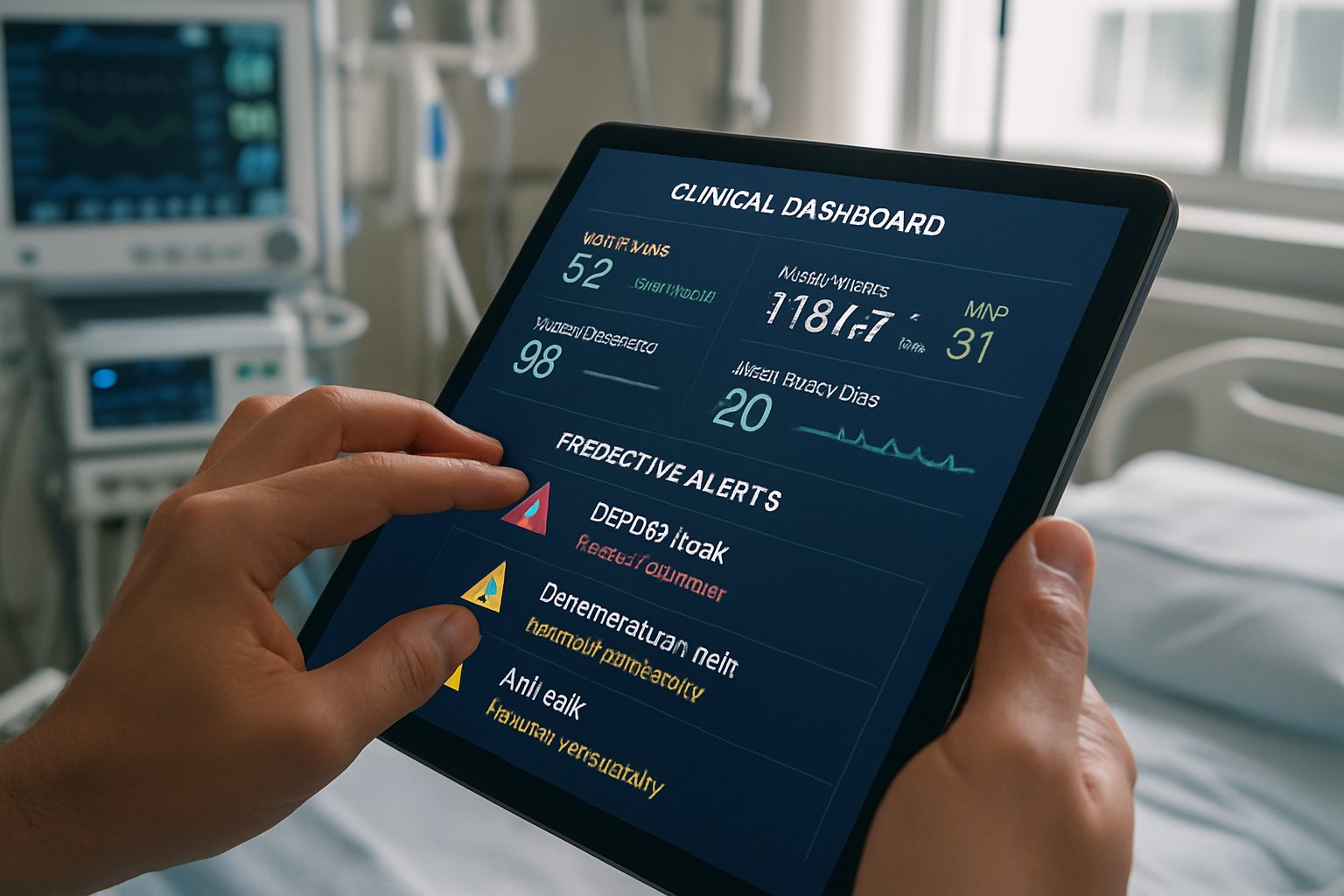
- Dashboards display real-time health monitoring metrics and backlog status.
- Feedback loops refine thresholds, reducing false positives quarterly.
Furthermore, local validation guards against dataset shift and hidden bias. Continuous monitoring of AUROC, calibration, and subgroup error rates keeps models safe. Consequently, governance committees schedule periodic retraining and threshold tuning. These tactics ensure Predictive Patient Deterioration Models deliver sustained value.
Rigorous implementation maximizes benefits. Yet, stakeholders must confront inherent risks before scaling enterprise-wide.
Risks And Caveats Critical
Despite promise, Predictive Patient Deterioration Models pose notable hazards. Alert overload may desensitize clinicians, eroding response rates. Moreover, proprietary “black box” logic hinders independent audits and equity assessments. In contrast, open algorithms invite peer scrutiny but demand internal expertise to maintain. Additionally, some studies noted longer ICU stays due to earlier transfers, shifting resource burdens.
Therefore, hospitals should track downstream impacts such as bed occupancy, staffing, and medication spending. Nevertheless, transparent reporting and model governance mitigate most concerns, fostering clinician confidence and public trust.
Understanding these caveats informs balanced adoption. Next, leaders examine hard performance numbers that justify investment.
Operational Impact Metrics Reviewed
Quantified gains strengthen the business case for Predictive Patient Deterioration Models and related clinical AI tools. Key metrics include:
- Mortality reduction: eCART adjusted OR 0.60; TREWS relative risk drop 18.7%.
- Lead time: eCART median 11–20 hours before deterioration thresholds.
- Hypotension exposure: HPI trial cut time <65 mmHg by 63%.
- Escalation efficiency: Epic EDI workflow lowered escalations 10.4 points.
Moreover, some hospitals report shorter ward stays and improved ICU throughput, though results differ by cohort. Consequently, finance teams often project substantial cost avoidance from prevented codes and litigation.
Accurate, regularly updated dashboards keep executives informed. Subsequently, governance structures evolve to oversee lifecycle management.
Governance And Future Roadmap
Effective oversight blends clinical, technical, and ethical perspectives. Governance boards schedule quarterly audits of alert burden, bias metrics, and real-time health monitoring accuracy. Additionally, they mandate documentation of retraining triggers to counter performance drift. Regional collaboratives are now drafting shared standards to benchmark Predictive Patient Deterioration Models across institutions.
Meanwhile, regulators hint at forthcoming transparency rules. Therefore, vendors may soon publish model cards detailing data provenance, testing protocols, and subgroup results. Moreover, federated learning and on-device inference promise privacy-preserving updates without data pooling.
Ultimately, stakeholders expect models to integrate seamlessly with broader clinical AI ecosystems, covering diagnosis, staffing, and supply chain logistics. This convergence will redefine patient safety strategies over the next decade.
Robust governance sets the stage for sustained innovation. The conversation now shifts to decisive next steps for healthcare leaders.
Conclusion
Predictive Patient Deterioration Models have moved from pilot projects to proven lifesavers. Evidence shows meaningful mortality cuts, faster interventions, and optimized resource use when implementations follow best practices. However, ongoing vigilance around bias, alert fatigue, and cost is essential. Furthermore, structured governance ensures performance stays high as data shift. Leaders should act now, refine workflows, and cultivate multidisciplinary oversight. Explore certifications like the AI Executive™ program to build the skills needed to steward these transformative tools responsibly.


