

AI CERTs
3 months ago
Synthetic Voice Commerce Interfaces Redefine Customer Support
Phones still dominate customer service, yet callers hate rigid IVR menus. Consequently, enterprises are racing toward Synthetic Voice Commerce Interfaces that sound human and act autonomously. These new systems merge large language models, neural speech, and robust integrations. Moreover, the shift promises shorter waits, higher satisfaction, and streamlined order flows. Analysts predict double-digit growth in voice commerce over the next decade despite conflicting reports. Meanwhile, concerns about fraud, regulation, and quality loom large for technology leaders. Therefore, understanding market momentum, technical progress, and risk mitigation is essential for strategic planning. This article unpacks the landscape for decision makers evaluating deployment in 2026 and beyond. We draw on fresh data, expert insights, and real deployments to separate hype from impact. Readers will also find guidance on skills validation through relevant certifications.
Market Momentum Surges
Market demand exploded between 2024 and 2025. In contrast, analyst estimates diverge because definitions vary. ResearchAndMarkets pegs 2024 voice commerce at $49.6 billion, while Market.us lists $66.5 billion. However, both sources foresee roughly 20-27 percent compound annual growth through 2030. Synthflow and Retell AI secured fresh funding as enterprises abandoned legacy IVRs. Consequently, investors see Synthetic Voice Commerce Interfaces as a core channel rather than an experiment. Decagon’s ElevenLabs deployment already fields tens of thousands of calls per day, validating scale. Adoption metrics and funding spikes confirm the market is heating quickly. Next, we examine the technologies enabling this surge.
Technology Advances Accelerate
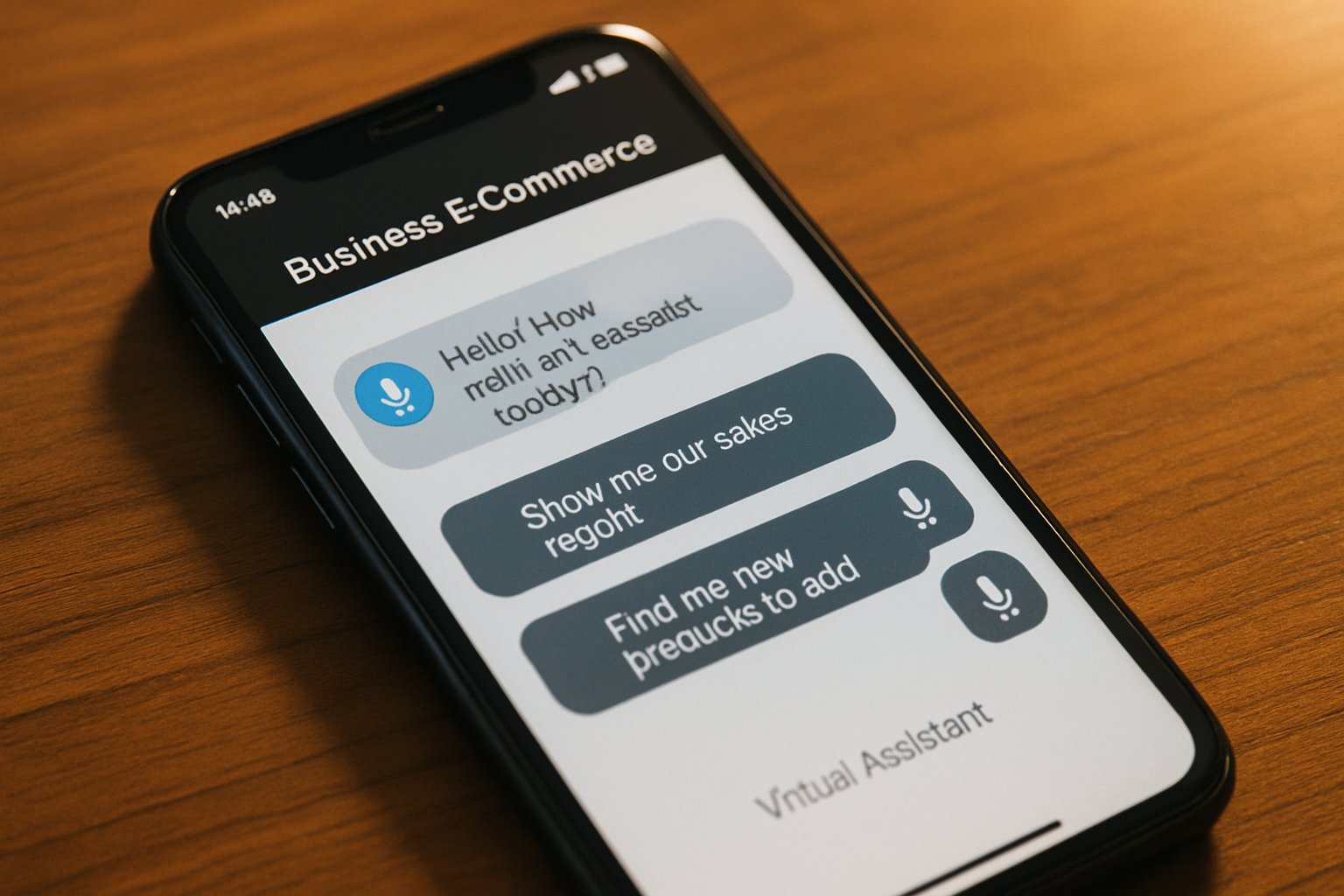
Low-latency neural TTS now answers within 300 milliseconds, matching human turn-taking. Furthermore, large language models handle intent parsing, context, and action planning. AWS, Google, and Microsoft embed these capabilities into contact-center stacks for turnkey deployment. Meanwhile, startups tout no-code builders that let managers script flows without engineers. ElevenLabs agents integrate knowledge bases and multilingual voices for global brands. Synthetic Voice Commerce Interfaces therefore deliver consistent brand tone across products and regions. Consequently, Synthetic Voice Commerce Interfaces now enable end-to-end purchase flows without screens. Additionally, secondary tools for voice automation handle speech recognition, payments, and CRM updates. Technical maturity has lowered barriers, broadening adoption across industries. The next section quantifies resulting business outcomes.
Tangible Business Impact Data
Early adopters report measurable gains despite limited independent audits. ElevenLabs claims 27 percent higher CSAT and 40 percent faster resolutions for e-commerce clients. Moreover, an AWS migration cut voice contacts by 51 percent, freeing human agents for complex cases. Meesho’s multilingual rollout handles 60,000 daily calls with minimal downtime. Consequently, Synthetic Voice Commerce Interfaces can shrink wait times and improve net promoter scores. Key performance indicators often include cost per interaction, containment rate, and sales conversion uplift.
- CSAT increase: up to 27 percent (ElevenLabs)
- Average handle time reduction: 40 percent (ElevenLabs)
- Voice contact deflection: 51 percent (AWS case)
- Daily calls managed: 60,000+ (Meesho)
Nevertheless, many figures originate from vendor marketing, so leaders should request raw datasets before scaling. These numbers hint at strong ROI yet require deeper validation. However, rising fraud could erode those gains if ignored.
Fraud Risks Intensify Rapidly
Pindrop tracked a 1,300 percent surge in deepfake fraud attempts during 2024. In contrast, legacy authentication methods struggle against cloned voices. Consequently, attackers target financial and insurance contact centers for high-value exploits. Synthetic Voice Commerce Interfaces may inadvertently widen attack surfaces when security lags innovation. Therefore, companies must pair conversational AI with real-time liveness, behavioral, and network checks. Moreover, staff need playbooks for immediate escalation when anomalies arise. Fraud dynamics demand equal investment in detection and prevention. Regulators are tightening expectations accordingly.
Regulatory Landscape Tightens
The FTC’s Voice Cloning Challenge signals active enforcement interest. Additionally, Illinois BIPA imposes consent requirements for biometric voiceprints. Europe’s AI Act will also cover high-risk voice automation deployments. Synthetic Voice Commerce Interfaces therefore face scrutiny around transparency, user consent, and data retention. Organizations should conduct impact assessments and document mitigation controls before launch. Practitioners may validate governance skills via the AI Governance Specialist™ certification. Regulatory compliance now ranks alongside uptime and performance in project plans. Best practice discussions follow next.
Deployment Best Practices
Project teams should start with limited, low-risk use cases such as order status checks. Subsequently, rigorous A/B tests can fine-tune prompts, voices, and escalation thresholds. Moreover, always offer a seamless human handoff within two turns to preserve trust. Designers must measure latency because conversational AI users abandon calls after long pauses. Architects should encrypt recordings and store transcripts separately to ease e-discovery. Synthetic Voice Commerce Interfaces thrive when integrated with CRM, payment, and inventory APIs for real actions. Effective voice automation governance demands cross-functional teams spanning CX, security, and legal.
- Define success metrics early.
- Implement multi-factor caller verification.
- Monitor model drift monthly.
- Train staff on exception handling.
Following these guidelines reduces surprises during scale-up phases. We close with future scenarios and strategic recommendations.
Future Outlook Considerations
Analysts expect voice commerce to exceed $700 billion by 2034 under optimistic scenarios. Nevertheless, market totals will depend on accepted definitions and regional regulation. Emerging multimodal agents will merge vision and touch, yet voice remains central for speed. Furthermore, on-device models promise privacy gains that could unlock health and finance verticals. Synthetic Voice Commerce Interfaces will likely shift from novelty to default channel within three years. Therefore, leaders should pilot now to build data, expertise, and user acceptance. The window for competitive advantage is open but narrowing. A brief recap follows.
Synthetic Voice Commerce Interfaces have moved from prototype to production at record speed. Market acceleration, technical maturity, and early ROI indicate durable momentum. However, escalating fraud and regulation require equal attention. Teams must pair conversational AI with rigorous security, governance, and human oversight. Deployments that follow best practices can reduce costs, raise satisfaction, and open new revenue streams. Moreover, hyper-personalized voices may soon reshape marketing and retention tactics. Professionals should upskill quickly to guide these transformations across business and policy domains. Start by exploring the linked certification and prepare your organization for the voice-first future.


