

AI CERTs
2 months ago
Zero-Trust AI Security Layers Transform Enterprise Defense
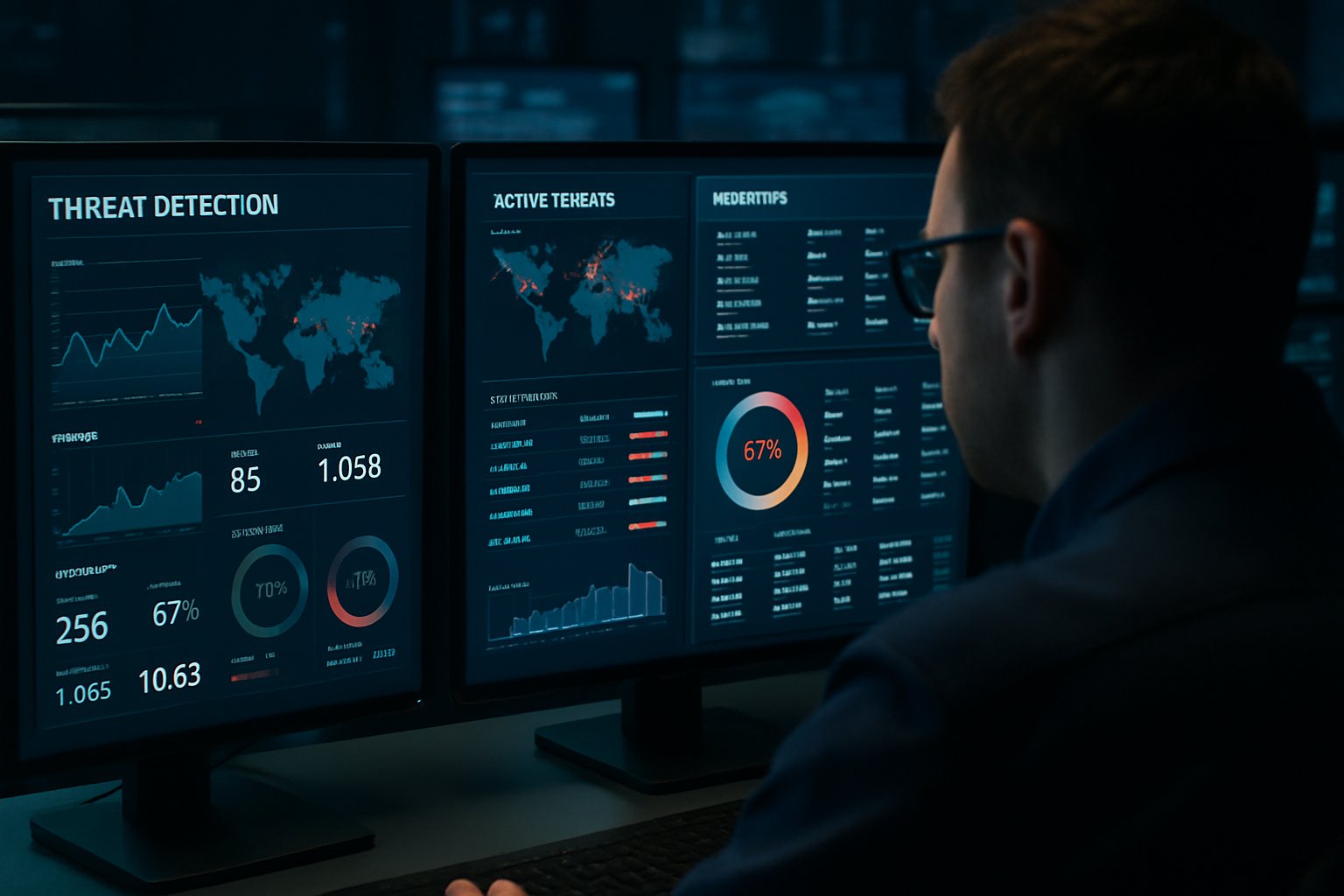
Boardrooms now obsess over defending new generative workloads. Consequently, Zero-Trust AI Security Layers have become the preferred blueprint for resilient enterprises. NIST, CISA, and leading vendors all publish guidance extending zero trust across models, data, and agents. Moreover, market analysts forecast double-digit growth for both zero-trust and AI-security segments through 2035. Pressure is rising because adversaries pivot toward model theft, data poisoning, and prompt injection.
However, many CISOs still struggle to map classic pillars onto machine learning lifecycles. This article unpacks the layered architecture, market momentum, and practical playbooks shaping that transition. Additionally, it examines challenges, vendor strategies, and actionable next steps for technical leaders. Readers will see where threat detection automation and identity AI fit within a comprehensive defense. Finally, resources and certifications provide pathways for sharpening skills in this rapidly evolving domain.
Market Forces Accelerate Adoption
Investment in zero-trust and AI security categories is climbing at breakneck speed. StatsMarketResearch projects the zero-trust market could approach 20 billion USD by 2032. Meanwhile, Precedence Research expects AI trust, risk, and security spending to top 21 billion USD by 2035. Such forecasts signal board-level urgency to budget for modern controls.
Regulators amplify that urgency. For example, CISA’s 2025 playbook explicitly links AI vulnerabilities to zero-trust mandates. Moreover, OpenAI warned that newer frontier models pose high cybersecurity risk without strong access controls. Consequently, procurement teams increasingly include Zero-Trust AI Security Layers in RFP criteria.
Market data and regulation together accelerate enterprise adoption momentum. Therefore, understanding the layered architecture becomes the next logical step.
Core Layered Architecture Overview
The architecture extends classic zero-trust pillars into machine learning contexts. NIST and CISA recommend a progressive, modular stack rather than monolithic gateways. Additionally, vendors group capabilities into discrete Zero-Trust AI Security Layers for clarity and governance. Each layer mitigates specific attack vectors across training, deployment, and inference.
- Identity: enforce MFA and short-lived machine certificates for every user, model, and service.
- Model governance: gate promotion, apply role-based access, and log every inference request.
- Data protection: encrypt at rest and in transit; use confidential computing for data-in-use.
- Runtime telemetry: monitor queries, control egress, and automate session termination upon anomalies.
- Supply chain: verify provenance, scan artifacts, and require reproducible builds for external models.
- Micro-segmentation: restrict lateral movement using service meshes, secure browsers, and next-gen firewalls.
- Assurance: run continuous AI red teams and schedule periodic re-attestation of model integrity.
Together, these Zero-Trust AI Security Layers replace implicit trust with measurable evidence. Moreover, they map cleanly to existing SOC workflows, easing operational adoption.
The layered stack offers practical segmentation of duties and tooling. However, executing the design introduces notable technical hurdles, covered next.
Identity Controls Expand Scope
Identity AI capabilities now apply behavioral analytics to both humans and machines. Okta and CyberArk integrate with Palo Alto’s Prisma AIRS to attest model sessions. Furthermore, short-lived mTLS certificates simplify automated rotation for agent workloads. Nevertheless, the explosion of ephemeral tokens stresses directory scalability.
Expanded identity scope underpins every other layer. Consequently, cost and complexity debates surface in the next section.
Implementation Hurdles And Costs
Even mature security teams underestimate the cultural change required for least privilege across data scientists. Moreover, tool sprawl remains significant because few platforms span every layer end-to-end. Integration work often consumes more budget than license fees themselves. Early adopters report multi-quarter projects when linking runtime telemetry to existing SIEM workflows.
Quantifying returns proves tricky. In contrast, board members demand hard metrics before funding large transformations. Forrester’s 2025 Wave recommends modeling savings from reduced incident response and data breach risks. Additionally, supply chain breaches avoided by Zero-Trust AI Security Layers can offset upfront spending.
Hurdles are real but not insurmountable with disciplined planning. Next, we explore vendor offerings accelerating deployment.
Emerging Vendor Ecosystem Growth
Major cloud providers extend native controls into their AI platforms. Microsoft’s Secure Future Initiative embeds Zero-Trust AI Security Layers across identities, workloads, and networks. Google Cloud’s Duet Gemini similarly inherits BeyondCorp network isolation and confidential computing. Moreover, Amazon adds GuardDuty protections for model endpoints and S3 training pipelines.
Security specialists complement cloud stacks. Palo Alto’s Prisma AIRS applies threat detection automation to browser agents and LLM gateways. Check Point integrates micro-segmentation and model posture scanning into Harmony suite. Additionally, Akamai leverages edge proxies for inference traffic policy enforcement.
Forrester ranks these vendors as leaders or strong performers in the 2025 Zero Trust Platforms Wave. Consequently, enterprises possess multiple viable partnerships when building layered defenses. Roadmaps from these suppliers highlight converged identity AI analytics and confidential computing safeguards. Zero-Trust AI Security Layers feature prominently in marketing messages, analyst notes, and reference architectures.
Vendor innovations shorten deployment timelines while expanding protective coverage. However, technical teams still need rigorous testing and automation, examined next.
Runtime Telemetry Imperatives Now
Strong telemetry enables rapid containment of prompt injection and data exfiltration. Therefore, platforms log every request, hash payloads, and throttle high-risk sequences. Threat detection automation applies machine learning to flag abnormal query patterns in near real time. Moreover, OpenAI recommends egress filters that block file uploads containing secrets.
Enterprises often push logs into their existing SIEM for correlation with network events. Subsequently, orchestration workflows trigger playbooks that revoke tokens or quarantine workloads.
Robust telemetry forms the detection nerve center. Next, the supply chain layer reinforces upstream integrity.
Supply Chain Vigilance Needed
Training data and external models introduce hidden backdoors when not vetted. NIST and OWASP guidance urge provenance tagging and artifact scanning before deployment pipelines. Additionally, enterprises implement attestations and reproducible builds to satisfy auditors. Zero-Trust AI Security Layers embed these checks alongside conventional dependency management.
Threat detection automation also sweeps model outputs for covert channels or policy violations. In contrast, manual reviews alone cannot scale against modern release cadences.
Supply chain vigilance prevents tainted artifacts from entering production. Consequently, continuous assurance closes the loop, as we conclude below.
Zero-Trust AI Security Layers now define the control plane for trustworthy machine learning operations. They bring identity AI analytics together with threat detection automation, provenance checks, and micro-segmentation. Furthermore, regulators and analyst forecasts confirm enduring budget momentum for these controls. Nevertheless, leaders must tackle integration costs, machine-identity explosion, and cultural change across developer teams. Starting small, mapping priorities to each layer, and automating evidence collection streamlines rollouts. Professionals can deepen skills through the AI Marketing Strategist™ certification. Therefore, now is the time to pilot additional Zero-Trust AI Security Layers before threats escalate further. Consequently, stakeholders gain measurable resilience and auditable assurance across the entire ML lifecycle.


