

AI CERTs
2 months ago
How AI Demand Forecast Engines Tame Retail Inventory Volatility
Retailers face a costly paradox: empty shelves sit beside excess stock gathering dust.
Consequently, global inventory distortion drains an estimated $1.7 trillion every year, IHL reports.
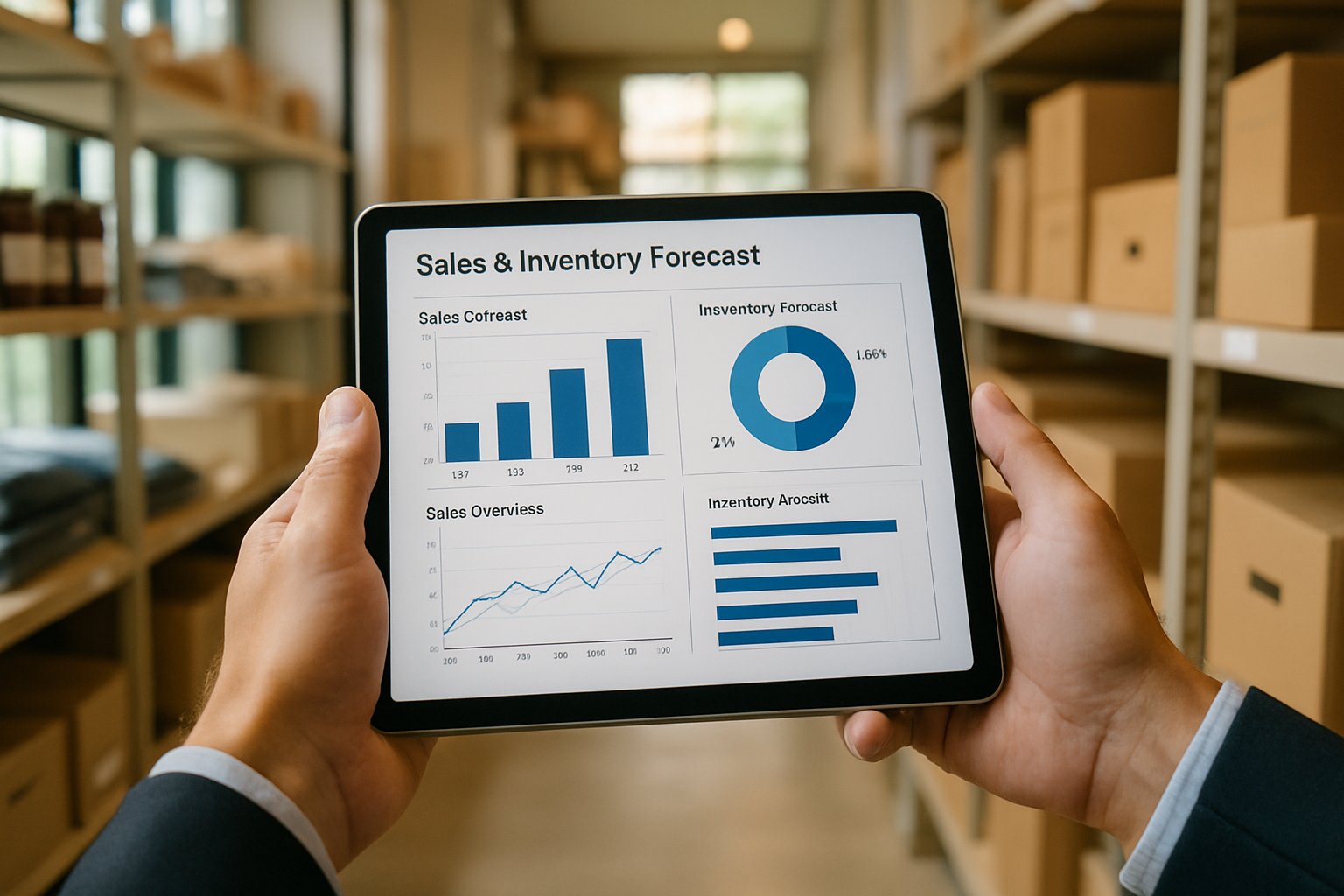
However, AI Demand Forecast Engines promise a calibrated solution, replacing blanket buffers with data driven precision.
Major chains like Walmart and Target already scale these systems beyond pilots, citing fewer stockouts and lower carrying costs.
This feature examines the technology, business cases, risks, and implementation tips behind smarter inventory control.
Throughout, we anchor analysis in verified data while flagging hype.
Moreover, readers will find actionable guidance linked to recognized certification resources.
Let us explore how predictive engines reduce volatility and strengthen profit margins.
Inventory Volatility Stakes Globally
Global retail loses mount rapidly when shelves lack desired products.
Meanwhile, overstocks generate markdowns, storage costs, and sustainability headaches.
IHL calculates combined out-of-stocks and overstocks at $1.7 trillion for 2023.
Therefore, executives seek levers that lower the amplitude of supply and demand mismatch.
Traditional forecasting tools often rely on coarse averages and static seasonal curves.
In contrast, volatile consumer behavior, promotions, and weather shocks demand dynamic, granular insight.
These limitations highlight the scale of the opportunity.
Consequently, the stage is set for algorithmic upgrades.
Accurate demand insight underpins profitability.
Next, we assess why adoption accelerates.
AI Forecasting Engine Boom
Adoption curves steepened during 2024 as pilots converted into enterprise deployments.
Furthermore, Walmart, Target, and Home Depot publicly credit machine learning with improved availability metrics.
Analysts at Grand View Research project AI in supply chains to grow tenfold by 2030.
AI Demand Forecast Engines integrate historical sales, promotions, web clicks, weather, and social chatter.
Moreover, many platforms output probabilistic quantiles, letting planners choose service levels instead of guessing.
As a result, forecast error reductions of 10–50 percent appear in published case studies.
Vendor diversity expands, from cloud hyperscalers like AWS to specialists such as RELEX and Blue Yonder.
Consequently, competitive pressure nudges late adopters toward quick experiments.
Market momentum now looks irreversible.
However, understanding core mechanics remains essential.
Demand Sensing Core Mechanics
Demand sensing refines baseline forecasts with near real-time signals.
Subsequently, models retrain frequently, capturing local events, sudden weather changes, and viral trends.
AI Demand Forecast Engines run at hourly cadences, updating reorder recommendations before shelves empty.
Furthermore, quantile outputs translate directly into dynamic safety stock updates.
Quick feedback loops dampen volatility.
Next, we examine measurable business gains.
Retail Planning Automation Gains
Retail planning automation capitalizes on these fresher forecasts to trigger orders, transfers, and markdowns automatically.
Therefore, planners move from routine data entry toward strategic exception management.
Getir, using Amazon Forecast, reported a four percent revenue lift and fifty percent waste reduction.
Similarly, a RELEX customer cut stockouts thirty percent across seasonal cosmetics.
AI Demand Forecast Engines underpinned each improvement by narrowing uncertainty.
- Forecast error reduced 10–50% across sampled categories
- Stockouts lowered up to 30%, driving sales uplift
- Overstocks trimmed, freeing working capital and space
- Response times shortened from days to hours
Collectively, these wins showcase the compounding value of retail planning automation plus advanced analytics.
KPI evidence builds a persuasive narrative.
However, implementation requires disciplined processes.
Stock Optimization Case Studies
Stock optimization demands precise balancing between service levels and carrying costs.
McKinsey notes organizations cutting supply chain costs two to three percent through improved forecast accuracy.
AI Demand Forecast Engines feed optimization modules that suggest location-specific safety stock and replenishment frequencies.
Consequently, Walmart speaks of 'self-healing inventory' that reroutes product based on predictive signals.
Additionally, Target’s Inventory Ledger automates hundreds of micro decisions daily, improving shelf availability.
Case studies prove technical feasibility.
Yet, success hinges on sound execution.
Implementation Best Practices Checklist
Teams should begin with high impact categories and clear baseline metrics.
Subsequently, unify data sources across sales, inventory, supplier performance, and promotions.
Retail planning automation platforms rely heavily on clean, timely feeds.
Experts recommend outputting quantile forecasts to integrate directly with replenishment policies.
Moreover, planners need dashboards explaining model drivers, building trust and governance.
- Audit data quality and resolve phantom inventory issues
- Select pilot SKUs and define error, stockout, and margin targets
- Train AI Demand Forecast Engines alongside legacy baselines for comparison
- Automate low-risk reorder decisions while keeping human oversight
- Measure ROI quarterly and refine models and processes
These steps surface quick wins while building organizational confidence.
Structured rollouts avoid costly setbacks.
Next, we address potential pitfalls.
Risks And Key Mitigations
Data fragmentation remains the most cited obstacle.
Nevertheless, cloud data lakes and modern integration tools simplify ingestion.
Vendor bias also clouds published improvement figures.
Therefore, organizations should demand transparent methodologies and retain independent validation.
Explainability challenges can erode planner trust when black boxes output counterintuitive volumes.
Consequently, leading platforms surface feature importance and scenario simulations to clarify recommendations.
Cold start items and sparse SKUs still challenge even advanced AI Demand Forecast Engines.
In contrast, hierarchical models and transfer learning partially offset limited history.
Risk awareness supports sustainable adoption.
Finally, we consider future outlook.
Market Outlook And ROI
Analysts size the AI supply chain market at roughly five billion dollars in 2023.
Grand View expects growth to exceed fifty billion by 2030, a staggering 39 percent CAGR.
McKinsey scenarios suggest 2–3 percent total cost savings and meaningful revenue lift from tighter forecasting.
Furthermore, IHL observed better sales performance among AI enabled retailers versus peers.
AI Demand Forecast Engines will likely become table stakes within five years, much like barcode scanners earlier.
Early movers already enjoy compounding competitive advantages through retail planning automation and continuous stock optimization.
ROI projections reinforce strategic urgency.
Let us conclude with actionable next steps.
Conclusion And Next Steps
Retailers no longer need to accept volatile inventory as inevitable.
AI Demand Forecast Engines now provide predictive clarity, real-time agility, and proven financial upside.
Moreover, retail planning automation layers translate those forecasts into fast, consistent execution.
Consequently, stock optimization aligns with shopper expectations while liberating trapped working capital.
Nevertheless, success depends on data hygiene, transparent governance, and incremental rollouts guided by clear KPIs.
Leaders embracing AI Demand Forecast Engines today will shape tomorrow’s resilient, responsive supply networks.
Professionals can deepen expertise via the AI for Everyone™ certification.
Start small, measure objectively, and scale with confidence.


