

AI CERTs
2 months ago
Software Code Orchestration Agents Transform DevOps and CI/CD
Disruption is sweeping modern DevOps pipelines. At the center sit Software Code Orchestration Agents that now leave the proof-of-concept stage. These multi-step, LLM-driven workers promise faster releases and tighter feedback loops. However, they simultaneously introduce fresh risks around cost, governance, and nondeterminism. Industry heavyweights such as GitHub and Dynatrace already ship production agent ecosystems. Consequently, engineering leaders must rethink metrics, policies, and team skills. Analysts even predict that 40% of enterprise apps will embed task-specific agents by 2026. Meanwhile, developers adopt AI tooling at record pace, aiming to lift engineering productivity despite lingering trust gaps. This article unpacks the technology, benefits, failure modes, and operational advice shaping this pivot. Furthermore, it grounds every insight in recent data and expert quotes for a pragmatic outlook.
Agents Rapidly Reshape DevOps
GitHub’s December 2025 release expanded Copilot into a full agent marketplace. Moreover, teams can now register repository-scoped definitions that trigger CI steps, security scans, and rollbacks. Such capabilities push Software Code Orchestration Agents beyond suggestion engines into orchestration engines. Consequently, pipeline events evolve into programmable conversations between agents and the underlying toolchain. Meanwhile, CI/CD automation becomes table stakes for competitive release cadence.
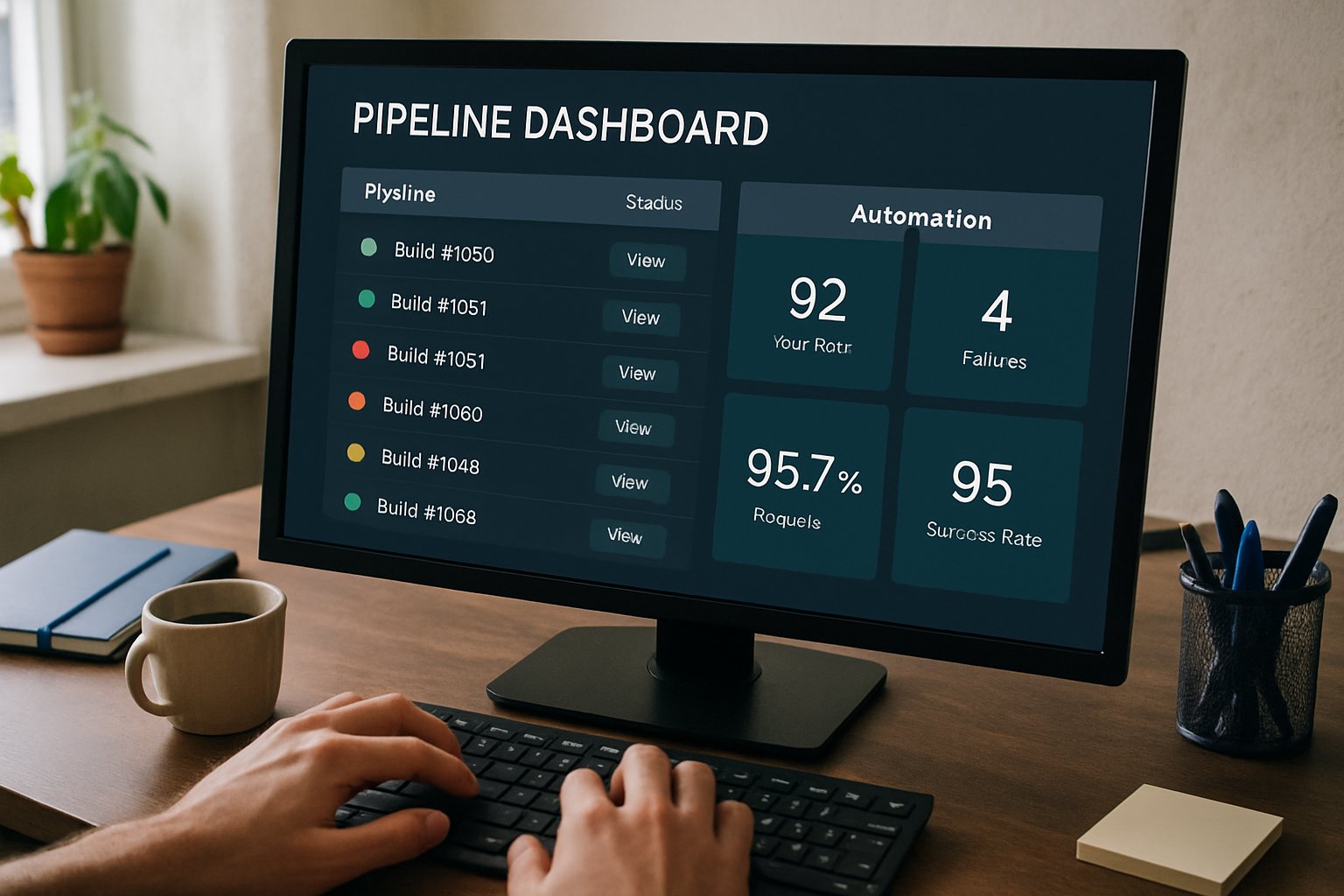
Open protocols amplify the shift. The Model Context Protocol standardizes secure calls to observability, ticketing, and deployment APIs. In contrast, earlier proprietary connectors slowed adoption with brittle one-off scripts. Therefore, vendors and open-source frameworks increasingly position Software Code Orchestration Agents as first-class integration clients. This momentum forces DevOps charts to include agent awareness alongside traditional build, test, and deploy stages.
Agents now sit inside critical loops rather than on the periphery. This repositioning accelerates delivery but raises architectural stakes. Let us examine their technical foundations.
Core Agent Technology Explained
An orchestration agent starts with a high-level goal such as "restore service." Subsequently, it plans incremental steps, stores context, and invokes tools through MCP. Each loop generates tokens that feed the next reasoning round. Consequently, depth of context heavily influences accuracy and cost.
Single-shot LLM calls differ greatly. They answer once, then forget. In contrast, agentic loops remember, revise, and retry. Moreover, skills libraries proposed by Anthropic let one agent load domain modules at runtime.
Token economics demand equal attention. Multi-step flows can exhaust budgets within minutes if left unmetered. Therefore, new DevOps dashboards track tokens per second, first-token latency, and context utilization. These metrics join classical throughput and error indicators inside pipelines.
Technology choices determine scalability, security, and spend. Moreover, they influence developer trust and adoption curves. Now, we quantify the payoffs and tradeoffs.
Benefits And Key Metrics
Surveys paint a bullish picture. Stack Overflow reports 84% of developers already use or intend to use AI tools. Furthermore, over half rely on them daily, chasing greater engineering productivity. Gartner echoes the enthusiasm, forecasting agents in 40% of enterprise applications within two years. Therefore, CI/CD automation powered by agents shortens feedback loops.
Teams cite tangible wins:
- PR creation time drops from hours to minutes with automated fixes.
- Incident noise falls by 99.9% after agent-driven event correlation, claims Dynatrace.
- Mean time to resolve decreases by double digits when closed-loop remediation runs.
- Standardized agents enforce coding conventions, boosting cross-team consistency.
Moreover, many organizations pursue CI/CD automation to reclaim nights and weekends for engineers. Early adopters link the shift to measurable engineering productivity gains delivered by Software Code Orchestration Agents. Nevertheless, benefits arrive only when metrics confirm sustainable performance.
Data illustrates clear upside across speed, quality, and morale. However, risks can negate those gains overnight. Next, we spotlight the common failure modes.
Emerging Agent Failure Modes
Hallucinations remain headline risk. Software Code Orchestration Agents sometimes propose plausible yet dangerous code changes. Consequently, mandatory reviews and automated tests stay essential.
Cost surprises lurk deeper. An AI agent can pass load tests while silently burning credits, warns DevOps.com. Therefore, budget caps and down-model staging protect profit margins.
Security stakes also intensify. Prompt injection or misconfigured MCP endpoints can leak keys or execute hostile commands. Nevertheless, authenticated gateways and tool whitelists reduce surface area.
Failure modes revolve around cost, correctness, and control. Mitigation demands disciplined operational practices. We now turn to those practices.
Practical Operational Best Practices
DevOps leaders add telemetry tailored to Software Code Orchestration Agents at every pipeline stage. Tokens per second now share space with classic latency charts. Furthermore, first-token latency helps predict conversational responsiveness.
Recommended safeguards include:
- Run integration tests on cheaper models before production promotion.
- Store agent traces for audit and replay troubleshooting.
- Define clear ownership and on-call rotations for every agent.
- Harden MCP endpoints with auth, rate limits, and tool filters.
Moreover, repository-level agent definitions encode policies as code, improving CI/CD automation reliability. Professionals can deepen governance expertise via the AI Executive™ certification.
Consequently, teams embed continuous learning alongside technical safeguards.
Operational discipline converts agent potential into sustained value. Market forces now shape the road ahead. Next, we review adoption trends.
Broader Market Outlook Ahead
Outcome as an Agentic Solution is redefining vendor economics. Instead of selling dashboards, providers will sell uptime orchestrated by Software Code Orchestration Agents. Consequently, accountability shifts toward service level outcomes enforced by embedded agents.
Meanwhile, the skills-versus-many-agents debate continues. Anthropic favors reusable skills to curb duplication and increase domain depth. Nevertheless, specialized agents thrive inside niche workflows where context is narrowly scoped.
CI/CD automation adoption remains a leading driver. Organizations seeking engineering productivity gains rally behind metrics that demonstrate faster lead time. Therefore, capital flows follow measurable returns.
Market momentum looks strong yet unsettled. Governance and cost control will decide long-term winners among Software Code Orchestration Agents.
Conclusion And Next Steps
Software Code Orchestration Agents have moved from hype to operational reality. Teams embracing them already accelerate releases, cut noise, and raise engineering productivity. However, success depends on fresh metrics, tight governance, and secure tool boundaries. Consequently, leaders should pilot agents within controlled budgets, then scale with confidence. Continuous education also matters. You can formalize strategic knowledge through the AI Executive™ certification. Moreover, monitor emerging standards like MCP to future-proof integrations. Nevertheless, remember that human oversight remains irreplaceable. Act now to evaluate Software Code Orchestration Agents and secure your competitive edge. Start with one workflow, measure rigorously, then share your wins.


