

AI CERTs
2 months ago
Intelligent Factory Scheduling Systems Cut Downtime, Raise Profit
Unplanned downtime still drains industrial profit margins. However, a new class of software is fighting back. Across sectors, Intelligent Factory Scheduling Systems align plans, machines, and maintenance in real time. Consequently, many operators report dramatic cuts in standstill hours and increased throughput. The stakes are high because global downtime now costs manufacturers about $1.5 trillion annually. Moreover, single automotive plants can lose up to $2 million for every lost production hour. These eye-watering figures explain why executive teams prioritise precise scheduling, predictive maintenance, and data integration. Meanwhile, vendors and consultancies race to embed AI, digital twins, and prescriptive analytics within plant workflows. This article unpacks the economics, technology stack, success stories, and outstanding risks driving the scheduling revolution. Professionals will gain a practical roadmap for capturing value while future-proofing smart factories against further disruption.
Downtime’s Expensive Manufacturing Reality
Senseye research pegs unplanned downtime for large manufacturers at roughly $1.4 trillion each year. Automotive lines can lose almost $2 million for every hour of lost output. Therefore, even single-digit percentage improvements translate into sizeable cash savings and competitive advantage. Moreover, downtime drives ripple effects across supply chains, delaying deliveries and eroding customer trust.
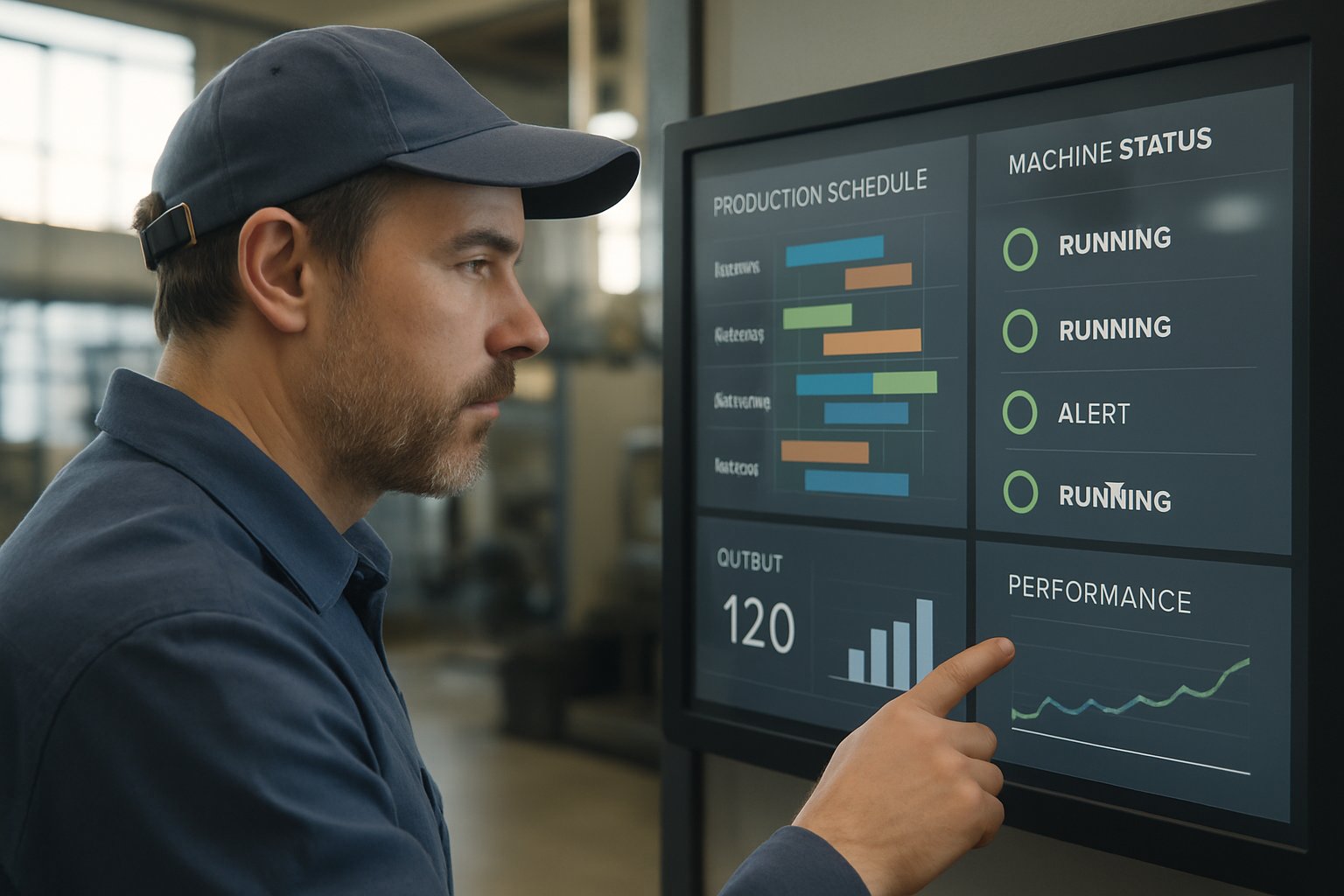
Smart factories need more than sensors; they need coordinated decisions that prevent cascading stoppages. Here, Intelligent Factory Scheduling Systems convert raw data into executable schedules that keep lines moving. Consequently, OEE rises while maintenance budgets shrink.
Downtime clearly carries staggering direct and indirect costs. However, integrated scheduling offers a proven financial lever, as the next section explains.
Core Technologies Behind Savings
Modern scheduling blends APS, MES, predictive maintenance, and prescriptive analytics into a closed loop. Additionally, digital twins simulate proposed plans before execution, limiting risk. Each component plays a distinct role, yet synergy unlocks maximum benefit.
Advanced Planning and Scheduling evaluates machine capacity, changeover rules, and demand priorities within seconds. MES feeds real-time shop-floor status back to the scheduler, enabling rapid re-optimization. Predictive maintenance models forecast remaining useful life, which guides maintenance slots for balanced production optimization.
Moreover, reinforcement-learning agents learn to propose sequences that minimize changeovers and micro-stops. Consequently, the system autonomously schedules minor repairs during low-impact windows. Intelligent Factory Scheduling Systems orchestrate these technologies, delivering actionable recommendations to planners or directly to machines.
Together, these modules provide the technical foundation for measurable downtime reductions. The subsequent section highlights concrete outcomes from early adopters.
Deployment Success Stories Shared
Real projects demonstrate the promise beyond laboratory benchmarks. Siemens Mobility integrated Opcenter APS with their MES and digital twin across assembly lines. Subsequently, non-value-added work dropped 60%, while lead time fell about 10%.
Deloitte’s IntelligentOps engagements claim 20–40% reductions in mean time to repair and 15% quicker changeovers. Although figures stem from client anecdotes, they align with many independent case studies reviewed by ARC Advisory.
Another series of pilots combined predictive maintenance alerts with automatic rescheduling inside Intelligent Factory Scheduling Systems. These experiments routinely delivered downtime cuts between 20% and 50% for constrained assets.
- 60% less non-value-added work at Siemens Mobility.
- 10% lead-time reduction within the same facility.
- 20–40% lower MTTR in Deloitte client programs.
- 20–50% unplanned downtime cuts in academic pilots.
Evidence spans vendors, consultants, and researchers, showing consistent though variable improvements. Nevertheless, benefits depend on data quality and change management, topics explored next. Smart factories that integrate these systems often reach higher throughput without capital expansion.
Implementation Challenges And Risks
Great potential invites significant hurdles. Data silos, aging sensors, and incompatible software frequently derail initial pilots. Moreover, inaccurate sensor calibration can mislead predictive models, triggering wrong maintenance decisions.
Cybersecurity also rises in importance because connected planners influence physical processes. Therefore, governance must include human-in-the-loop overrides and strict access controls. Organizational change remains tougher than technology, as planners must trust algorithmic recommendations.
Several executives reported cultural resistance when Intelligent Factory Scheduling Systems started adjusting established shift plans automatically. In contrast, plants that invested in training unlocked faster adoption.
Technical and human barriers can stall expected ROI. However, a structured adoption roadmap can mitigate most problems, as the following section outlines.
Stepwise Adoption Roadmap Explained
Executives should approach deployment iteratively rather than enterprise-wide on day one. Firstly, instrument a bottleneck asset with reliable vibration, temperature, and current sensors. Secondly, cleanse historical failure data and integrate MES, ERP, and spare-parts systems into a common lake.
- Pilot predictive maintenance on the chosen asset.
- Feed risk scores into the scheduling engine.
- Simulate new production optimization sequences inside a digital twin.
- Implement human-override rules before automatic execution.
- Scale to adjacent lines after validated savings.
Additionally, professionals can boost skills through the AI Prompt Engineer™ certification, securing in-house algorithm expertise.
Smart factories that followed this phased plan reported smoother scale-up and faster stakeholder buy-in. Consequently, full-plant rollouts reached payback within 12-18 months, according to several integrators. A disciplined rollout reduces both technical risk and organizational friction. The next section explores how emerging innovations may further accelerate gains. Intelligent Factory Scheduling Systems sit at the heart of this incremental program, coordinating every improvement.
Future Outlook For Factories
Technology momentum shows no sign of slowing. Reinforcement-learning schedulers already learn from millions of historical states, proposing ever tighter sequences. Meanwhile, large language models now generate plain-language explanations for schedule changes, improving human trust.
Moreover, cloud-edge architectures push near-instant optimisation to machines, crucial for real-time production optimization needs. Vendors also bundle sustainability metrics, letting planners weigh energy intensity alongside throughput. Industry analysts predict double-digit growth for MES, APS, and digital twin markets through 2030.
Consequently, Intelligent Factory Scheduling Systems will likely become standard equipment in competitive plants. Nevertheless, leaders must continue hardening cybersecurity and governance as automation deepens.
Upcoming advances promise even higher uptime and flexibility. The final section distills key insights and recommended next actions.
Conclusion And Action Steps
Downtime remains a colossal drain, but targeted technology can reverse the trend. Intelligent Factory Scheduling Systems transform raw data into proactive, profitable decisions. They integrate predictive maintenance, APS, MES, and digital twins to boost production optimization without new capital. Real cases already show 20–60% less downtime and faster lead times in smart factories worldwide. However, success depends on sensor accuracy, clean integrations, and thoughtful change management. Therefore, leaders should begin with narrow pilots, measure rigorously, and scale only after proven ROI. Professionals wanting deeper expertise on Intelligent Factory Scheduling Systems should pursue the AI Prompt Engineer™ certification. Ultimately, Intelligent Factory Scheduling Systems will anchor the next wave of resilient, sustainable industry. Now is the time to evaluate, pilot, and capture the uptime dividend.


