

AI CERTs
3 months ago
AI procurement oversight systems reshape transparency compliance
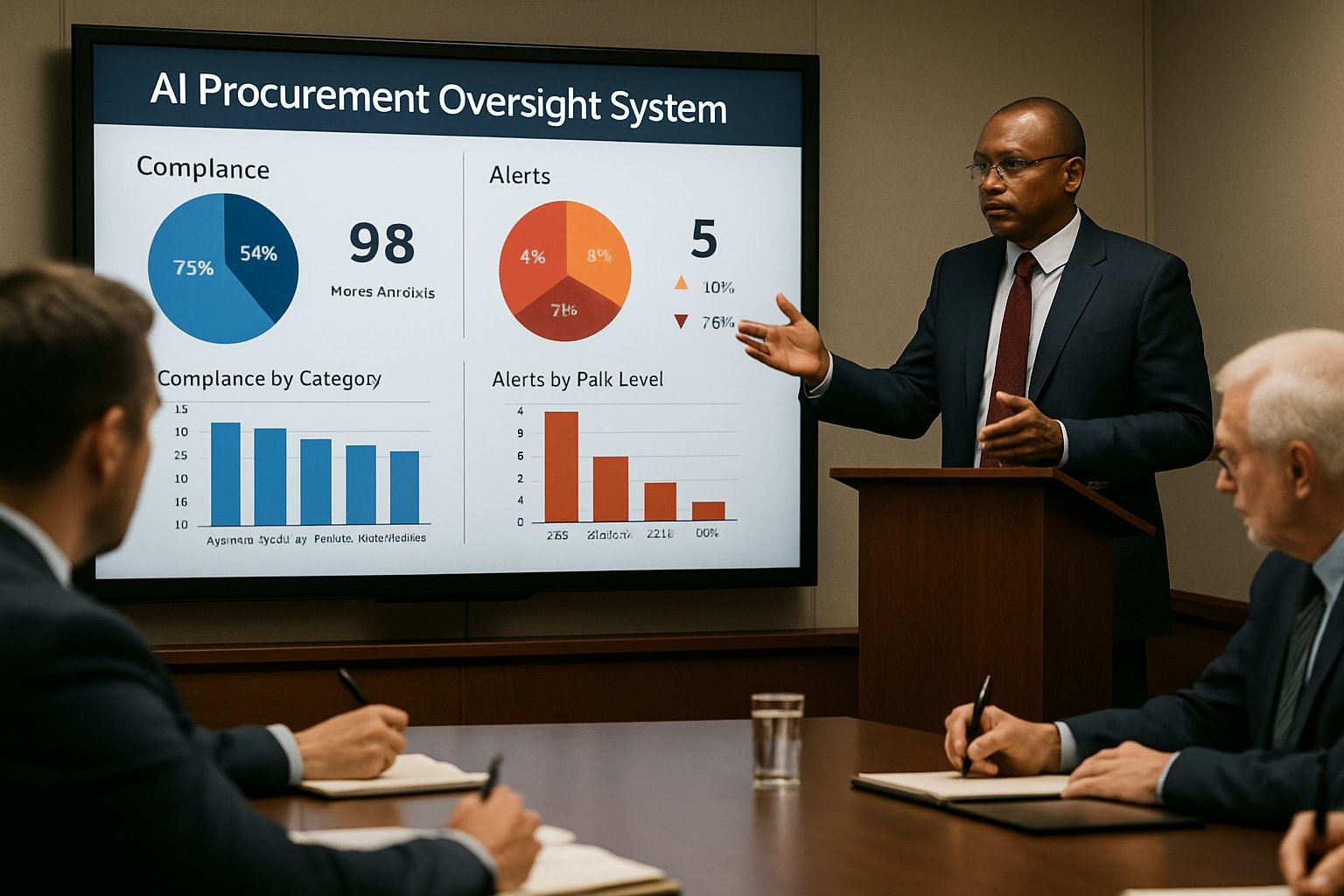
Public buyers are rewriting contracts to demand deep visibility into every algorithm they acquire. Consequently, vendors must supply unprecedented documentation or risk exclusion from lucrative tenders. Against this backdrop, AI procurement oversight systems have emerged as the central enforcement mechanism for new transparency mandates.
Moreover, regulators across the EU and United States now embed model-level disclosures directly into statutory procurement clauses. These changes shift transparency from voluntary guidance into mandatory, auditable deliverables. This report examines how AI procurement oversight systems orchestrate documentation and automate checks. Furthermore, it explains how the same platforms underpin compliance automation and robust risk governance at scale.
Regulators Tighten Transparency Requirements
The European Artificial Intelligence Office finalized the General-Purpose AI Code of Practice in July 2025. Meanwhile, the EU AI Act phases in templates for model cards and AI Bills of Materials across sectors. Consequently, suppliers face hard deadlines to deliver machine-readable evidence before selling within the single market. Thus, AI procurement oversight systems will verify that each provider respects those templates. Sector-specific annexes cover health, finance, and critical infrastructure nuances.
Across the Atlantic, OMB memoranda M-25-21 and M-25-22 impose similar disclosures on U.S. federal procurements. Therefore, agencies must inventory AI use cases and require suppliers to submit attestations, red-team reports, and AIBoMs. States, health systems, and finance regulators replicate these clauses, extending coverage to thousands of downstream contracts. GAO has begun tracking agency readiness and will publish scorecards every quarter.
In short, transparency clauses now dominate public tenders on both continents. However, producing and validating artifacts at that volume demands new technology. Oversight tools are rising to meet this pressure.
Oversight Tools Enter Mainstream
HiddenLayer, Manifest, and Cycode now market platforms that discover models and auto-generate AIBoMs within minutes. Moreover, open-source projects like OWASP’s generator publish free schemas that integrate with GitHub workflows. These offerings embed policy-as-code gates, continuous monitoring, and alerting dashboards. Consequently, AI procurement oversight systems experience rapid adoption curves.
Vendors claim manual vetting lasts six weeks, yet automated platforms reduce review time to single digits of minutes. Consequently, procurement teams reallocate scarce experts from paperwork toward higher-value assurance activities. Importantly, AI procurement oversight systems integrate directly with ServiceNow, Jira, or SAP to close approval loops. Independent pilots at two European ministries confirmed similar savings during fiscal 2025.
Automation thus moves transparency from static PDFs to living data feeds. Nevertheless, workflows within government buyers still require adjustment. Those process shifts appear next.
Procurement Workflows Rapidly Change
Legacy solicitations rarely referenced model cards or AIBoMs. Today, templates insert explicit sections for artifact submission, validation checkpoints, and escalation paths. Additionally, evaluation boards incorporate data scientists who review technical metrics before price negotiations commence. Procurement officers often receive training on interpreting bias metrics and hallucination rates.
Subsequently, contract performance clauses require runtime telemetry and drift alerts. Therefore, suppliers must maintain secure APIs that stream metrics back to dashboards operated by internal auditors. In contrast, older contracts relied on annual reports, leaving agencies blind between audits. Continuous assurance aligns with NIST AI RMF manage functions.
Modern workflows prioritize continuous evidence over periodic attestations. Consequently, AI procurement oversight systems become default gatekeepers for every deployment push. Understanding benefits and tradeoffs is therefore essential.
Key Benefits And Tradeoffs
The foremost advantage is speed. Procurement cycles shrink, allowing agencies to respond faster to mission needs. Moreover, machine-readable artifacts enable compliance automation across cybersecurity, privacy, and equity teams.
Second, detailed provenance strengthens risk governance by clarifying accountability when incidents occur. Clear lineage accelerates root-cause analysis and informs remediation plans. However, extensive disclosure raises intellectual property and security questions for model developers. Smaller suppliers warn that documentation costs may hit margins.
The following data points capture the evolving cost-benefit picture:
- GAO lists 1,200 federal AI use cases awaiting procurement review.
- Manifest reports manual vetting averages six to eight weeks per model.
- HiddenLayer and peers claim automated checks finish under ten minutes.
- Market analysts project 25–40% annual growth for AI governance tooling.
- EU templates demand red-team evidence for every GPAI model by 2026.
These numbers highlight strong business incentives for transparency tooling. Nevertheless, implementation demands disciplined practices. Best-practice guidelines appear below.
Practical Implementation Best Practices
Start by conducting an enterprise-wide model inventory using discovery scanners. Then, require suppliers to deliver AIBoMs that match an agreed schema. Additionally, embed policy-as-code checks within CI pipelines to block undocumented models automatically. Pilots should focus on one critical workflow before scaling organization wide.
Next, assign a cross-functional review board comprising security, legal, and data ethics representatives. Subsequently, establish service-level objectives for telemetry freshness and incident reporting. Ensure suppliers protect sensitive information using encryption, NDAs, and controlled lab access.
Professionals can deepen expertise via the AI Government Specialist™ certification. Therefore, teams gain shared vocabulary for evaluating documentation and enforcing controls. Adhering to these steps operationalizes compliance automation and reinforces risk governance consistently. Market dynamics show why this investment matters. AI procurement oversight systems enforce these gates without manual intervention.
Future Governance Market Outlook
Market.us values the AI governance segment in the low hundreds of millions today. Moreover, analysts project multi-billion revenues early next decade, driven by procurement mandates. Consequently, venture funding flows toward startups specializing in AI procurement oversight systems integration. Public cloud vendors also bundle transparency modules with existing security suites.
Standardization remains the wildcard. No single AIBoM schema dominates, although OWASP efforts are gaining traction among security teams. In contrast, EU templates could become de-facto baselines if vendors seek harmonization. Investors regard AI procurement oversight systems as foundational infrastructure. Many procurement leaders expect convergence within three years.
Overall, demand appears locked in regardless of standards politics. Therefore, organizations should plan multiyear budgets for continuous tooling and staff development. The article closes with key takeaways.
Final Thoughts And Action
Transparency no longer sits on policy wish lists; it lives inside purchase orders and runtime dashboards. AI procurement oversight systems now translate regulatory text into executable gates across enterprises. Consequently, compliance automation becomes routine, and risk governance gains measurable effectiveness. Nevertheless, unresolved standards, IP concerns, and capacity gaps demand vigilant management. Organizations should adopt inventory tools today, pilot machine-readable artifacts, and refine contract language before 2025 deadlines bite. Furthermore, professionals can upskill through certifications that embed best practices into daily workflows. Explore the linked program and position your team for transparent, accountable AI adoption. Timely action will secure budget support and stakeholder confidence.


