

AI CERTs
2 months ago
Robotic process intelligence controllers reshape assembly lines
Factories face new volatility from custom orders and labor shortages. Consequently, executives seek technology that blends human skill with robotic speed. Enter robotic process intelligence controllers, an orchestration layer that schedules both people and machines in real time. Moreover, the technology merges process-mining with low-latency robot control, creating adaptive assembly lines. Recent launches by UiPath, Siemens, and Inbolt show the concept moving from lab to plant floor. Meanwhile, global installations of industrial robots already exceed half a million units per year. Collaborative robots, or cobots, also grow at double-digit rates according to Grand View Research. Therefore, manufacturers must rethink integration strategies so that automation scales safely and flexibly. This article explains how the new controllers work and why they matter. It also outlines deployment within broader industrial automation programs. Each section distills market data, architecture guidance, and risk considerations for technical leaders.
Market Drivers Accelerate Adoption
Global production demand fluctuates faster than fixed tooling can adapt. Consequently, flexible automation becomes essential.
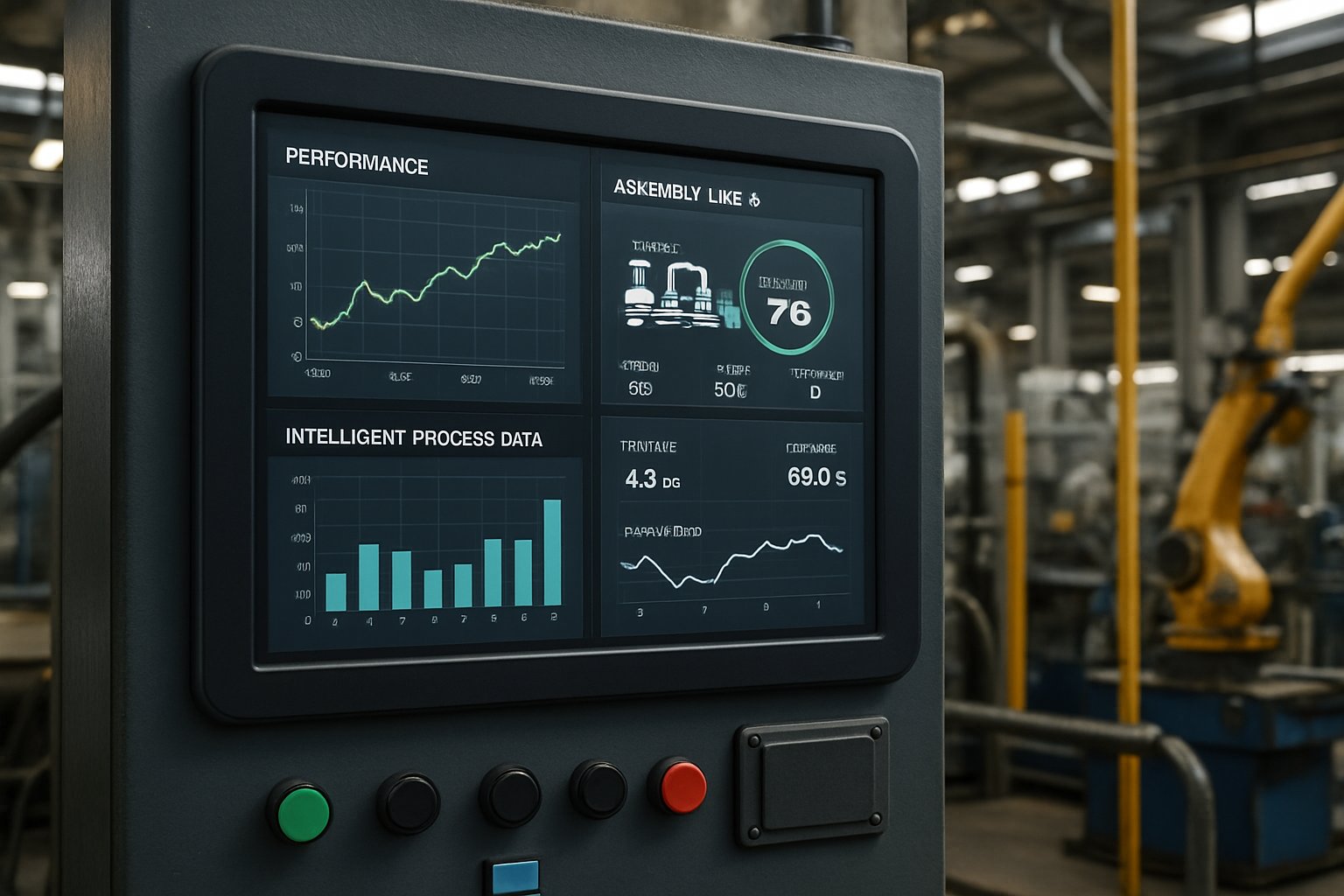
According to IFR, annual industrial robot installations surpassed 500,000 units in 2025. Moreover, cobot revenue is projected near USD 3 billion this year. Meanwhile, Gartner reports RPA market revenue of roughly USD 3.8 billion.
However, disconnected software bots and shop-floor robots previously optimized separate workflows. Therefore, downtime and idle labor persisted.
Robotic process intelligence controllers align enterprise KPIs with real-time shop-floor execution, closing that gap.
These numbers underscore urgent demand for orchestration. Nevertheless, budgets remain tight, so investments must yield rapid ROI.
These trends confirm strong momentum. In contrast, integration complexity still threatens adoption; the next section explains the controllers themselves.
Robotic Process Intelligence Controllers
The term describes a platform that treats humans, cobots, fixed robots, and software bots as schedulable resources.
Furthermore, the platform embeds process-mining analytics to measure cycle times and propose optimizations.
In modern industrial automation ecosystems, these controllers bridge IT and OT layers.
Low-latency connectors talk to PLCs and robot streaming APIs, ensuring millisecond reactions beside workers.
Consequently, robotic process intelligence controllers reassign tasks when a station bottlenecks, avoiding line stoppage.
Vendors such as UiPath Maestro and Siemens Industrial Copilot illustrate the architecture in commercial offerings.
A research counterpart, FELICE, couples an ADAPT workflow language with a digital twin for optimization.
Subsequently, KPIs update dashboards, enabling continuous improvement loops familiar to lean practitioners.
These design elements clarify the technology groundwork. Next, we explore human-robot collaboration benefits.
Human Robot Synergy Realized
Mixed assembly lines increasingly pair technicians with cobots for screwdriving, sanding, and inspection.
Moreover, Inbolt and FANUC demonstrated streaming-motion screwdriving on a moving GM line during Automate 2025.
Here, vision algorithms localize parts every few milliseconds, while robotic process intelligence controllers coordinate motion with worker pace.
Consequently, fixtures shrink and ergonomics improve because heavy tasks shift to robots.
In contrast, traditional hard automation required costly retooling for every product change.
A recent study showed 20 % throughput gains when orchestration scheduled people and machines dynamically.
Therefore, integrating human factors into scheduling becomes a competitive advantage.
Collaboration gains are clear. However, robust architecture remains vital, as the next section details.
Architecture And Key Components
An orchestrator divides responsibilities across cloud, edge, and device layers.
Additionally, safety functions run on certified PLCs to meet ISO 10218 and ISO/TS 15066.
The following components appear in most deployments:
- Scheduler that assigns humans, cobots, and equipment using live telemetry
- Process-intelligence engine that mines execution traces and recommends changes
- Low-latency control bridge for robot streaming motion and AMR routing
- Digital twin simulator for “what-if” scenario validation
- Governance layer that logs agent actions for audit and cybersecurity
Moreover, robotic process intelligence controllers integrate these blocks through standard protocols like OPC UA and MQTT.
Professionals can enhance their expertise with the AI Ethics for Business™ certification.
These components establish the technical backbone. Subsequently, we assess prominent deployment hurdles.
Challenges And Practical Mitigations
Safety remains the foremost concern when humans share space with robots.
Therefore, risk assessments must verify speed and force limits before production.
Integration complexity also frustrates teams because legacy PLC code varies by vendor.
Nevertheless, robotic process intelligence controllers abstract many device differences through unified APIs.
Cybersecurity introduces additional risk; autonomous agents can create new attack surfaces.
Consequently, zero-trust networking and strict role-based access help secure orchestration endpoints.
Skill gaps persist as OT engineers learn cloud and AI concepts.
However, vendor training and internal cross-functional squads accelerate competence.
These hurdles are significant. Meanwhile, a phased roadmap can reduce risk, as the next section explains.
Implementation Roadmap Guidance Steps
Deployments succeed when companies follow a structured sequence.
- Define business KPIs and map processes with mining tools.
- Select pilot cells where cobots already operate under clear safety footprints.
- Install edge hardware and connect robot streaming APIs.
- Introduce robotic process intelligence controllers to schedule tasks and collect metrics.
- Iterate using digital twins, then scale across additional lines.
Moreover, cross-functional governance boards should review each expansion stage.
In contrast, “big bang” rollouts often stall due to unforeseen integration issues.
Therefore, incremental scaling protects throughput while revealing latent bottlenecks early.
Roadmap discipline drives predictable outcomes. Subsequently, strategic foresight guides long-term value.
Future Outlook And Recommendations
Analysts expect cobots to exceed USD 6 billion by 2030, buoyed by orchestrated collaboration trends.
Meanwhile, industrial automation vendors embed AI agents natively, shrinking custom code requirements.
Consequently, robotic process intelligence controllers will become baseline infrastructure, like MES before them.
Moreover, cloud-edge hybrids will trim latency below 50 milliseconds, enabling faster moving-line operations.
Nevertheless, governing autonomous decisions will require transparent logs and ethical oversight.
Therefore, early adopters should codify guardrails and maintain multidisciplinary review boards.
These insights suggest rapid maturation. The conclusion distills actionable next steps.
Robotic process intelligence controllers are uniting data, humans, and machines into agile production ecosystems. Furthermore, cobots and wider industrial automation assets now synchronize through real-time orchestration rather than static programming. Consequently, manufacturers gain higher throughput, safer workspaces, and faster changeovers. Nevertheless, success demands disciplined architecture, rigorous safety validation, and skilled teams. Leaders should start small, integrate process-mining, and expand using proven roadmaps. Additionally, governance and ethical oversight must evolve alongside autonomous agents. Professionals can deepen skills via the AI Ethics for Business™ certification. Act now to convert orchestration potential into measurable competitive advantage.


