

AI CERTs
3 months ago
Samsung’s ambient AI companions redefine context-aware living
Inside Samsung’s latest launches, a quiet revolution is unfolding. However, the company’s vision extends beyond flashy gadgets. Samsung now frames devices as ambient AI companions that sense context and act proactively across every room. Consequently, executives argue that cross-device intelligence will unlock new revenue and loyalty. Meanwhile, critics question reliability, privacy, and repairability. This article dissects the strategy, market forces, and technical foundations shaping the shift.
Global Market Momentum Overview
Market researchers agree the opportunity is vast. Grand View Research estimates the ambient computing market reached USD 46.8 billion in 2024. Moreover, the firm projects USD 352.7 billion by 2033, reflecting a 25.3 percent CAGR. Coherent Market Insights offers a similar trajectory, citing USD 59 billion in 2025 and USD 438 billion by 2033. In contrast, SNS Insider and others list ranges, yet every report signals double-digit expansion. These numbers illustrate why vendors chase scale.
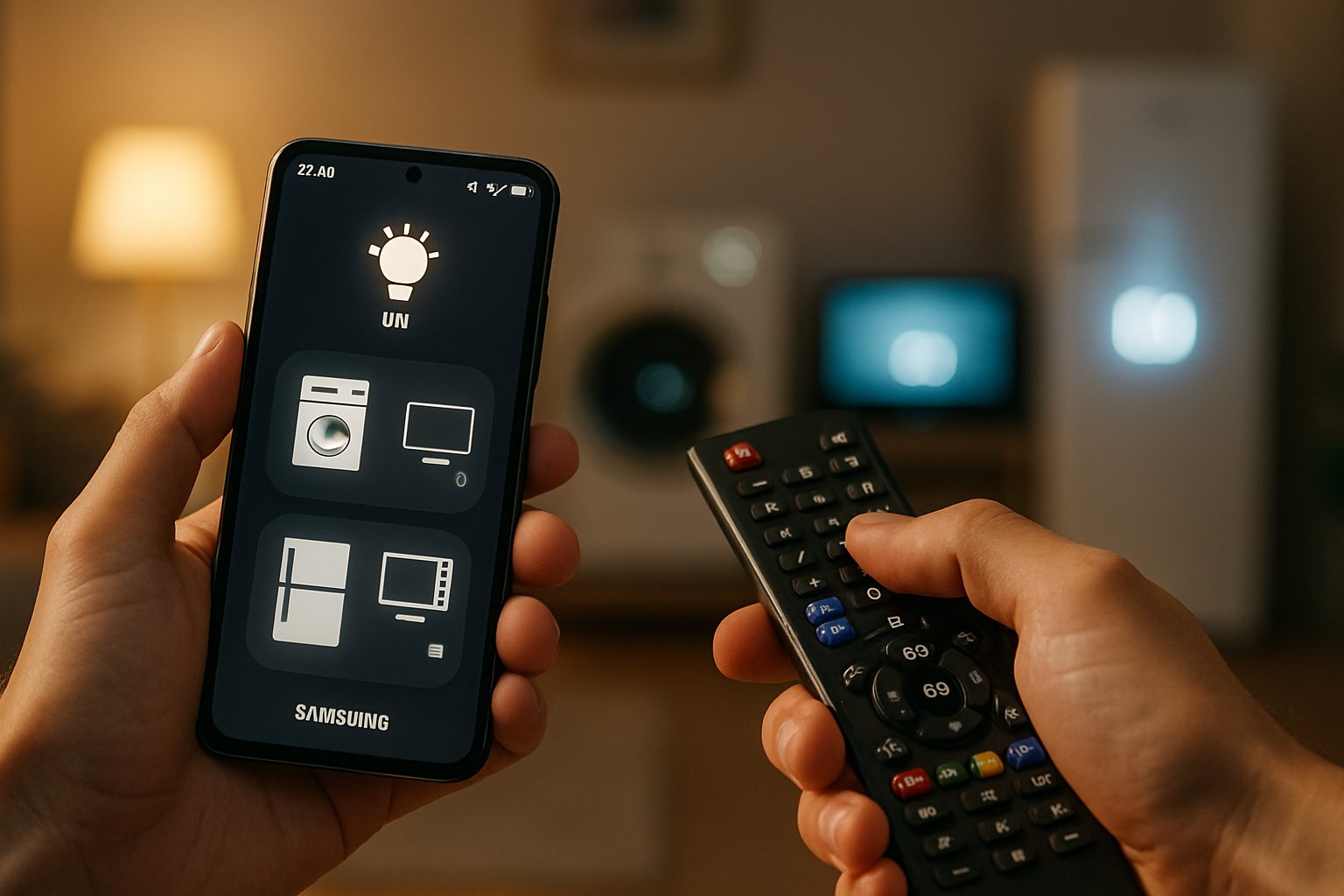
Samsung already claims more than 430 million SmartThings users. Furthermore, insurance partner Hartford Steam Boiler pilots risk-based services that monetize device data. Analysts believe such programs advance consumer AI ecosystems and deepen platform lock-in. Nevertheless, revenue models remain experimental.
- 2024 market size: USD 46.8 billion (Grand View).
- 2033 forecast range: USD 269-438 billion.
- Projected CAGR: 20-30 percent.
- SmartThings users: 430 million (Samsung, 2025).
These statistics validate the commercial stakes. Therefore, momentum sets the context for Samsung’s pivot.
The market’s acceleration underscores urgency. However, translating forecasts into profit demands cohesive execution.
Samsung Strategic Pivot Explained
January 22, 2025 marked a turning point. The Galaxy S25 launch positioned the phone as a “true AI companion.” Subsequently, the January 5, 2026 CES showcase expanded the story: Vision AI Companion for TVs, SmartThings Home AI, and Knox Matrix security. TM Roh declared the greatest innovations mirror users, not devices.
This pivot weaves ambient AI companions through phones, displays, and appliances. Additionally, Qualcomm’s custom Snapdragon 8 Elite enables on-device inference for rapid, private responses. Google Gemini augments appliance vision tasks, blending cloud muscle with edge privacy. Consequently, Samsung can orchestrate personalized assistants that follow context, not screens.
Yet, the Ballie home robot tells a cautionary tale. Samsung shelved consumer release, citing technical hurdles. Nevertheless, lessons from Ballie now inform spatial intelligence across the product line.
The pivot signals ambition. Meanwhile, unresolved engineering challenges persist.
Core Technology Building Blocks
Context awareness begins with sensors. Microphones, cameras, and environmental detectors feed multimodal models. Moreover, edge NPU acceleration trims latency and shields data. Cloud models, in contrast, expand language reach. Therefore, Samsung pursues a hybrid stack.
Galaxy AI merges speech, vision, and gestures on smartphones. Vision AI Companion recognizes objects on TVs and surfaces content. SmartThings Home AI fuses sensor signals to automate lighting, climate, and security. Consequently, users experience seamless ambient AI companions rather than siloed utilities.
Developers can extend capabilities through the SmartThings API. Additionally, professionals may deepen expertise through the AI Architect certification. Skills in federated learning and edge orchestration will grow more valuable as consumer AI ecosystems mature.
These building blocks form the technical spine. In contrast, trust mechanisms must match sophistication.
Privacy And Trust Debates
Always-on sensing invites scrutiny. Gay Gordon-Byrne of Repair.org labeled Samsung’s AI refrigerator “a fridge that spies before cooling.” Moreover, iFixit’s “Worst in Show” cited repairability failures. Privacy coalitions warn that ambient AI companions could normalize domestic surveillance.
Samsung counters with Knox and Knox Matrix. Furthermore, the firm touts privacy-by-design and on-device processing. Nevertheless, independent audits remain scarce. Consequently, regulators may tighten transparency expectations.
Trust will shape adoption. Therefore, vendors must document data flows, consent paths, and patch lifecycles.
Concerns emphasize governance needs. However, competitive pressures push features forward regardless.
Competitive Landscape Snapshot Today
Amazon, Apple, Google, and LG all chase ambient intelligence. Alexa’s UI overhaul, Apple’s HomePod gestures, and LG’s CLOiD robots intensify competition. Additionally, chipmakers like MediaTek embed NPUs for mid-range devices, broadening access.
Samsung differentiates by controlling phones, TVs, appliances, and the SmartThings cloud. Moreover, partnership breadth—with Google, Qualcomm, and insurers—builds a moat. Yet, rivals exploit their own strengths. In contrast, Apple leverages vertical integration and privacy branding, while Amazon wields ecosystem breadth.
Consequently, success hinges on delivering reliable personalized assistants within broader consumer AI ecosystems. Users will not tolerate flaky automation, regardless of brand hype.
Competitive dynamics remain fluid. Therefore, execution speed and trust credentials decide winners.
Future Outlook And Risks
Analysts expect device shipments embedding context-aware agents to grow sharply through 2030. Furthermore, insurance, energy management, and wellness services could produce recurring revenue. Nevertheless, technical debt, fragmented standards, and regulatory headwinds threaten momentum.
Shelving Ballie illustrates hardware risk. Additionally, unresolved repairability may spark right-to-repair mandates. Meanwhile, cyber-attacks on edge models could erode confidence. Consequently, firms must balance innovation with rigorous governance.
Opportunities beckon professionals. Developing robust, ethical ambient AI companions will demand skills in privacy engineering, multimodal modeling, and human-centric design. Therefore, earning specialized credentials, such as the linked AI Architect program, positions talent for leadership.
Risks coexist with reward. However, proactive governance can turn trust into a differentiator.
Conclusion And Next Actions
Samsung’s push for ambient AI companions reflects a broader industry pivot. Market forecasts show massive growth, yet consumer trust remains fragile. Moreover, privacy audits, repairable hardware, and resilient models will influence adoption. Professionals who master these disciplines will shape the next decade of consumer AI ecosystems.
Consequently, now is the moment to upskill. Explore certifications, including the linked AI Architect path, and engage in transparent, user-centric design. Success will belong to teams that deliver reliable, respectful personalized assistants that earn everyday trust.


