

AI CERTS
2 days ago
Battery autonomy hierarchy reshapes US EV supply power map
Korean conglomerates responded quickly, funding gigafactories across several states. Meanwhile, Chinese suppliers find themselves boxed out by Foreign Entity of Concern restrictions. Automakers now scramble to secure qualifying batteries or risk losing consumer tax credits. Therefore, investors and engineers alike must rethink strategies, partnerships, and technology roadmaps. The following analysis unpacks winners, risks, and policy milestones shaping the next decade.
Policy Drives Domestic Build
Washington placed industrial policy at center stage after years of import shocks. Subsequently, the Inflation Reduction Act linked tax credits to local content thresholds. DOE grants and cheap loans layered further incentives onto the program. Consequently, cell capacity exceeded 200 GWh in 2024 with 700 GWh under construction. Analysts note this pipeline could satisfy full US demand by 2026.
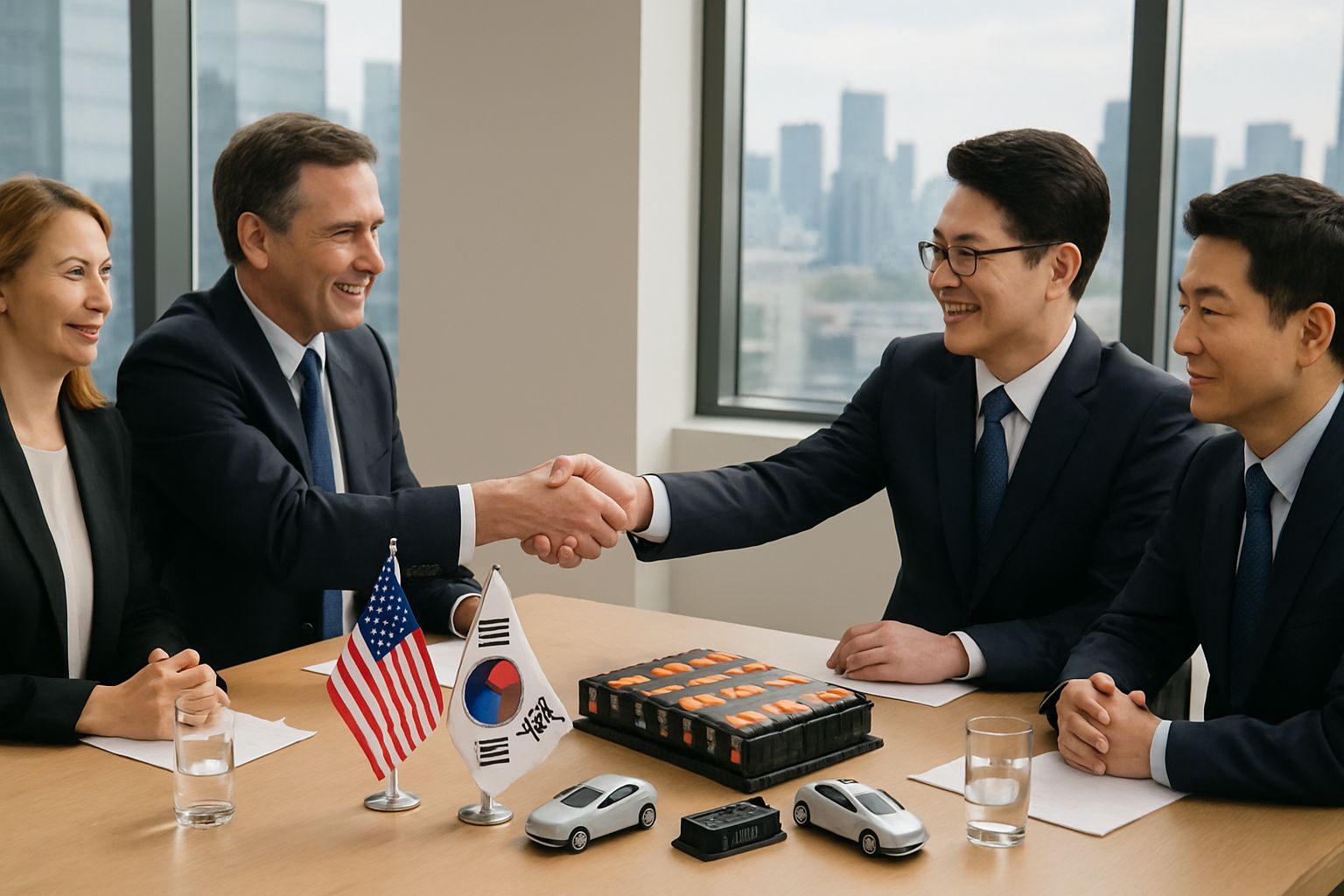
The evolving Battery autonomy hierarchy depends on these carrots and sticks. Moreover, final Treasury rules clarify Foreign Entity of Concern exclusions through 2027. Suppliers must document every cathode, anode, and separator before credits apply. Therefore, compliance departments now rival production teams in importance. This regulatory clarity propels planning yet magnifies penalties for missteps.
In short, policy incentives rapidly scaled US battery capacity. However, corporate strategy ultimately determines who benefits next. Next, we examine the companies moving fastest.
Korean Firms Take Lead
Korean conglomerates seized first-mover advantage as incentives crystalized. LG Energy Solution, Samsung SDI, and SK On committed about $20 billion to US plants. Moreover, many agreements include long-term offtake with automakers craving compliant packs. Reuters calls them clear Korean winners in the new order. Consequently, share prices reflect optimism about US margins despite overcapacity fears.
The Battery autonomy hierarchy now tilts toward these Korean winners at China’s expense. Additionally, Panasonic faces pressure to protect historic Tesla footholds. Chinese CATL remains locked out of credits because of FEOC limits. In contrast, joint ventures such as GM-Samsung in Indiana target 36 GWh annual output. Such scale promises cost parity with imports even without perpetual subsidies.
Korean winners expanded fastest and deepest. Therefore, they anchor many domestic supply chain deals. Up next, policy specifics refine the landscape.
IRA Rules Reshape Incentives
Final guidance released on January 2, 2026 ended months of uncertainty. Moreover, the Inflation Reduction Act now requires 60% domestic critical minerals during 2025. This threshold rises yearly, reaching 70% in 2026 and 80% by 2028. Consequently, projects in recycling and lithium conversion attract fresh capital. Treasury also detailed how automakers must trace each precursor back to a mine.
The stricter metrics reorder the Battery autonomy hierarchy once more. Import dependency shrinks when upstream investments close material gaps. Nevertheless, China still dominates many processed inputs, especially synthetic graphite. Therefore, DOE grants prioritize alternative anode materials from US startups. Suppliers that master documentation enjoy unbroken access to credits.
- New Battery autonomy hierarchy favors Korean winners.
- Installed capacity 2024 reached 200 GWh.
- Projects under construction add 700 GWh.
- Korean investment tops $20 billion.
- IRA mineral threshold hits 70% in 2026.
Tighter rules squeeze unprepared players. Subsequently, compliance becomes a core competitive weapon. The demand picture reveals further complications.
Supply Demand Gap Looms
By 2026, US factories could churn out more cells than local buyers need. BloombergNEF warns utilization might dip below 70% in bearish scenarios. Consequently, price competition may erode early margins for cell makers. Overcapacity would reverberate through every supply chain contract. Analysts therefore model plant deferrals and technology shifts to solid state.
An expanding Battery autonomy hierarchy still helps national security despite spare capacity. Import dependency on finished packs virtually disappears under surplus conditions. However, idle lines threaten employment promises touted during groundbreaking ceremonies. Automakers might renegotiate offtake volumes and delay model launches. In contrast, grid storage developers welcome cheaper batteries.
Oversupply can punish profits. However, consumers may enjoy lower prices next. Material sourcing challenges add another layer of risk.
Upstream Risks Still Persist
Cell autonomy does not equal material independence. Today, China supplies most cathode metals and nearly all coated foil. Moreover, only a handful of US lithium refining projects have broken ground. Consequently, import dependency remains acute for many precursors. DOE’s $3 billion program funds twenty-five projects to close these gaps.
The Battery autonomy hierarchy will not hold without robust upstream diversification. Additionally, recycling capacity must scale to reclaim nickel, cobalt, and lithium. Albemarle and Redwood plan expansions, yet permitting timelines stretch years. Therefore, policymakers study fast-track approvals to retain momentum. Progressive improvements could stabilize the supply chain by 2030.
Materials remain the weakest link. Nevertheless, the Battery autonomy hierarchy relies on upstream breakthroughs. Automaker strategies will show who adapts.
Strategic Implications For Automakers
Automakers must map cell strategies to credit eligibility models quarterly. In contrast, ignoring thresholds risks $7,500 per vehicle in lost incentives. Tesla hedges by building proprietary cells in Texas while buying from LGES. GM and Stellantis rely on joint ventures with Korean winners for compliance. Moreover, smaller brands license technology to avoid capital intensity.
The emerging Battery autonomy hierarchy also affects design choices. Vehicles may shift to lithium-iron-phosphate chemistries due to abundant domestic phosphate. Consequently, pack costs fall even as ranges grow modestly. Meanwhile, insurers monitor fire data from new chemistries. Supply chain visibility tools now integrate directly with climate-risk dashboards.
Credit math now shapes engineering. Therefore, flexible sourcing will define survivor brands. Finally, professionals can act on emerging opportunities.
Action Points For Professionals
The Battery autonomy hierarchy now defines profitability, technology selection, and geopolitical leverage for mobility firms. Moreover, ongoing Inflation Reduction Act revisions will continue shifting threshold math every fiscal quarter. Import dependency endures upstream, yet federal grants and private capital collectively narrow exposure. Consequently, engineers, strategists, and investors must track factory ramps, mineral deals, and credit eligibility. Meanwhile, transparent data tools will separate confident planners from reactive followers. Professionals can deepen expertise through the AI+ Robotics™ certification. Additionally, mastery of data analytics and automation accelerates decision cycles across the evolving supply chain. Therefore, proactive learning converts disruptive policy shifts into lasting competitive advantages.


