

AI CERTS
7 months ago
Malaysia’s push for Education AI literacy transforms classrooms
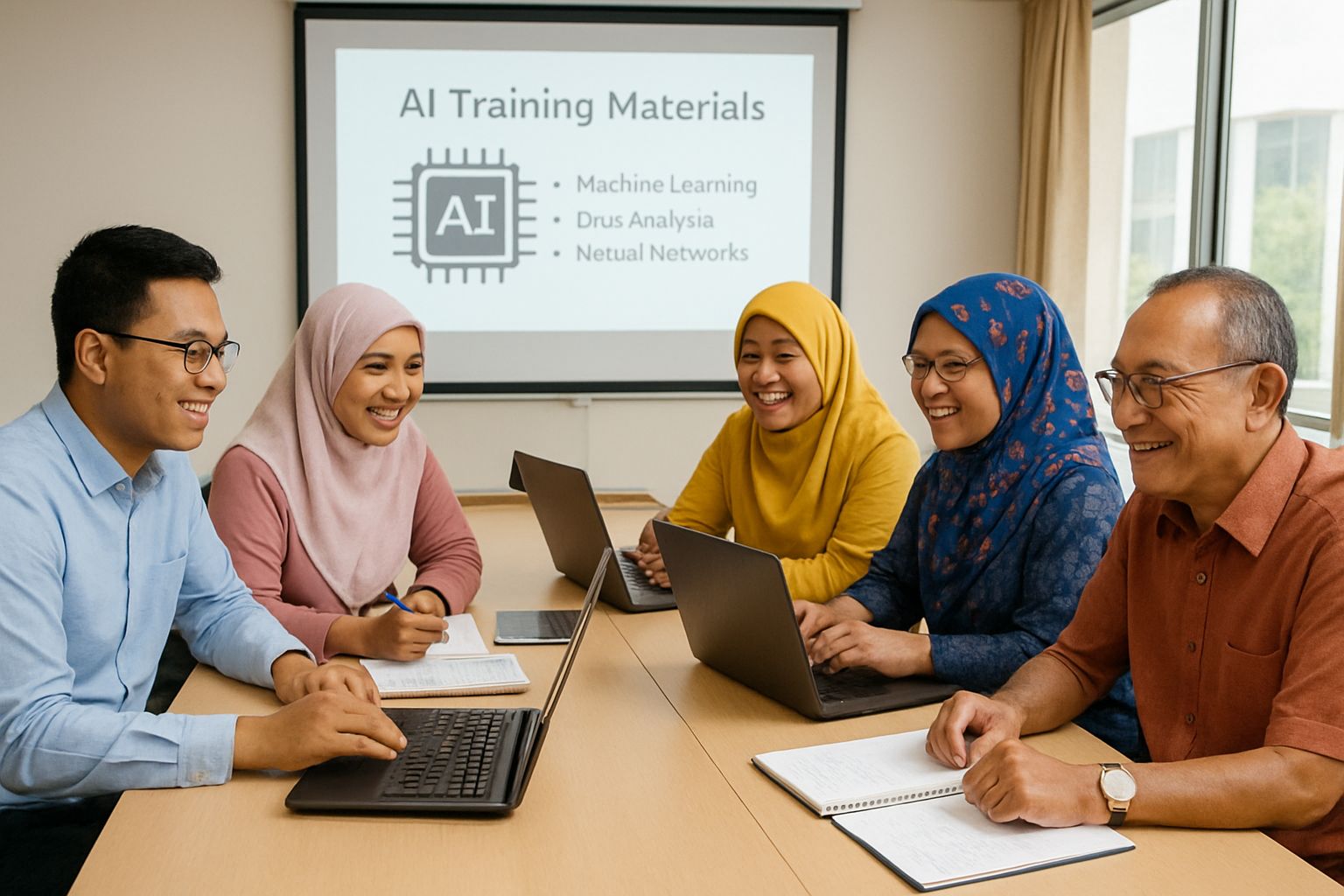
Prime Minister Anwar Ibrahim’s AI Untuk Rakyat campaign exemplifies this new urgency.
The programme alone targets one million citizens by year-end.
Meanwhile, the Education Ministry plans to embed AI concepts across the 2027 curriculum.
Microsoft’s US$2.2 billion investment and similar deals add industrial momentum.
Moreover, a National AI Office now coordinates standards, ethics, and a comprehensive policy framework.
These moves promise faster innovation yet raise questions about resources, equity, and teacher readiness.
This article examines how Malaysia can translate ambition into classroom impact.
It also highlights opportunities for professionals seeking to contribute through certifications and partnerships.
Malaysia AI Policy Roadmap
Malaysia adopted a layered policy framework to steer its AI ambitions.
In December 2024, the National AI Office began issuing guidelines on ethics, security, and procurement.
Additionally, the office coordinates ministries, industry, and NGOs to avoid duplicate spending.
The roadmap aligns Education AI literacy goals with economic targets for 2030.
Consequently, tech investors can map capacity building to measurable social outcomes.
Nevertheless, analysts warn that regulatory drafts must arrive before large scale classroom deployments.
Furthermore, UNESCO urges Malaysia to embed child-data safeguards within upcoming statutes.
In contrast, some educators fear over-centralisation could slow local innovation.
Balanced governance therefore remains essential for sustainable Academic life.
- AI Untuk Rakyat targets one million enrolled users by 2024.
- National AI Office launched on 12 December 2024.
- Microsoft committed US$2.2 billion for Malaysian cloud and AI projects.
- Curriculum introduces AI basics to primary pupils in 2027.
A coherent policy framework now exists, yet timely regulation is critical.
Next, the curriculum overhaul will test whether plans reach every learner.
National Curriculum Overhaul Timeline
The Education Ministry confirmed that AI basics will enter primary classrooms in 2027.
New Technology and Digital textbooks will cover algorithms, data, and simple machine-learning activities.
Moreover, secondary subjects like Computer Science will expand into generative AI projects.
These steps aim to embed Education AI literacy throughout Academic life, not just specialized courses.
Teachers received draft syllabi this year to begin pilot testing with Year Five pupils.
Meanwhile, curriculum designers apply computational thinking models already familiar to local educators.
Consequently, the overhaul promises richer student learning outcomes if resources arrive on time.
Nevertheless, critics caution that content alone will not guarantee deep engagement.
Rigorous assessment rubrics and formative analytics must back each lesson.
Robust content sets the stage for effective student learning.
Attention now shifts to massive teacher capacity programmes.
Teacher Capacity Building
Over 100,000 educators will undergo structured teacher training in digital pedagogy.
Microsoft, Apple, and Google have pledged modules on generative tools and responsible use.
Additionally, the Experience AI programme already trained thousands through Penang Science Cluster workshops.
Course materials emphasise ethical prompts, bias detection, and project-based assessment.
Meanwhile, specialised cohorts focus on rural teachers who face connectivity gaps.
The government links every stipend to explicit Education AI literacy competencies.
Consequently, certification becomes a performance metric rather than a mere credential.
In contrast, veteran teachers express concern about increased workload and limited mentoring.
Peer coaching networks and micro-credentials may ease the burden.
Scaled teacher training can unlock higher learner outcomes and deepen Education AI literacy gains.
The next hurdle involves classroom technology and infrastructure.
Classroom Technology Rollout
Smartboards, high-speed Wi-Fi, and adaptive learning platforms headline the equipment list.
Government targets promise 10,000 smartboards by 2027, though procurement data remains pending.
Moreover, adaptive systems personalize student learning paths and flag dropout risks early.
AI dashboards provide teachers with realtime mastery reports.
However, rural Sabah and Sarawak schools still struggle with stable electricity.
Public-private partnerships therefore include satellite connectivity pilots for remote villages.
Additionally, tech giants co-fund device grants tied to usage analytics.
Professionals can enhance their expertise with specialised certifications.
For example, the AI Supply Chain™ credential covers data driven operations.
System deployment follows the national policy framework to ensure vendor neutrality and data security.
Technology can amplify Education AI literacy only when infrastructure gaps close.
Attention now moves to ethical and equity challenges.
Equity And Ethics Challenges
Digital divides threaten to widen if devices and broadband remain uneven.
Consequently, B40 students risk limited access to personalized content and peer collaboration.
Moreover, data privacy concerns surface as platforms collect sensitive learner profiles.
UNESCO recommends a rights-based policy framework that limits surveillance and mandates transparency.
Meanwhile, teachers worry about plagiarism and superficial comprehension when generative tools craft essays.
Academic life could suffer if schools fail to reinforce critical thinking habits.
Nevertheless, well-designed rubrics encourage reflection and source verification.
The Education Ministry is drafting guidelines that anchor Ethics within Education AI literacy practice.
Equitable access and strong governance protect student learning quality.
Industry and NGO partnerships now scale these safeguards nationwide.
Industry And NGO Partnerships
Microsoft’s investment packages include free cloud credits for school projects and hackathons.
Similarly, Google.org funds AI Class ASEAN modules translated into Bahasa Malaysia.
Additionally, Raspberry Pi Foundation’s Experience AI reaches thousands of teachers yearly.
These alliances accelerate Education AI literacy diffusion across diverse regions.
Consequently, private capital supplements limited public budgets.
Local NGOs such as Penang Science Cluster manage teacher training workshops and student showcases.
Moreover, impact metrics track completion rates, gender parity, and student learning improvements.
Clear memoranda of understanding outline data ownership and intellectual property.
Cross-sector teamwork strengthens Academic life and boosts national competitiveness.
The conversation now shifts toward future actions and monitoring.
Future Outlook And Actions
Malaysia has created momentum that few regional peers match.
However, sustained funding, evidence, and agile governance will decide ultimate success.
Subsequently, officials must publish transparent dashboards showing curriculum coverage and teacher training completion.
Stakeholders should also review Education AI literacy metrics annually against labour market trends.
Furthermore, continuous research should examine long-term effects on student learning and Academic life.
Professionals can contribute by mentoring schools or pursuing advanced credentials.
Therefore, Malaysia could export proven models to other ASEAN nations.
In summary, political will, skilled educators, and inclusive infrastructure will define impact.
Moreover, balanced ethics rules will maintain public trust while Education AI literacy expands.
Readers eager to help the movement should explore recognised certifications and share best practices.
Visit the earlier linked AI Supply Chain™ programme and start shaping tomorrow’s classrooms.
Disclaimer: Some content may be AI-generated or assisted and is provided ‘as is’ for informational purposes only, without warranties of accuracy or completeness, and does not imply endorsement or affiliation.


