

AI CERTS
3 months ago
General Robotics: Tesla Optimus Mass Production Reality Check
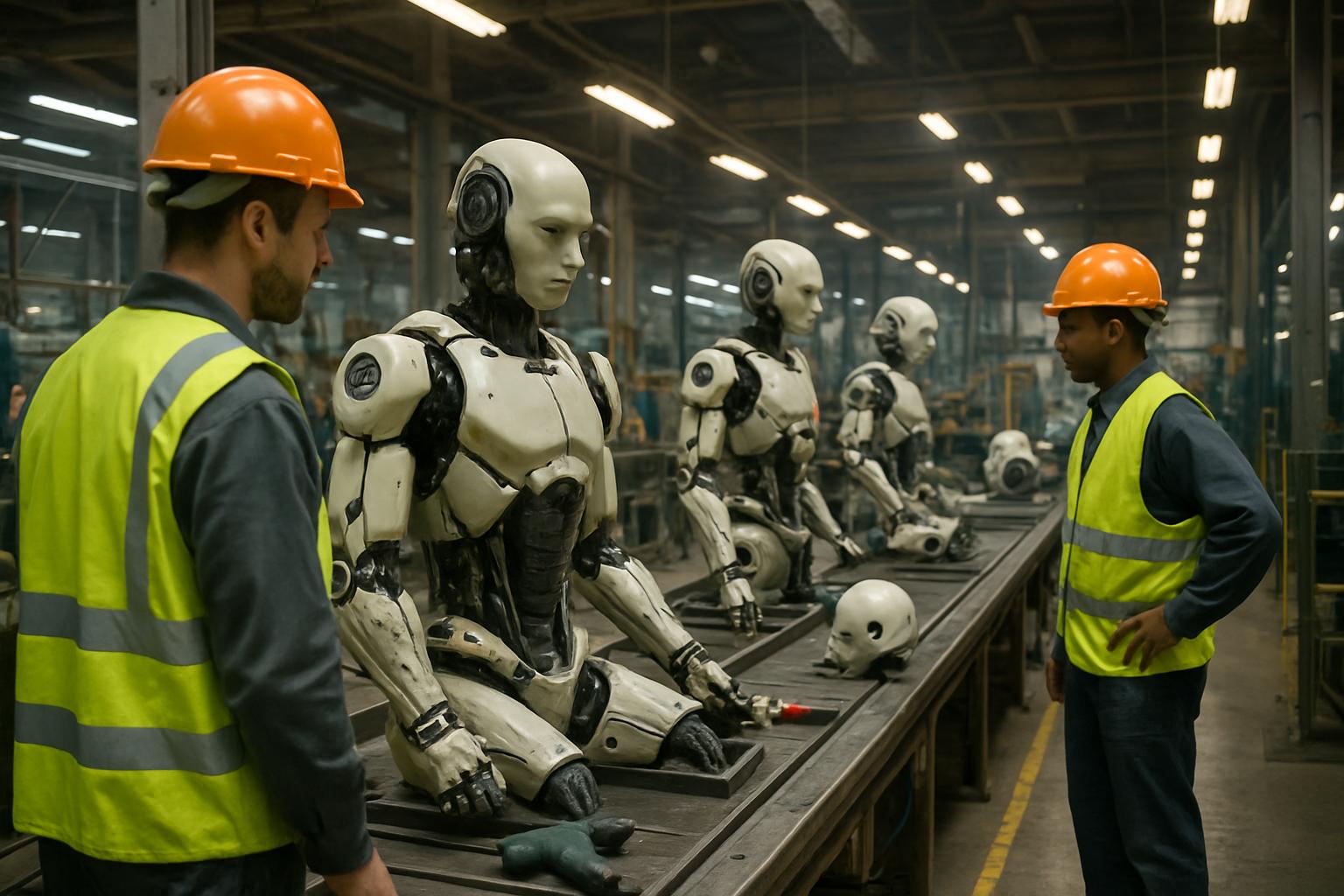
Meanwhile, CEO Elon Musk claims thousands of robots will roll off lines in 2025. In contrast, independent reports confirm only hundreds exist today. Therefore, the gap between aspiration and output shapes investor sentiment. This article dissects technical, operational, and economic factors influencing mass Production.
Market Hype Versus Reality
Historically, ambitious roadmaps stimulate capital. Yet, history also shows missed schedules tarnish credibility. Moreover, General Robotics projects amplify this pattern because hardware and software must mature together.
Key 2025 figures highlight the divergence:
- Tesla target: 5,000 humanoid units by December 2025
- Verified output: “hundreds” reported by TechCrunch and The Information
- Market size: approximately $1.8 billion in 2025 according to Precedence Research
- Competitor Unitree R1 price: roughly $6,000
Consequently, analysts caution that optimistic slide decks do not equal factory throughput. Investors now compare Tesla timelines with Agility Robotics, Figure, and Unitree schedules. Nevertheless, each organization measures “mass Production” differently, complicating benchmarks.
Researchers interviewed for this report view General Robotics as still entering its “Model-T moment.” Furthermore, they suggest at least three design generations will pass before reliable household service emerges. Consequently, timelines should be calibrated against semiconductor learning curves, not smartphone upgrade cycles.
These numbers reveal enthusiasm tempered by underperformance. However, engineering obstacles explain much of the shortfall and deserve deeper attention.
Engineering Hurdles Still Persist
Every humanoid demands reliable balance, dexterity, and power. However, Optimus prototypes struggle with overheating joint motors and fragile hands. Moreover, Rodney Brooks argues tactile sensing remains unsolved, making delicate manipulation unrealistic today.
Therefore, Tesla engineers redesigned arm actuators during 2025, pausing supplier orders. Subsequently, supplier audits restarted in December, indicating partial resolution. Nevertheless, battery life under factory workloads reportedly stays below desired multi-hour thresholds.
These technical limitations inhibit round-the-clock deployment. Consequently, mass Production cannot ramp until durability tests confirm stability across thousands of cycles.
Persistent mechanical and control issues slow progress. In contrast, supply chain turbulence adds further uncertainty.
Supply Chain Frictions Grow
Rare-earth magnets, sensors, and bespoke actuators form the robot’s backbone. Furthermore, export controls on magnets created additional paperwork for Tesla suppliers in China. Business Insider reported authorities needed end-use assurances, delaying shipments.
Meanwhile, rising demand from electric vehicles competes for the same materials. Consequently, pricing volatility complicates long-term contracts. Additionally, leadership turnover within Tesla’s procurement team introduced communication gaps that vendors cited privately.
Industry think tanks within the International Robotics Consortium estimate actuator demand could exceed 300,000 units by 2027. Therefore, early suppliers gain leverage over pricing, lengthening break-even horizons for late entrants.
Agility Robotics mitigated similar risks by co-locating its “RoboFab” facility near component partners. However, Tesla’s vertically integrated strategy still relies on global sub-suppliers for specialty parts.
Material bottlenecks can idle assembly lines despite engineering readiness. Therefore, competitive dynamics warrant equal examination.
Competitive Landscape Rapidly Shifts
Unitree shocked observers by unveiling the $6,000 R1 Humanoid in July 2025. Consequently, cost expectations for versatile robots dropped dramatically. Moreover, Figure AI and Boston Dynamics continue securing venture and corporate funding.
General Robotics strategists now weigh capability versus price. Tesla positions Optimus as a premium “physical AI” platform. In contrast, Unitree prioritizes affordability, even if task repertoire narrows.
Start-ups often pitch data network effects as their moat. However, overall robotics success also hinges on physical component availability, which levels the playing field for well-capitalized manufacturers.
Competitive visibility influences customer pilots. Therefore, logistics firms may hedge by ordering small Unitree batches while monitoring Tesla’s progress.
Rivals exploit price or niche advantages to gain early revenue. Nonetheless, labor economics ultimately frame the stakes.
Labor Economics In Focus
Robots must beat human Labor costs to scale. Furthermore, durability targets near 20,000 operating hours underpin optimistic return-on-investment models. Musk suggests future units could cost under $20,000, excluding software fees.
However, analysts warn that bill-of-materials estimates remain opaque. Additionally, union leaders question whether savings will translate into worker reskilling budgets. Nevertheless, Labor advocates demand clear transition funding from employers. Consequently, policy discussions around wage displacement and retraining gather momentum. Consequently, equitable Labor policies could accelerate public acceptance.
Professionals can enhance their expertise with the AI Customer Service™ certification. Such programs equip managers to integrate Humanoid assistants without sacrificing service quality.
Economic viability depends on both component pricing and Workforce adaptation. Meanwhile, leadership must craft transparent timelines to maintain trust.
Roadmap And Next Steps
Elon Musk still targets tens of thousands of units during 2026. Nevertheless, internal memos reviewed by The Information indicate possible slippage toward late 2026. Therefore, stakeholders should track quarterly supplier filings, not only press events.
Subsequently, Tesla will likely deploy its robots inside factories before external sales. Moreover, software updates delivered over cellular links could expand task libraries gradually. That phased release mirrors automotive “Full Self-Driving” rollouts.
Real-time fleet analytics will feed back into design. Consequently, General Robotics platforms can evolve via software updates, mirroring cloud practices.
Critical Metrics To Watch
- Verified monthly output versus 5,000-unit 2025 pledge
- Average hand actuator lifespan measured in cycles
- Battery runtime under 15 kg payload
- Component cost trend against $20k target
- Third-party safety certifications achieved
Consequently, consistent disclosures on these points will clarify whether General Robotics breakthroughs translate into sustained Production. Investors and policymakers alike demand measurable progress.
Transparent metrics foster accountability and guide market forecasts. Therefore, the coming year will determine if Tesla converts prototypes into profitable fleets.
Mass-producing a versatile Humanoid remains one of technology’s most complex challenges. However, relentless iteration and capital inflows keep the dream afloat. Today, engineering setbacks, supply chain constraints, and competitive price shocks limit output. Nevertheless, Tesla’s manufacturing experience and AI stacks offer distinct advantages if mechanical reliability improves. Therefore, decision-makers should monitor verified production counts, actuator durability, and component costs throughout 2026. Professionals who grasp these dynamics can position their organizations for upcoming shifts. Consequently, exploring targeted upskilling, such as the previously mentioned certification, ensures teams stay ahead of the General Robotics curve.


