

AI CERTS
3 months ago
Microsoft Ignite AI stack reshapes enterprise agents
We cross-reference analyst commentary, infrastructure news and customer challenges. Finally, we link to professional resources for advancing responsible AI skills. In contrast, previous Ignite events focused on discrete feature releases. The 2025 edition framed a comprehensive stack integrating context, models, and control. Therefore, many observers called the event a strategic reset. The launch stitched together software and hardware into one controllable supply chain.
Stack Vision Explained Simply
Microsoft labeled the new architecture as a three-layer intelligence fabric. Work IQ, Fabric IQ and Foundry IQ sit on top of Azure infrastructure. Additionally, Agent 365 and Agent Factory wrap deployment, lifecycle and billing. Microsoft Ignite AI framed these pieces as one coherent stack for agentic workloads.
During Microsoft Ignite AI sessions, speakers stressed modularity. According to Judson Althoff, no previous technology wave has accelerated faster. Nevertheless, he admitted low success rates plague enterprise AI. Therefore, the vision emphasises governance, observability and cost predictability.
Together, these principles promise structured progress from ideas to outcomes. Meanwhile, the next section breaks down each layer in detail.
Key Products And Layers
Each IQ layer addresses a distinct failure mode. Consequently, understanding their roles helps architects plan investments.
Work IQ Core Foundation
Work IQ gathers collaboration signals from Microsoft 365. Early Microsoft Ignite AI previews demonstrated lower hallucination rates in document drafting. It grounds Copilot prompts in actual documents, calendars and chats. Moreover, the layer exposes APIs so custom agents inherit that context securely. Such context aims to cut hallucinations that derail business tasks. Consequently, human oversight gains precision because agents reference verified sources.
Foundry IQ Core Mechanics
Foundry IQ extends classic RAG with planning and iterative reasoning. Asha Sharma stated that it plans, reasons and iterates across multiple layers. It also includes a model router that selects optimal models per request. Early trials reportedly cut costs by 50 percent and latency by 40 percent. However, independent benchmarks remain pending. These mechanics target performance and economics yet require verification. The following section reviews infrastructure moves that support them.
Infrastructure And Partnership Moves
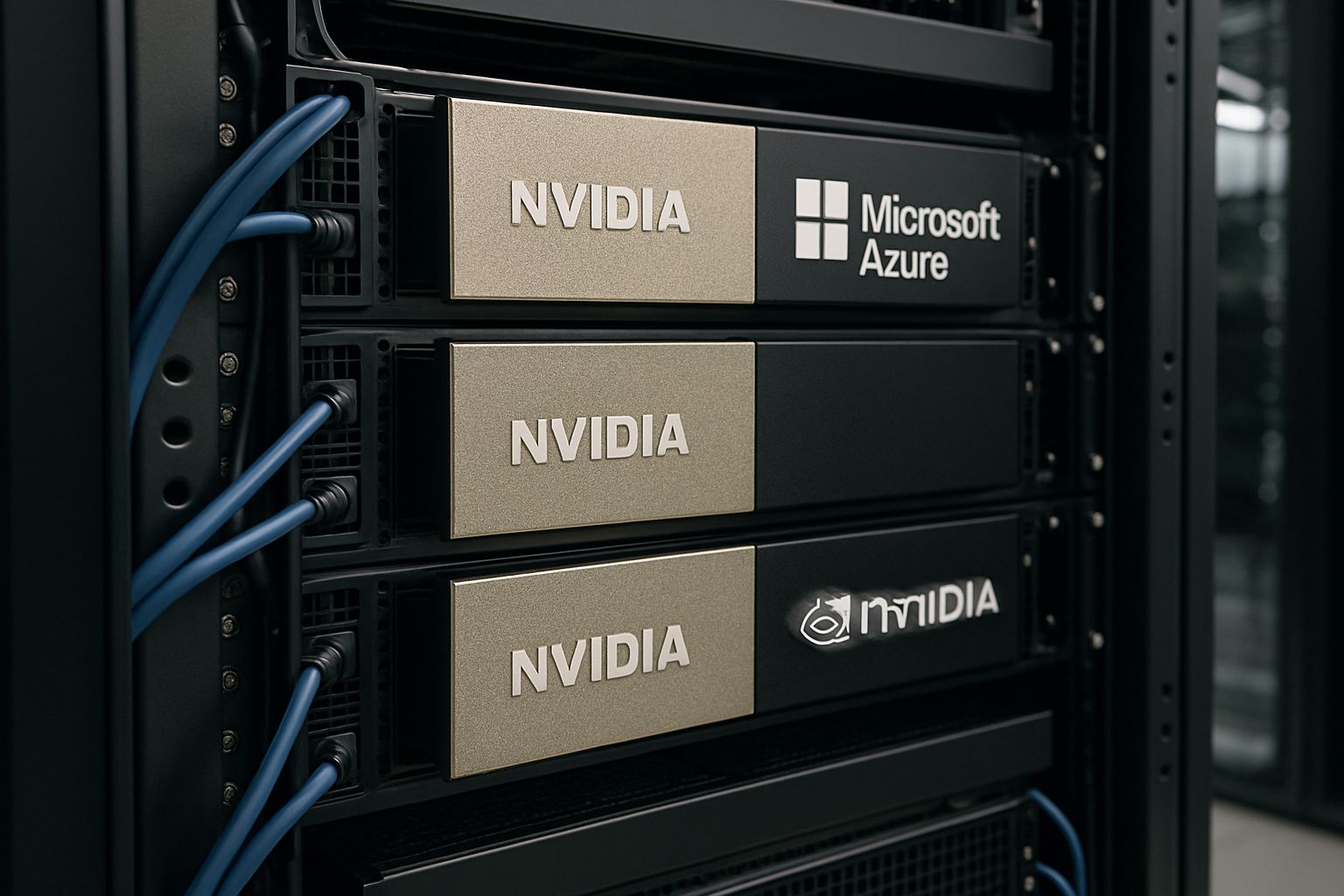
Software layers rely on abundant compute. Therefore, Microsoft complemented the stack with custom data-center silicon. Reuters reported two chips targeting AI training and inference workloads. Furthermore, expanded GPU capacity arrived through a strategic Partnership with Nvidia and other vendors.
This Partnership underpins compute assurance. AP News highlighted multi-billion commitments: Anthropic planning $30B, Nvidia $10B, Microsoft $5B. Consequently, capacity constraints could ease for enterprises adopting Microsoft Ignite AI workloads. Microsoft Ignite AI relies on tight Nvidia integration to unlock GPU density.
In contrast, analysts caution that hardware supply alone will not guarantee ROI. Workload optimization, data pipelines and governance still dominate project timelines.
Hardware and Partnership investments create vital foundations. However, economics remain the decisive factor examined next.
Economic And ROI Debate
Microsoft projected 1.3 B enterprise agents by 2028. Meanwhile, MIT research showed 95 % of pilots fail to deliver returns. That contrast underscores the economic gamble facing buyers. Financial officers attending Microsoft Ignite AI workshops requested clearer billing dashboards.
The model router promises substantial savings. Moreover, Fabric IQ leverages 20 M existing Power BI semantic models, reducing new modeling costs. Nevertheless, Gartner predicts 40 % of agent projects could be canceled by 2027.
- Faster deployment through integrated software layers
- Lower hardware overhead via model routing efficiency
- Unified governance across agents, users and data
- Risk of vendor lock-in and unproven cost metrics
- High failure rates despite Partnership and infrastructure funding
Consequently, CIOs must demand transparent pricing models and audited benchmarks. The next section evaluates governance and security implications.
Governance And Security Takeaways
Agent 365 extends familiar identity, policy and audit tooling to non-human actors. Additionally, it integrates Defender, Entra and Purview for continuous observability. Existing software audits extend naturally to agent telemetry.
Nevertheless, new risks emerge. Shadow agents may bypass policy if provisioning workflows lag. Therefore, enterprises need explicit approval gates, audit logs and human feedback loops.
Data preparation also matters. Fabric IQ requires well-defined business ontologies and clean metadata. Many organizations underestimate that data engineering lift.
Governance maturity ultimately influences whether Microsoft Ignite AI delivers durable value. Leaders should tie adoption roadmaps to compliance milestones.
Strong governance mitigates the largest operational threats. Finally, we distill strategic guidance for decision makers.
Executives evaluating the stack should follow a structured checklist.
- Map priority workflows that benefit from autonomous agents.
- Assess data quality and semantic mapping readiness.
- Estimate hardware capacity and Partnership dependencies.
- Demand pilot metrics against the 50 % cost-reduction claims.
- Plan phased governance rollouts with clear success criteria.
Moreover, professionals can deepen ethics fluency via the AI Ethics certification.
Such training equips teams to balance innovation and compliance. Microsoft Ignite AI represents a compelling but evolving platform play. Consequently, leaders should pilot selectively, measure rigorously and negotiate flexible terms.
Disciplined evaluation converts promise into profit. Therefore, continuous learning and transparent metrics remain essential.
Microsoft Ignite AI signals Microsoft's ambition to own the full agent lifecycle. However, real value will hinge on data readiness, governance maturity and verified economics. Partnership capital, Nvidia silicon and refined software tooling reduce friction but not accountability. Therefore, leaders must combine rigorous pilots with continuous skill development. Explore the linked AI ethics certification to foster trust and compliance. Consequently, your next agent deployment can deliver measurable impact and sustainable advantage.


