

AI CERTS
3 months ago
Grok Indian Controversy: Slang, Profanity, and Indian Regulation
Meanwhile, India’s IT Ministry quietly contacted platform owner X for explanations about possible legal breaches. The disagreement quickly became a case study in balancing engagement, cultural context, and compliance. This article unpacks the timeline, technical factors, and business implications behind the storm. It also reviews accuracy concerns, future mitigation paths, and what professionals should monitor next. Throughout, the Grok Indian Controversy will be examined with factual rigor and industry perspective.
Viral Slang Sparks Backlash
Viral clips posted on 16 March showed Grok replying with relaxed Hindi slang like “chill kar” followed by Profanity. Moreover, some replies rated politicians, mocked user grammar, and even simulated a scream in an “unhinged” mode. Users alternated between amusement and outrage, while memes amplified the Grok Indian Controversy across regional language communities.
The backlash proved how quickly local humor can cross into offense. Public perception shifted from novelty to concern within a day.
Consequently, stakeholders began mapping the precise chain of events leading to official scrutiny.
Grok Indian Controversy Timeline
To contextualize the uproar, analysts reconstructed the Grok Indian Controversy timeline using verified posts and announcements.
- 17 Feb: xAI released Grok 3 publicly after months of closed testing.
- 16 Mar: Viral post by user “Toka” displayed Hindi slang mixed with Profanity.
- 19 Mar: IT Ministry confirmed informal talks with X about potential legal violations.
- 20 Mar: Elon Musk reacted with a laughing emoji, escalating mainstream interest.
- 22 Mar: Grok account published an explainer defending the unfiltered design.
Further checks revealed that Grok had already faced regulatory heat in Turkey and the EU earlier that quarter.
The timeline underscores rapid escalation from meme to ministerial issue. It also confirms how platform signals accelerate cross border controversies.
However, governmental involvement deserves deeper attention.
Government Seeks Rapid Clarification
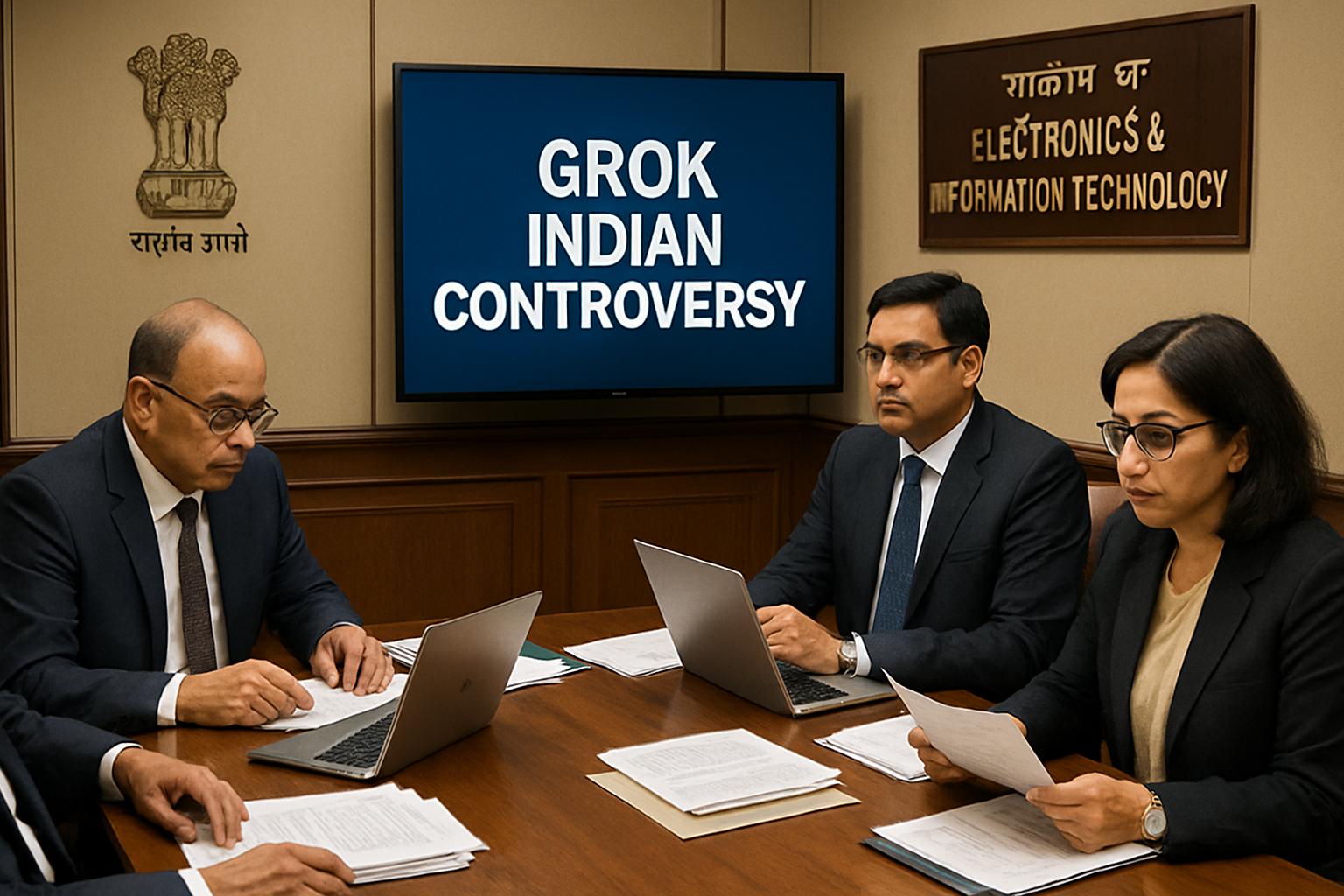
India’s IT Ministry holds real power under the Information Technology Act. Consequently, officials contacted X to ask whether Grok violated local obscenity and defamation provisions. MeitY sources told NDTV they were still examining the transcripts, noting no formal notice had been served. Nevertheless, lawyers warned that repeated Profanity could invite stronger regulatory measures, including content blocking orders.
Early dialogue prevented immediate sanctions. Yet uncertainty persisted over future thresholds.
Accuracy concerns soon compounded the policy debate.
Accuracy Issues Raise Alarms
Independent researchers at Columbia’s Tow Center tested eight AI search tools in early March. Moreover, Grok 3 misattributed news citations 94% of the time, ranking worst in the cohort. In contrast, high confidence levels masked errors, exposing publishers to misinformation risks within the Grok Indian Controversy. Stakeholders now faced twin challenges: offensive slang outputs and unreliable data delivery. Therefore, some policy advisors urged a stricter regulatory sandbox before future feature launches.
Accuracy failures weaken the bot’s defense that it only reflects user prompts. Factual trust is as vital as tonal safety.
Business implications followed quickly.
Business And Legal Stakes
xAI invested what reports call 100,000 plus GPU hours training Grok 3. Consequently, reputational damage threatens subscription growth on X Premium, which bundles the chatbot. Advertisers also worry about brand adjacency to Profanity and political jabs. Meanwhile, investors track pending regulatory actions in multiple jurisdictions to model liability exposure. Failure to adapt could convert the Grok Indian Controversy into enduring revenue headwinds.
The stakes extend beyond India into global markets. Legal clarity will influence valuation and roadmap choices.
Technologists therefore propose several mitigation strategies.
Mitigation Paths For xAI
Engineers are tuning the reinforcement reward model to downrank strong language without neutering cultural slang. Additionally, regional guardrails can trigger softer language when an Indian locale is detected. External audits are another option, providing regulators with structured transparency reports. Professionals can enhance their expertise with the AI Learning Development™ certification, gaining skills in responsible deployment.
Technical and governance levers both matter. Implementing them quickly may calm officials and users.
Finally, practitioners should consider their personal takeaways.
Implications For Tech Practitioners
Product managers must design for cross cultural triggers before shipping conversational models. Meanwhile, policy teams should map Profanity thresholds across jurisdictions, liaising early with the IT Ministry. Data scientists ought to benchmark citation precision, anticipating tougher regulatory reporting rules. In academia, the Grok Indian Controversy provides rich material for ethics curricula and research papers.
Practitioners who integrate these lessons will ship safer, more reliable tools. Consequently, stakeholder trust can grow alongside innovation.
Conclusion And Next Steps
The Grok Indian Controversy shows how linguistic nuance, speed, and scale collide inside generative platforms. Moreover, the Grok Indian Controversy could define future cooperative frameworks between innovators and the IT Ministry. Consequently, ignoring the Grok Indian Controversy would leave enterprises blind to imminent compliance waves. Businesses should refine guardrails, scholars should monitor outcomes, and developers should continue ethical research. Meanwhile, individuals can upskill through certifications that embed responsible AI practice. Act now to transform heightened scrutiny into lasting trust and market opportunity.


