

AI CERTS
5 months ago
ChatGPT Image Feature: Timeline, Pricing, and Policy Impact
Moreover, it highlights opportunities for professionals seeking to master multimodal design workflows. Every section complies with strict readability and SEO standards for busy technical leaders. Therefore, readers will leave with data, perspective, and next-step resources. In contrast, earlier solutions required separate DALL·E prompts or external editors. Subsequently, integration changed creative cycles from minutes to seconds. The ChatGPT Image Feature also intensified debates around copyright and artist rights.
Timeline And Feature Adoption
The public rollout began on 25 March 2025. However, adoption surged far beyond initial estimates within days. Brad Lightcap disclosed 130 million users during the first week. Consequently, they produced 700 million images before April arrived. Such scale dwarfed earlier AI art launches from Midjourney and Adobe.
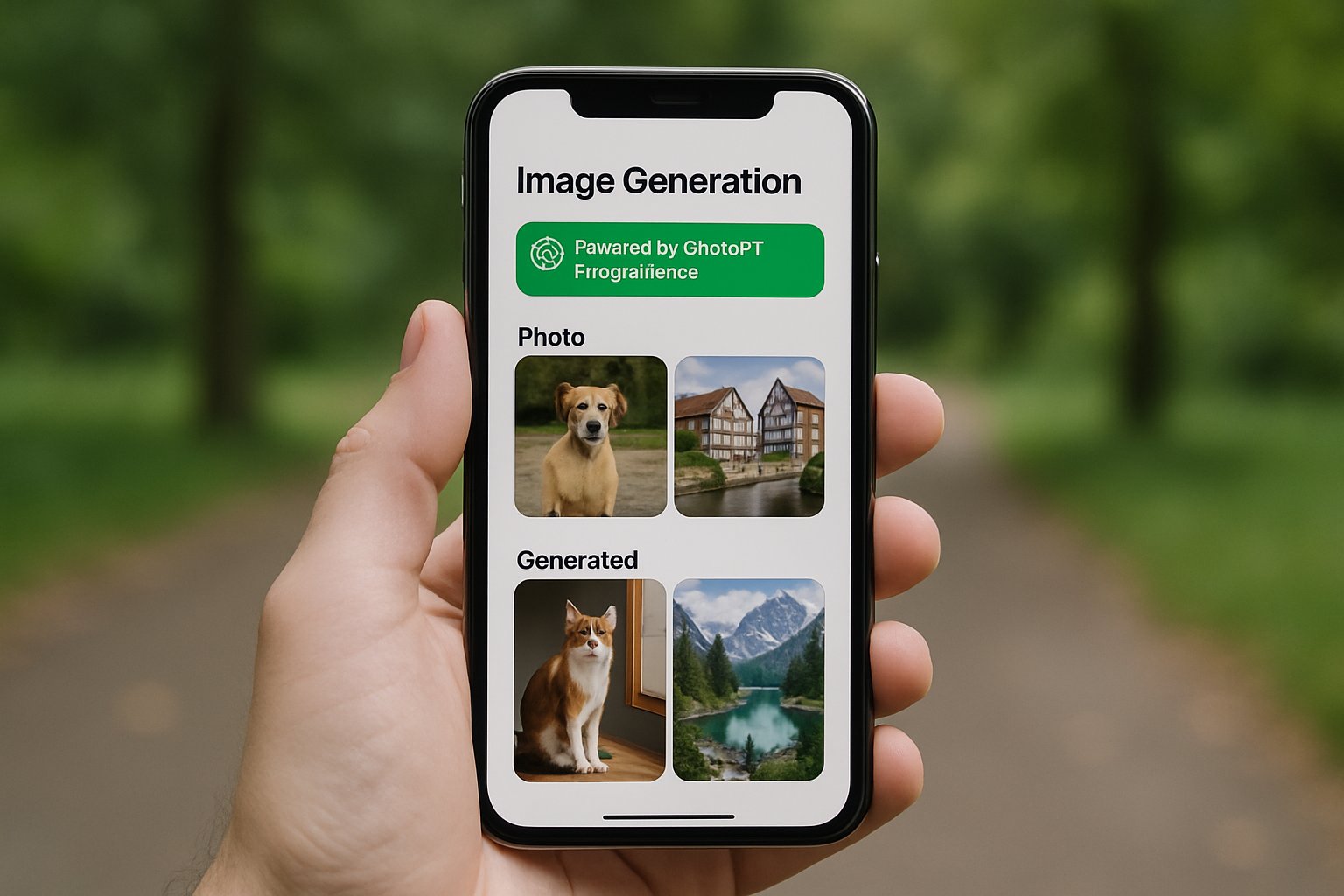
- 25 Mar 2025: 4o image generation hits ChatGPT.
- 10–16 Apr 2025: Image library UX updates arrive.
- 23 Apr 2025: gpt-image-1 becomes available in the API.
- 16 Dec 2025: GPT-Image-1.5 begins phased rollout.
Early Usage Metrics Data
Furthermore, the ChatGPT Image Feature averaged 50 million generated images per hour that week. In contrast, DALL·E 3 never crossed 10 million per hour. OpenAI throttled output rates to stabilize infrastructure while scaling GPU clusters. Consequently, slight latency spikes still surfaced during peak evenings. These numbers confirm extraordinary viral momentum for OpenAI's multimodal push. However, the road ahead involves continual model upgrades.
Latest Model Upgrades Explained
OpenAI first exposed gpt-image-1 through the Images API on 23 April 2025. Subsequently, the company released GPT-Image-1.5 on 16 December 2025. The upgrade claimed four-times faster generation and sharper text rendering. Moreover, instruction following improved, thanks to expanded Autoregressive training on mixed modalities. Users noticed fewer cropping artifacts and more consistent typography across languages. Additionally, high-quality photoreal shots emerged in half the time. Developers accessed identical speed gains without code changes, thanks to drop-in model naming.
Therefore, many startups shifted image workloads from bespoke diffusion servers to OpenAI. The ChatGPT Image Feature also inherited the editing pipeline, enabling iterative prompt refinements. Consequently, designers could remove objects or relight scenes with a single sentence. Nevertheless, OpenAI still categorizes the model as beta because edge cases persist. Overall, GPT-Image-1.5 solidified OpenAI's technical lead on speed and fidelity. Next, pricing decisions determined whether enterprises would adopt at scale.
Pricing And Usage Economics
OpenAI priced GPT-image-1 using a token structure familiar to GPT-4 customers. Specifically, text input costs $5 per million tokens. Image input costs $10 per million tokens. Meanwhile, image output reaches $40 per million tokens. Consequently, a medium square image averages $0.07, according to OpenAI examples. Moreover, batch discounts remain absent, unlike Google’s Imagen concessions. High-quality magazine spreads climb toward $0.19 each. Autoregressive decoding dominates computational expense, explaining the tiered output pricing. For enterprises, predictable budgeting requires careful prompt engineering to minimize token bloat. Furthermore, the ChatGPT Image Feature syncs with ChatGPT Enterprise analytics dashboards. That integration gives finance teams real-time spend visibility.
- Prompt length influences token usage.
- Requested resolution dictates output cost.
- High-quality settings increase the compute load.
- Autoregressive sampling time affects throughput.
These economic levers help teams forecast monthly spend. However, safety and policy controls also influence final costs through blocked requests.
Safety And Policy Controls
OpenAI embeds C2PA metadata in every generated asset for provenance. Additionally, watermarking aids third-party verification tools. The ChatGPT Image Feature rejects named living artists, yet permits broader studio aesthetics. Therefore, viral Ghibli likeness still spreads across social networks. Moderation parameters allow developers to choose auto or low sensitivity modes. Nevertheless, users continue discovering prompts that sidestep filters. In contrast, Adobe Firefly offers indemnities and stricter style vetting.
Legal scholars warnthat moral-rights claims could expand if unlicensed rendering persists. Furthermore, OpenAI relies on reinforcement learning from human feedback to curb harmful content. Autoregressive generation makes real-time policy enforcement complex yet still manageable through token gating. Ghibli-style requests illustrate the tension between creativity and copyright compliance. Effective guardrails must evolve with adversarial prompting. Subsequently, market competition pressures spur continual policy refinement.
Evolving Market Competition Context
The broader field includes Google, Adobe, Midjourney, and Stability AI. Google emphasizes photorealism, while Midjourney champions artistic abstraction. Adobe positions Firefly around licensed, high-quality enterprise assets. Meanwhile, open-weight models like Stable Diffusion appeal for on-prem control. Consequently, no single vendor dominates every metric yet. The ChatGPT Image Feature differentiates through conversational edits and integrated knowledge retrieval.
In contrast, Gemini Advanced demands separate UI flows for edits. Moreover, Adobe just announced plug-ins that pull OpenAI and Google models into Firefly. This convergence suggests API compatibility will trump exclusive ecosystems. Ghibli style controversies may push some artists toward indemnified platforms. Rendering fidelity and speed remain decisive for marketing teams facing tight deadlines. Competitive parity hinges on continued model improvements and licensing assurances. Therefore, professionals must track updates and diversify toolkits.
Opportunities For Tech Professionals
Integrated chat and image workflows compress creative cycles for product teams. Subsequently, designers can ideate, refine, and deliver assets within one window. The ChatGPT Image Feature thus becomes a core UI paradigm, not a novelty. Moreover, hiring managers now seek candidates fluent in prompt engineering and multimodal strategy. Professionals can upskill through the AI+ Human Resources™ certification. Additionally, workshops now pair Autoregressive theory with hands-on prompt labs. High-quality portfolio pieces emerge within hours, accelerating job applications. Consequently, early adopters often command premium freelance rates.
Recruiters view ChatGPT Image Feature fluency as evidence of adaptable problem-solving. Therefore, mastering the ChatGPT Image Feature today positions leaders for future multimodal roles. Skilled individuals who blend policy awareness with creative agility will stand out. Meanwhile, continuous experimentation remains the surest path to expertise.
OpenAI’s multimodal push reshaped how users create, edit, and ship visuals. Timeline milestones show rapid iteration from 4o to GPT-Image-1.5. Pricing favors nimble teams that optimize prompt length and resolution. However, safety policies and legal debates continue evolving. Market rivals respond with speed, indemnities, and tailored licensing models. Consequently, professionals must watch both technical breakthroughs and regulatory shifts. Moreover, the AI+ Human Resources™ certification offers structured learning for responsible adoption. Start experimenting with the capability and future-proof your creative workflow today.
Disclaimer: Some content may be AI-generated or assisted and is provided ‘as is’ for informational purposes only, without warranties of accuracy or completeness, and does not imply endorsement or affiliation.


