

AI CERTS
3 months ago
MongoDB Gen AI Anchors Trust With Voyage AI, Compliance Portal
Meanwhile, a new Customer Trust Portal addresses compliance pains that slow large deals. Furthermore, rising Atlas revenue proves commercial traction among demanding sectors. Pharma, e-commerce, and banking leaders cite decreased hallucinations and faster modernization projects. Nevertheless, analysts warn that trust remains fragile until independent benchmarks surface. This article examines how MongoDB Gen AI executes its trust strategy and where challenges persist.
MongoDB Gen AI Vision
At the June developer summit, executives defined MongoDB Gen AI as a “developer data cloud with embedded intelligence”. However, the vision leaned less on model counts and more on verifiable outcomes like reduced hallucination. Dev Ittycheria framed trust as the decisive competitive moat during his keynote. Moreover, he stressed that integrating retrieval, vector storage, and reranking inside Atlas would boost Reliability for mission-critical workloads. Consequently, customers avoid stitching niche vector databases, an exercise that often creates governance blind spots. The vision links technical depth with governance clarity. Next, we explore the Voyage acquisition that powers those promises.
Voyage Acquisition Enhances Retrieval
MongoDB paid roughly $220 million for Voyage AI in February 2025. Consequently, proprietary embedding models now flow directly into Atlas Vector Search. Reranking capabilities follow, promising sharper top-k results and fewer hallucinations. In contrast, specialist vendors like Pinecone or Weaviate still require network hops to external pipelines. Moreover, native retrieval shortens latency, an advantage for high-traffic e-commerce chatbots. Engineers report early gains of up to 15% precision in pilot benchmarks, though public data remain limited. Nevertheless, retrieval alone cannot guarantee full Reliability; evaluation loops and safety layers stay essential. These technical moves set the stage for the compliance discussion that follows.
Customer Portal Boosts Compliance
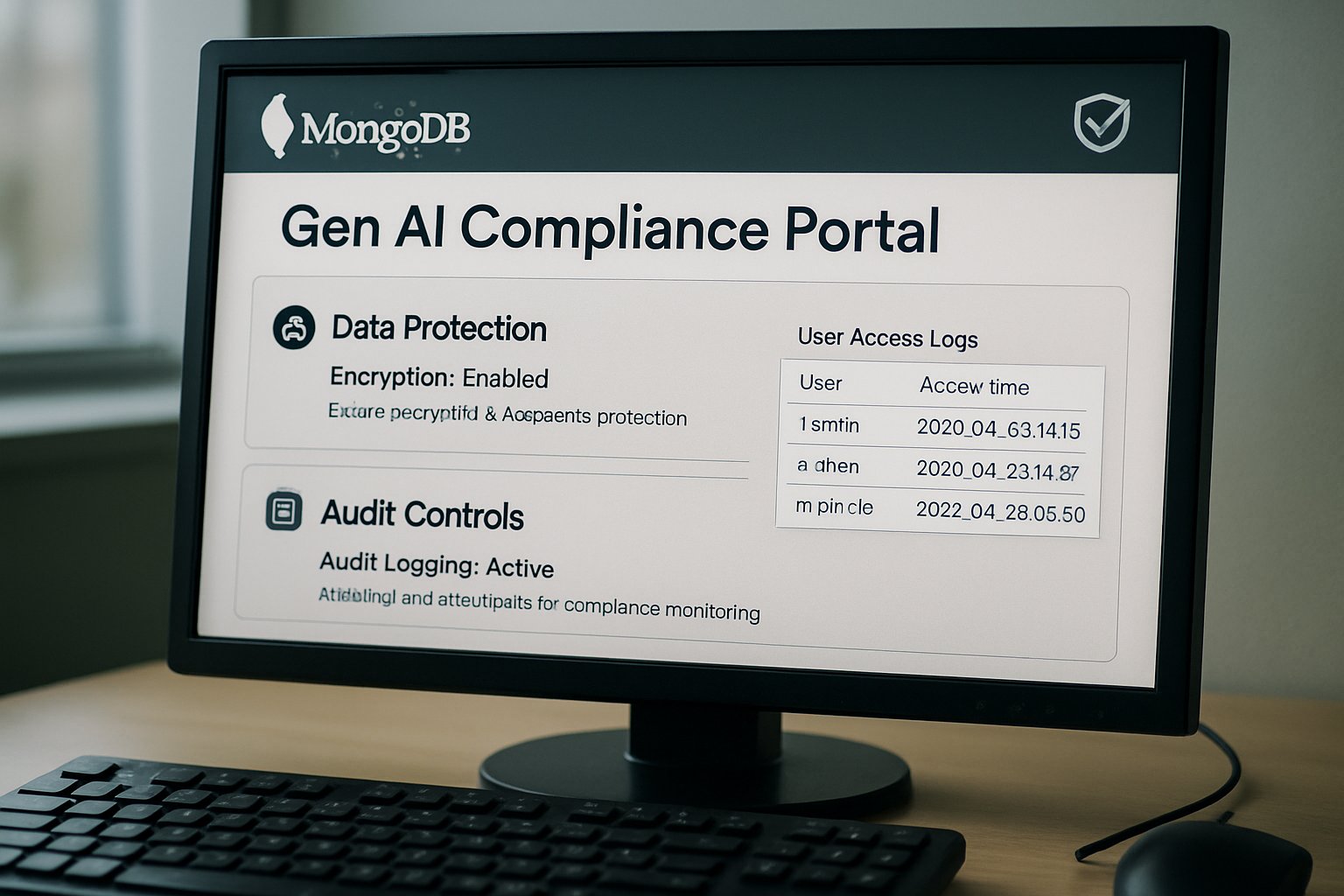
November 2025 introduced the Customer Trust Portal, a self-service window into audit reports and certifications. Furthermore, the portal bundles ISO 9001, TISAX, HDS, TX-RAMP, and SOC2 documents behind account authentication. Procurement teams in pharma cite week-long cycle reductions because paperwork arrives instantly. Consequently, legal reviews accelerate, allowing faster proof-of-concept launches on MongoDB Gen AI. In contrast, rivals often demand e-mail exchanges or NDA negotiations for similar artifacts. Valentina Poghoysan argued that transparency cements Reliability and differentiates the vendor. However, journalists still await hard adoption metrics showing portal impact on quarterly sales. The compliance groundwork supports a broader ecosystem push, examined next.
Ecosystem Strengthens Enterprise Reliability
MongoDB’s AI Applications Program aligns cloud providers, model companies, and governance vendors under one roof. Moreover, integrations with Liquibase Secure and Robust Intelligence close policy gaps at the database and model layers. Consequently, enterprises receive prescriptive blueprints for data lineage, schema management, and intrusion monitoring. The approach targets regulated verticals where Reliability rules buying decisions. Partner momentum appears healthy, with Atlas customer counts rising from 54,500 to 59,900 within two quarters. Meanwhile, Atlas revenue grew 24% year over year, affirming commercial resonance.
- Up to 8,000 startups building Atlas GenAI prototypes under subsidized credits.
- Reference architectures combining Voyage embeddings with Anthropic Claude models.
- Consulting sprints promising 60x code migration speed for banking modernization cases.
Nevertheless, ecosystem breadth introduces coordination risk that engineers must track. The next section shows how use cases across sectors pressure-test these integrations.
Sector Use Cases Expand
Early adopters demonstrate the multi-faceted reach of MongoDB Gen AI. For pharma researchers, vector search indexes trial reports, enabling near-instant similarity queries across molecular data. Consequently, lab teams report faster hypothesis generation and improved audit trails. Within e-commerce giants, chat assistants leverage Voyage reranking to curb hallucinated product attributes. Moreover, better recommendations raise conversion rates while holding latency below demanding thresholds. Banking group Lombard Odier highlights modernization gains, claiming code migration completed 50 times quicker. In contrast, legacy data stores required manual schema rewrites and offline batch jobs. Industrial manufacturers adopt the platform for asset manuals, valuing Reliability in safety-critical workflows. These stories validate the trust narrative, yet operational caveats surface next.
Operational Risks And Mitigations
Field engineers caution that vector indexing costs can spike during large ingestion windows. However, write consistency delays occasionally frustrate real-time e-commerce personalization teams. Community threads document hourly billing surprises when retention policies lack tuning. Moreover, embedding generation inside Atlas may raise vendor-lock questions for pharma compliance officers. Liquibase integrations partially mitigate drift, yet migration scripts still demand review cycles. Consequently, MongoDB recommends phased rollouts, starting with non-critical workloads.
- Cost profiles for indexing, storage, and query traffic.
- Latency budgets under peak transactional loads.
- Audit evidence linking retrieval logs to compliance frameworks.
Nevertheless, proactive monitoring and AI firewalls reduce many headline risks. These precautions inform the strategic guidance that concludes our analysis.
Strategic Outlook And Guidance
MongoDB Gen AI now competes on a trust platform narrative, not raw model counts. Analysts applauded the Voyage deal, yet they seek firm release dates for multi-modal retrieval. Furthermore, independent benchmarks comparing retrieval precision against Pinecone or pgvector remain absent. Consequently, buyers should request roadmap documents and pilot access timelines. Organizations in pharma, manufacturing, and e-commerce ought to run side-by-side evaluations. Meanwhile, architects must weigh stability needs against potential platform lock-in. Professionals can enhance expertise with the AI for Everyone™ certification. Adopters who master governance and modernization patterns will capture outsized value. The conclusion summarizes the essential actions ahead.
Conclusion
MongoDB Gen AI has tied product depth, compliance speed, and partner reach into a compelling trust proposition. Moreover, Voyage embeddings and reranking strengthen retrieval pipelines that underpin mission-critical reasoning. The Customer Trust Portal shortens audits, while ecosystem programs guide sector-specific modernization. However, MongoDB Gen AI still faces cost, benchmarking, and roadmap scrutiny. Therefore, teams should pilot MongoDB Gen AI alongside specialized vector stores to verify performance under local constraints. Meanwhile, clear governance mapping, assisted by certifications and AI firewalls, will future-proof deployments. Consequently, executives embracing MongoDB Gen AI position their organizations for durable, trusted growth.


