

AI CERTS
4 hours ago
NTT DATA’s AI Smart Mobility Push Cuts Urban Gridlock
Moreover, the effort dovetails with a 500-billion-yen Toyota and NTT partnership targeting zero road deaths by 2030. Global congestion statistics from INRIX underline the financial stakes. U.S. drivers alone lost 43 hours and $74 billion in 2024. Furthermore, megacities like Istanbul, Chicago and Tokyo reported more than 100 wasted hours. Regulators meanwhile tighten privacy rules, forcing vendors to rethink data sharing architectures. This article examines how NTT DATA’s program could meet those economic and regulatory pressures.
Urban Gridlock Stakes Rise
Congestion remains stubborn despite decades of incremental signal tweaks. INRIX counts 102 annual lost hours for Chicago commuters alone. In contrast, stalled freight convoys add hidden inventory costs that ripple through supply chains. Therefore, stakeholders increasingly demand quantifiable returns from technology pilots.
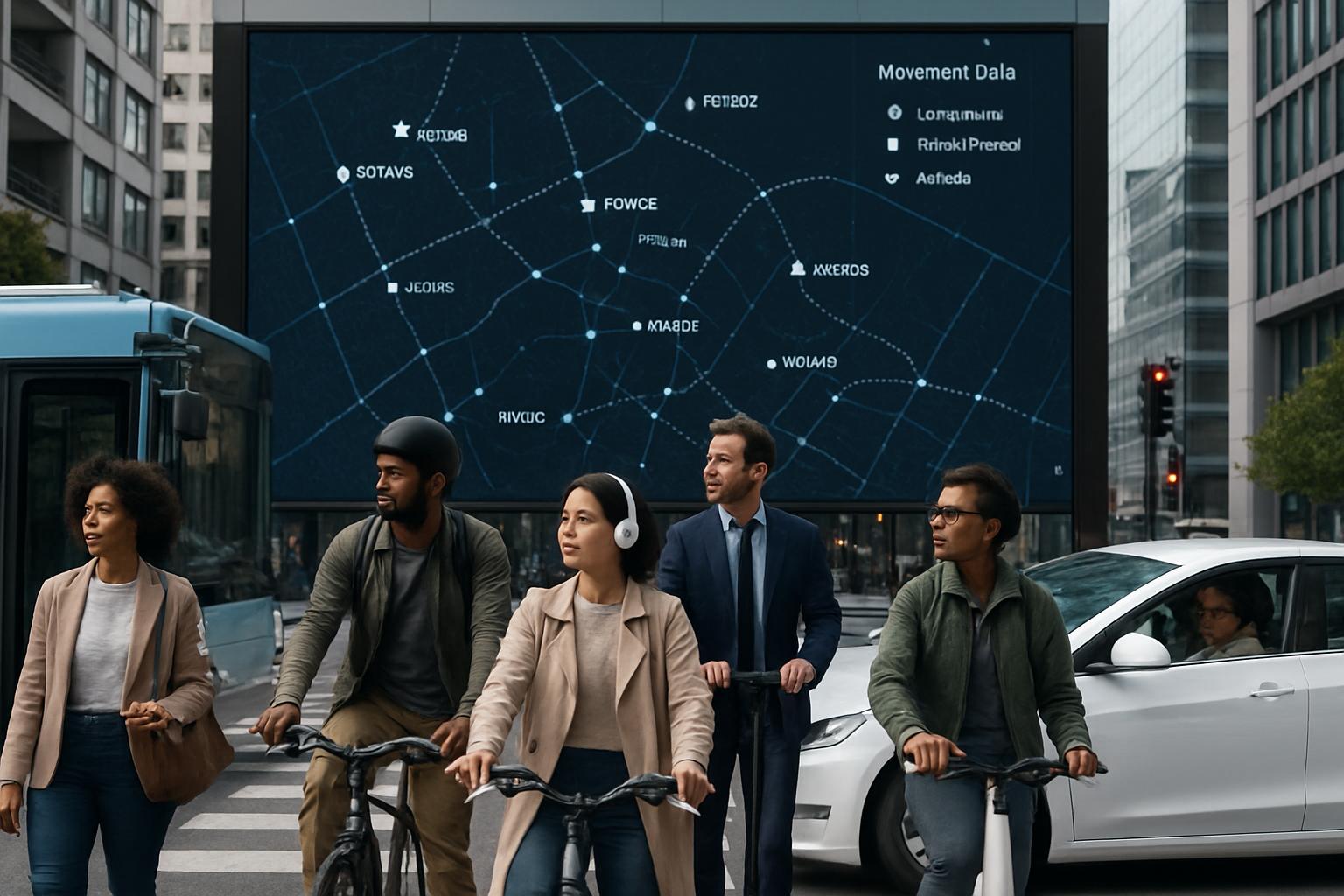
Traffic AI shines because it forecasts conditions minutes ahead, not hours later in spreadsheets. Real-time dashboards display expected queue lengths or reroute drivers before choke points form. Moreover, emissions models translate saved minutes into tangible carbon metrics.
- Consequently, INRIX pegs global congestion losses at $200 billion annually.
- Meanwhile, Toyota and NTT pledged $3.3 billion for mobility AI research by 2030.
- Chicago drivers faced 102 idle hours, while Tokyo shoppers endured holiday gridlock peaks.
These figures spotlight an AI Smart Mobility opportunity for disruption. However, capital alone cannot deliver impact without clear execution roles.
NTT DATA Strategic Role
NTT DATA serves as systems integrator across cloud, edge and vehicle domains. Consequently, the firm bridges automakers, municipalities and telecom operators. The Lalaport Tokyo-Bay pilot illustrates that mediator position. Vehicles shared speed and fuel data, while digital signage nudged arrival behavior. Furthermore, NTT DATA published congestion status on the mall website, easing parking searches.
Company executives link the pilot to the broader AI Smart Mobility roadmap. Robb Rasmussen called connected-car telemetry a cross-industry sustainability enabler in 2023. Additionally, partnerships with Cisco and Google Cloud supply scalable back-end muscle. That stack matters because real-time inference tolerates only millisecond latency. Nevertheless, success still depends on data governance and commercial alignment.
NTT DATA therefore positions itself as both architect and operator. This dual role frames the expanding platform story covered next.
Mobility Platform Vision Unfolds
NTT and Toyota jointly announced the Mobility AI Platform in late 2024. The partnership pledged 500 billion yen for phased development through 2030. Moreover, the vision targets zero accidents, elevating road safety while smoothing urban flow. Industry AI Cloud and IOWN photonics will underpin terabit connectivity between vehicles and edge nodes.
AI Smart Mobility components act as early service modules inside that larger architecture. AVP, routing and demand forecasting modules will feed the centralized marketplace of algorithms. In contrast, local governments can still choose governance policies through modular deployment options.
Project milestones specify social implementation by 2028 and nationwide scaling two years later. Consequently, vendors must mature pilots quickly to satisfy investors.
The vision cements AI Smart Mobility inside a national timetable. Next, we examine the infrastructure enabling real-time analytics at scale.
Infrastructure Powers Real-Time Analytics
Traffic predictions demand both massive bandwidth and ultra low latency. Therefore, NTT DATA’s Cisco software-defined infrastructure accelerates data-plane automation. Google Cloud integration meanwhile simplifies model training across multi-region clusters. Edge appliances near intersections host lightweight models that update driving behavior signals every second.
Real-time stream processing ingests vehicle speed, camera feeds, weather and public transit status. Subsequently, federated learning summarizes features without exposing personal identifiers. Differential privacy adds mathematically provable noise to protect driver identity.
Consequently, compliance risk drops even as prediction accuracy rises. However, persistent monitoring still verifies model drift and security posture.
Scalable infrastructure turns AI Smart Mobility exhaust into actionable insights within milliseconds. Privacy guardrails, explored next, keep that engine legally sustainable.
Privacy Guardrails And Consent
Regulators now fine automakers for opaque data sharing practices. The 2025 Honda case underscored that trend. Therefore, AI Smart Mobility embeds consent management APIs and secure clean rooms. NTT DATA also tests differential privacy and homomorphic encryption across partner environments.
Moreover, data contracts clarify ownership, purpose limitation and allowed secondary behavior analytics. In contrast, federated queries deliver congestion heatmaps without exporting raw GPS traces.
- Transparent opt-in dashboards inform drivers of telemetry usage.
- Edge anonymization removes identifiers before cloud ingestion.
- Audit logs capture every query for regulators.
These safeguards promote public trust and legal certainty. Consequently, validated metrics become the next credibility hurdle.
Metrics Validate Early Pilots
The Lalaport Tokyo-Bay study measured effects on parking search times and tailpipe emissions. NTT DATA reported a 12 percent drop in peak congestion during holiday weekends. Meanwhile, signage nudges shifted arrival patterns, spreading visitor behavior across off-peak windows. CO2 estimates improved by 4 percent, according to internal dashboards.
- Reduced average queue length by 18 meters per entrance.
- Improved driver safety perception scores by 9 points.
- Increased retail spend as dwell time rose two minutes.
Nevertheless, experts caution that pilot gains may not scale linearly citywide. Therefore, upcoming deployments will incorporate randomized control zones for rigorous evaluation.
Preliminary data suggests AI Smart Mobility delivers modest yet meaningful improvements. The future roadmap will decide whether momentum accelerates.
Future Roadmap And Upskill
Roadmaps indicate commercial rollouts aligning with the 2028 social implementation milestone. Subsequently, NTT DATA expects municipal tenders for integrated traffic management platforms. Stakeholders must therefore cultivate talent capable of designing, tuning and auditing AI Smart Mobility systems. Professionals can enhance credibility via the AI Prompt Engineer™ certification. Moreover, multidisciplinary skills will unlock greater safety and stronger city resilience.
Industry watchers predict aggressive procurement once demonstrable benefits exceed 10 percent travel time savings. In contrast, lagging cities may face investor backlash and citizen frustration. Consequently, transparent metrics and cross-sector governance will remain boardroom priorities.
Upskilling supports both platform deployment and ethical oversight. The concluding section recaps insights and invites further exploration.
Conclusion
NTT DATA’s traffic program links connected cars, cloud and edge into one predictive loop. Moreover, robust infrastructure and privacy guardrails position the effort for regulated markets. Early Tokyo pilots already trimmed delays and improved customer safety perceptions. However, citywide deployments will require deeper metrics, stable funding and agile governance. Consequently, stakeholders should invest in workforce skills aligned with AI Smart Mobility architectures. Professionals can start by pursuing vendor neutral certifications and participating in open data consortia. Meanwhile, vendors must demonstrate transparent impact before budgets tighten. Readers seeking competitive insight should explore next-step resources and connect with NTT DATA experts today.


