

AI CERTS
4 months ago
NTT DATA’s AI Sustainability Project Revives Daintree Rainforest
Remote sensing, drones and LiDAR feed real-time models guiding precise field actions. Meanwhile, community rangers propagate hundreds of native species in onsite nurseries. The goal remains simple yet daunting: accelerate ecological restoration while creating a replicable blueprint. This article unpacks the technology stack, funding realities and unresolved risks shaping the venture. Readers will gain practical lessons for launching data-driven conservation at enterprise scale.
Technology Meets Ancient Forests
NTT’s Smart Management Platform ingests heterogeneous field data every hour. However, rainforest conditions demand low-latency decisions delivered at the forest edge. Therefore, edge servers stationed near nursery sheds crunch sensor streams without relying on flaky mobile coverage. LiDAR scans, drone imagery, and weather probes merge into a dynamic digital twin. Consequently, managers visualise canopy gaps, invasive weeds, and micro-climate zones on one dashboard. Those insights then inform planting crews before they walk into the heat. The approach ties classical forestry wisdom with modern data science, embodying the AI Sustainability Project ethos. Additionally, the twin considers Daintree landforms, soil nutrients and flood histories for each square metre. Such precision supports restoration goals while reducing wasted seedlings.
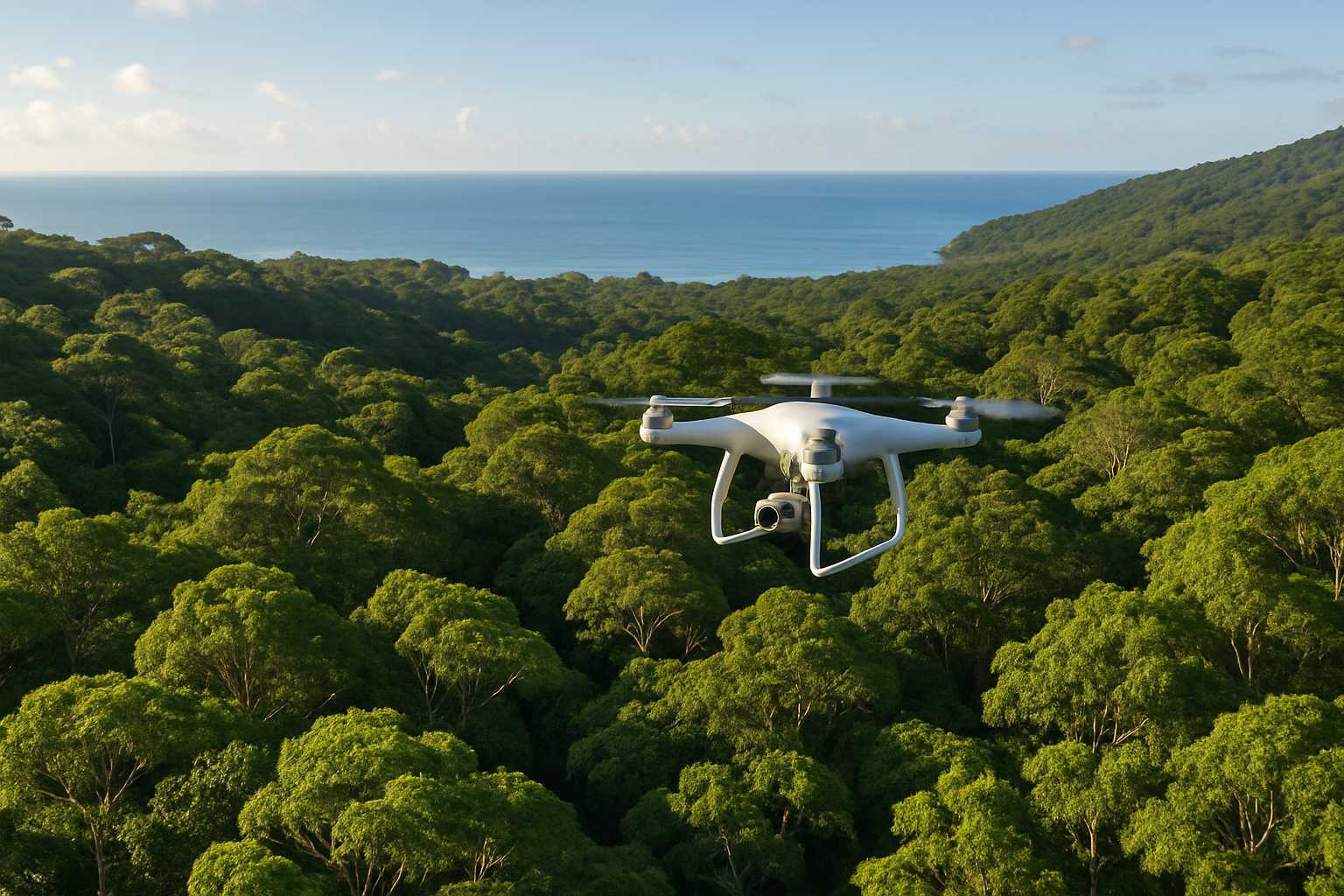
Smart sensing shortens feedback cycles and boosts field accuracy. Nevertheless, data without context produces limited change; understanding the platform’s backbone is essential.
Core Data Backbone Explained
The Smart Management Platform relies on modular microservices. Moreover, APIs integrate external biodiversity databases alongside live IoT feeds. Authentication layers protect Indigenous knowledge that informs species selection. In contrast, open summaries share non-sensitive metrics with donors and regulators. Machine-learning models classify drone imagery to detect seedling survival within complex understory. Meanwhile, soil moisture predictions guide irrigation trailers during dry spells. Each model retrains weekly, leveraging MLOps pipelines familiar to enterprise developers. Consequently, lessons learned here can migrate to other AI Sustainability Project deployments worldwide. The dataset already contains millions of Daintree pixel samples spanning two monsoon seasons. Such time-series data reveals ecosystem thresholds that previously remained hidden.
Robust architecture underpins every predictive insight. However, technology alone cannot plant trees; field workflows matter next.
Field Workflows In Action
Nursery teams cultivate roughly 180 native species chosen through Indigenous consultation. Furthermore, daily dashboards display germination rates, allowing quick intervention when pathogens appear. Soil inoculants restore fungal networks essential for seedling growth. In contrast, invasive Guinea grass gets mapped for targeted removal. Drones spread seed balls across steep ridges unreachable by vehicles. Consequently, labour hours drop while coverage scales. Community rangers track cassowary sightings, feeding that information back into the AI Sustainability Project model. Weekly field walks validate algorithmic predictions, closing the data loop.
- Pilot acreage: 372-527 acres pending final survey
- Trees planned: 360,000-400,000
- Saplings planted: 25,000 as of 2024
- Species cultivated: about 180
- Indigenous rangers employed: 12 seasonal roles
These workflows translate analytics into tangible forest growth. Now, funding realities determine whether momentum lasts.
Community And Funding Realities
ClimateForce raised A$2.5 million to secure the degraded farmland. Additionally, NTT DATA contributes donations, engineering talent and global fundraising reach. Indigenous Jabalbina custodians receive capacity funding for ranger programmes. Meanwhile, visitors purchase symbolic trees, diversifying revenue streams. However, long-term upkeep still requires multi-year commitments from corporate backers. Independent scientists warn that restoration success depends on decade-long monitoring. Consequently, transparent budgets and KPIs remain high priorities for the AI Sustainability Project. Clear reporting will also reassure the wider ecosystem of investors.
Nations watch this model for scalable climate action. Therefore, understanding remaining challenges becomes critical.
Persistent Implementation Challenges Ahead
Restoring tropical landscapes is inherently complex. Soil fertility declines quickly once the rainforest is cleared. Moreover, feral pigs uproot seedlings and compact the ground. Floods during the wet season drown young roots. Nevertheless, predictive models flag high-risk zones before planting occurs. LiDAR suggests micro-topography adjustments, guiding berms that divert standing water. In contrast, satellite data tracks canopy recovery over multiple years. Yet measurement uncertainty persists until third-party auditors verify biomass gains. Consequently, the AI Sustainability Project team is drafting open monitoring protocols. Drones will soon carry hyperspectral sensors to improve carbon estimates.
Challenges will not disappear overnight. However, scaling innovations could offset these risks when replicated elsewhere.
Scaling Lessons For Industry
Corporations increasingly seek credible nature investments. This Smart Rainforest offers transferable governance templates. Furthermore, modular data layers enable fast deployment in new biomes. Partners should secure strong Indigenous participation from project inception. Clear benefit-sharing builds trust and accelerates restoration progress. Meanwhile, edge computing reduces bandwidth costs in remote zones. Organisations can upskill talent through the AI Foundation™ certification to manage similar initiatives. Such training aligns with future AI Sustainability Project leadership needs. Lessons from Daintree soils also highlight the importance of early microbial restoration. Consequently, holistic planning secures entire ecosystem services, not just carbon credits.
- Integrate aerial mapping and ground truthing for rapid feedback
- Maintain soil fungi through biochar and inoculants
- Publish open data dashboards quarterly
- Link finance to verified restoration milestones
These principles reduce failure risks. In contrast, ad-hoc interventions rarely deliver durable impact.
Conclusion
The Smart Rainforest demonstrates how corporate ingenuity can regenerate fragile landscapes. Moreover, integrating Indigenous wisdom with high-resolution data builds social legitimacy. Consequently, early results from the Daintree pilot inspire cautious optimism. Nevertheless, long-term funding, soil stewardship and rigorous auditing remain non-negotiable. Enterprises planning an AI Sustainability Project must embed clear KPIs from day one. Meanwhile, open dashboards will reassure regulators and investors. Professionals should pursue continuous learning to lead such ecosystem programs. Therefore, enrollment in the AI Foundation™ certification offers a practical next step. Collaborative, data-driven action today secures tomorrow’s forest resilience. Take part now and accelerate global restoration.


