

AI CERTS
6 hours ago
Lane Crawford Bets Big on Retail AI Innovation
AiDLab, a PolyU and Royal College of Art laboratory, brings academic muscle and proprietary models. Meanwhile, shoppers will receive head-to-toe recommendations, avatar try-ons, and community events linked to the tool. Market watchers already predict multi-billion growth for AI driven apparel technology over the next decade. Therefore, the partnership offers a timely case study in applied machine learning for commerce. This article unpacks the strategy, technology, benefits, and possible pitfalls behind the collaboration. Readers will also find practical takeaways and skills guidance to ride the coming wave.
Partnership Signals New Era
Lane Crawford curates more than 350 luxury brands across Greater China and online. Yet leadership sees limits in traditional appointment-only styling. Consequently, Chief Executive Jennifer Woo seeks scalable digital engagement.
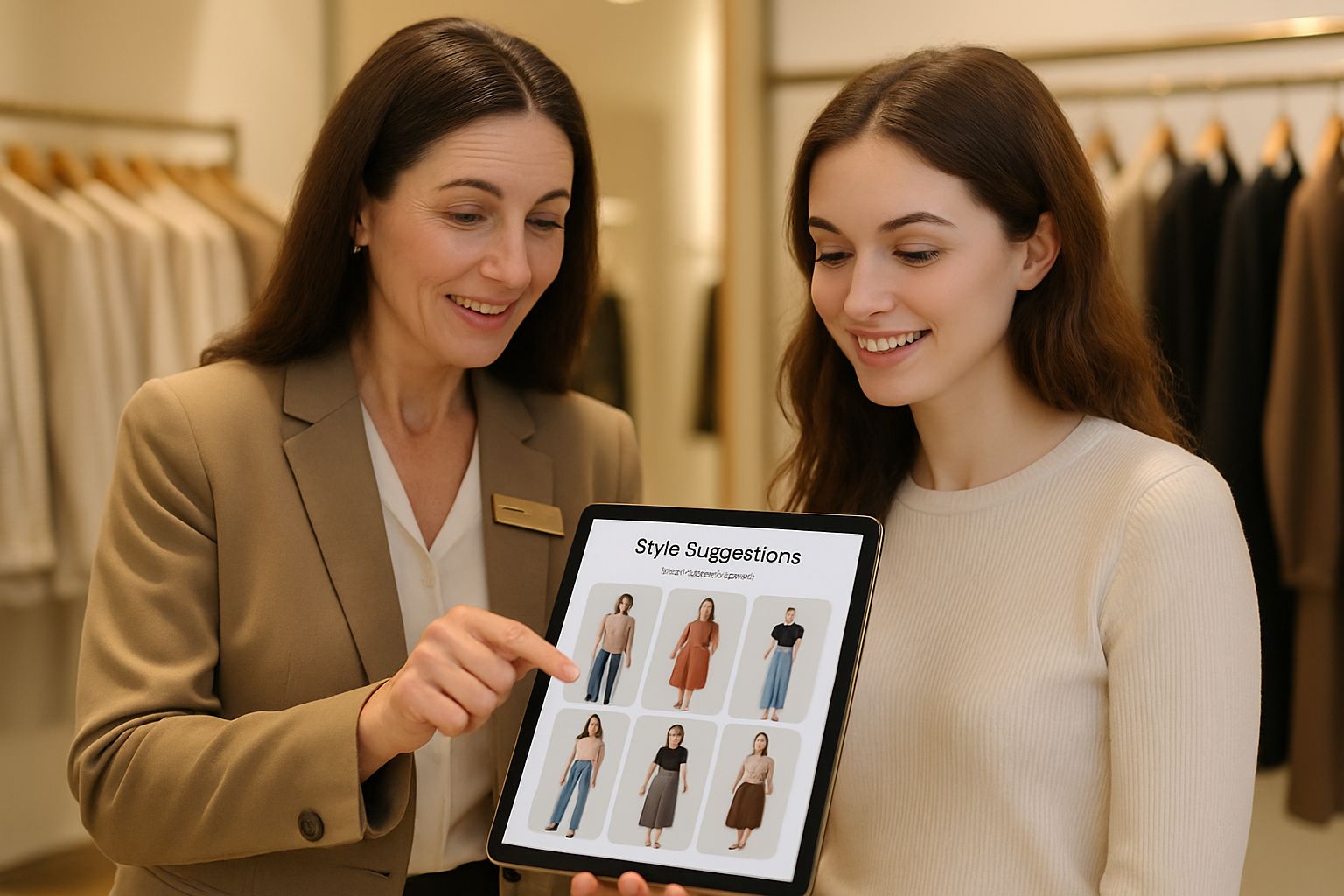
Her statement in the release underscores that ambition. She noted, "Personal styling is an important and valued service at Lane Crawford." Partnering with AiDLab will extend that service beyond physical boutiques and time zones.
AiDLab reciprocates the enthusiasm. Professor Wing-tak Wong described the collaboration as evidence that academic research can thrive commercially. Moreover, Professor Calvin Wong emphasized practicality and user alignment during the announcement.
The deal therefore ushers a fresh chapter for Retail AI Innovation in luxury. Lane Crawford gains research horsepower, while AiDLab secures an upscale proving ground. Both parties frame the move as customer-centric and globally minded. Understanding the underlying technology will clarify how those promises may materialize.
Technology Behind Virtual Service
SARA ingests customer preferences, purchase history, and contextual signals like weather or occasions. Subsequently, the engine returns curated outfits complete with mix-and-match accessories and color guidance.
Real-time inventory links ensure recommendations reflect actual stock levels across stores and the e-commerce site. Meanwhile, a computer-vision stack powers head-to-toe virtual try-ons on adaptive avatars.
AiDLab contributes AiDA and AiDF, tools that generate design concepts in roughly ten seconds. Advanced colour extraction recognizes about 2,300 shades, supporting precise palette suggestions for designers. Therefore, the same algorithms can refine SARA’s output for sharper aesthetic coherence.
The platform combines data, graphics, and generative models for seamless user experiences. Such architecture exemplifies Retail AI Innovation marrying back-office design and front-end engagement. However, commercial benefit matters as much as technical elegance.
Benefits For Lane Crawford
Scaled personalization tops the advantage list. Digital styling extends expert advice to global customers without appointment bottlenecks. Consequently, conversion rates and average order values often rise when shoppers receive tailored guidance.
Inventory efficiency improves as algorithms surface overlooked stock that suits a shopper’s taste. Returns may drop because virtual try-ons address fit expectations before checkout.
- Faster design cycles through AiDA assisted ideation
- Cross-sell uplift via complete-look suggestions
- Community engagement from LC×AiDLab events
- Data insights for dynamic merchandising decisions
Moreover, early adopters of personalization engines report double-digit revenue uplifts according to market studies. Lane Crawford thus expects measurable gains across sales, marketing, and design. These benefits illustrate tangible value drivers behind Retail AI Innovation. Nevertheless, every upside brings a counterbalancing set of risks.
Risks And Challenges Ahead
Virtual try-ons require body data that can be considered biometric under privacy laws. Therefore, compliance with GDPR, CCPA, and Hong Kong PDPO becomes paramount.
Bias in training data also threatens inclusive representation across sizes, ages, and cultures. In contrast, a human-in-the-loop workflow can mitigate algorithmic blind spots.
Intellectual property concerns surface when generative models echo existing designer motifs. Furthermore, integration demands investment in data engineering and cloud infrastructure.
Legal, ethical, and operational hurdles could stall unwary retailers. Robust governance and staged rollouts remain critical for sustainable Retail AI Innovation. Market benchmarks help quantify those stakes and solutions.
Market Context And Comparisons
Analysts value the global AI in fashion market at up to USD 1.6 billion in 2025. Forecasts project multibillion growth by 2030 with personalization and virtual try-on as leading use cases.
Comparable initiatives include Vivrelle’s Ella, FINDMINE’s styling engine, and Vue.ai’s fitting solutions. However, Lane Crawford delivers a luxury spin anchored in Hong Kong heritage and curated brands.
- In-store and digital convergence
- Integration with AiDLab design tools
- Community programming for brand loyalty
Consequently, the collaboration exemplifies Retail AI Innovation within an experiential luxury framework. The competitive field grows crowded, yet clear differentiation remains possible. Lane Crawford leverages heritage, research ties, and brand curation to stand out. Professionals now ask which skills will let them contribute to such projects.
Skills And Certification Path
Cross-functional talent must blend data science, UX, and merchandising knowledge. Additionally, ethical AI governance skills are increasingly mandatory.
Professionals can deepen expertise through the AI Researcher™ certification. The curriculum covers data strategy, model evaluation, and sector-specific case studies. Moreover, certified staff can advocate responsible Retail AI Innovation inside their organizations.
Upskilling ensures teams deploy technology responsibly and profitably. That preparation directly addresses the challenges outlined earlier. Attention now turns to the partnership’s broader implications for retail’s future.
Future Outlook For Retail
Stakeholders expect an initial pilot before the 2026 holiday season, although no date is official. Subsequently, similar AI stylist services will likely emerge across Asia and beyond.
Regulators may tighten biometric rules, pushing vendors toward privacy-preserving architectures. Consequently, transparent consent flows and on-device processing could become standard.
Investors will monitor key metrics like conversion uplift, return reduction, and customer lifetime value. Meanwhile, consumers will judge experiences by creativity and ease, not algorithmic novelty alone.
Retail AI Innovation now sits at the intersection of technology, design, and trust. Lane Crawford and AiDLab have placed an early, visible bet on that nexus.
The Lane Crawford project demonstrates how research partnerships can birth practical Retail AI Innovation. Results will surface once shoppers interact with the fashion avatar and checkout seamlessly. Early pilots should reveal whether conversion gains offset integration and governance costs. Nevertheless, market momentum suggests AI-enabled stylist experiences will soon move from novelty to norm. For executives, the takeaway is clear. Invest in data readiness, ethical controls, and interdisciplinary skills before competitors do. Practitioners should continually monitor advancements to keep their Retail AI Innovation roadmap relevant. Therefore, now is the time to explore structured learning and recognized credentials. Begin by enrolling in the AI Researcher™ program and lead the next upgrade.


