

AI CERTS
5 months ago
How the PExA AI framework Redefines Text-to-SQL Accuracy
That score briefly placed the system among top agentic contenders. Moreover, the approach offers lessons for teams balancing speed, governance, and precision. This article unpacks the architecture, results, and deployment implications. Readers will see how agent cooperation, rigorous benchmarking, and careful risk management intertwine.
Enterprise Data Context Now
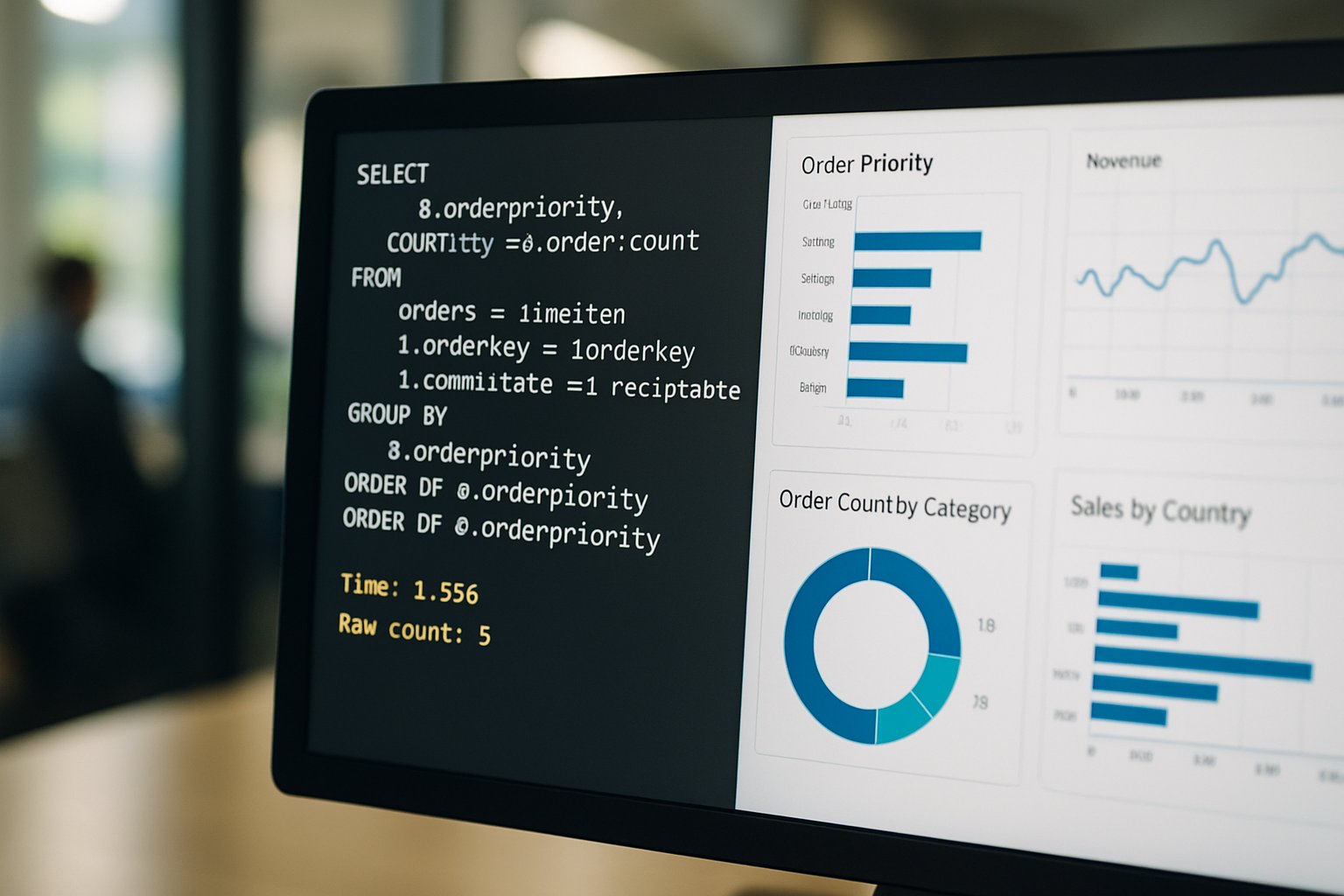
Enterprise analysts face sprawling databases with hundreds of related tables. Consequently, natural-language querying fails when schemas shift or embed hidden business rules. In contrast, leaderboards like Spider 2.0 expose these weaknesses by demanding multi-hop reasoning across diverse domains. Therefore, benchmarking progress becomes crucial for vendors and buyers. The PExA AI framework emerged partly in response to these pain points.
These pressures set the stage for innovative agentic designs. Meanwhile, the next section explores PExA’s unique internal workflow.
Inside PExA Design Steps
The PExA AI framework splits query generation into three cooperative agents. Firstly, the Planner converts user intent into semantically rich test cases. Secondly, the Test Case Generator executes micro queries to gather live evidence. Thirdly, the SQL Proposer synthesizes a final program and verifies its result using accumulated signals. Furthermore, the agents run in parallel, limiting latency overhead.
- Planner: crafts intent-aligned test plans.
- Test Case Generator: executes SQL probes for evidence.
- SQL Proposer: builds and checks final statement.
Moreover, software-testing inspiration distinguishes this workflow from single-pass prompting. By validating join paths early, the agents cut runtime errors and raise execution accuracy. Such design decisions exemplify why the PExA AI framework attracts enterprise interest.
These design layers reveal a disciplined engineering mindset. However, performance numbers ultimately decide real impact.
Spider Benchmarking Insights Shared
Spider 2.0 Snow remains the toughest public text-to-SQL yardstick. On that board, PExA registered a 70.20 execution accuracy. Consequently, the score placed it within the top cohort, though still below ByteBrain-Agent and LingXi Agent. Benchmarking committees emphasize execution accuracy because syntax matching can mislead practitioners.
- ByteBrain-Agent: 84.1 execution score.
- LingXi Agent: 79.9 execution score.
- PExA: 70.2 execution score.
Furthermore, Spider 2.0 contains 547 tasks covering finance, hospitality, and academic schemas. These cases force robust join reasoning and complex aggregation. Therefore, surpassing 70 percent execution accuracy on Spider signals tangible progress. Within the PExA AI framework, leaderboard submission used prompt caching to control cost.
The leaderboard thus validates PExA’s agentic concept. Meanwhile, users still need broader evaluation views.
Strengths And Key Limits
Bloomberg cites several practical advantages. Firstly, execution evidence targets the metric that matters most to analysts. Secondly, test probes reduce schema ambiguity, improving SQL precision. Moreover, parallel agent execution keeps latency competitive with simpler baselines. Nevertheless, multi-agent orchestration complicates debugging, monitoring, and cost modeling.
Data governance also enters the chat. Because probes need live read access, security teams must vet permissions and audit logs. In contrast, offline evaluation sidesteps those duties. Additionally, benchmark gains may not transfer when schemas drift or business logic lives outside databases. The PExA AI framework also benefits from parallel exploration.
These caveats temper enthusiasm yet inform wise planning. Consequently, buyers should weigh risk against benefit before launching pilots.
Operational Adoption Considerations Now
Enterprises evaluating the PExA AI framework should begin with guarded sandboxes. First, restrict probe access to synthetic or anonymized data. Furthermore, monitor concurrency because parallel agents can saturate warehouse credits. Therefore, capture wall-clock latency under realistic user loads and compare against baseline SQL assistants.
A structured checklist supports due diligence. Professionals can enhance their expertise with the AI Sales™ certification. Such programs build fluency in measuring AI return on investment and communicating value to stakeholders.
- Define data access policies before agent deployment.
- Run controlled benchmarking with representative queries.
- Track execution correctness and cost metrics regularly.
These practices create governance confidence and transparent metrics. However, strategic research questions still remain.
Future Research Checklist Ahead
Bloomberg promises a forthcoming technical preprint with deeper method details. Consequently, independent labs can attempt replication once code becomes public. Moreover, practitioners await cost and latency benchmarks under production constraints.
Researchers also plan to explore hybrid symbolic-learning approaches that may surpass current performance ceilings. Meanwhile, Spider expansions covering governance rules would improve external validity. The PExA AI framework is expected to open research around schema self-diagnosis.
The field therefore marches toward richer datasets and clearer reproducibility. These trends set the stage for our closing thoughts.
Conclusion And Next Steps
The PExA AI framework demonstrates that agent cooperation and systematic probing can lift real-world text-to-SQL reliability. It achieved 70.20 percent execution accuracy on Spider 2.0, validating the concept through rigorous benchmarking. Consequently, teams now see a viable path toward higher data-query fidelity.
Nevertheless, secure deployment demands governance, cost analysis, and skilled practitioners. Explore how the PExA AI framework and related skills can elevate your data strategy. Start by reviewing sandbox results, pursuing certifications, and iterating responsibly.
Disclaimer: Some content may be AI-generated or assisted and is provided ‘as is’ for informational purposes only, without warranties of accuracy or completeness, and does not imply endorsement or affiliation.


