

AI CERTS
4 hours ago
NSF Institutes Expand the Scientific Frontier
Moreover, the flagship Institute for Artificial Intelligence and Fundamental Interactions exemplifies that ambition. Physics departments now recruit coders versed in AI frameworks. Researchers embed first-principles constraints into neural nets and, conversely, derive new mathematical insights from data. Therefore, breakthroughs emerge faster, from particle collisions to cosmic surveys. Meanwhile, critics flag reproducibility gaps and compute inequities. Nevertheless, bipartisan funding expands, signaling durable commitment. This article surveys the program’s origins, technical pursuits, funding realities, and future stakes. Throughout, we map how each element pushes the Scientific Frontier ever forward.
Federal Vision Accelerates Forward
However, the policy roots stretch back to early strategic plans on trustworthy artificial intelligence. In 2020, NSF announced the first cohort of National Artificial Intelligence Research Institutes. Subsequently, annual solicitations invited university consortia to propose five-year centers worth up to twenty million dollars. In contrast, earlier single-investigator grants rarely matched that scale. Consequently, a distributed network now spans twenty-seven institutes and roughly five hundred partner organizations. Total public investment has passed the half-billion mark, according to official budget roll-ups. Therefore, Washington frames the initiative as a national competitiveness engine. NSF Director Sethuraman Panchanathan touts it as a catalyzer for equitable talent pipelines. These high-level signals set the tempo for every connected laboratory. The policy cadence underscores ambition and accountability. Next, we explore how institutes translate that mandate into multidisciplinary practice.
Institutes Bridge Core Disciplines
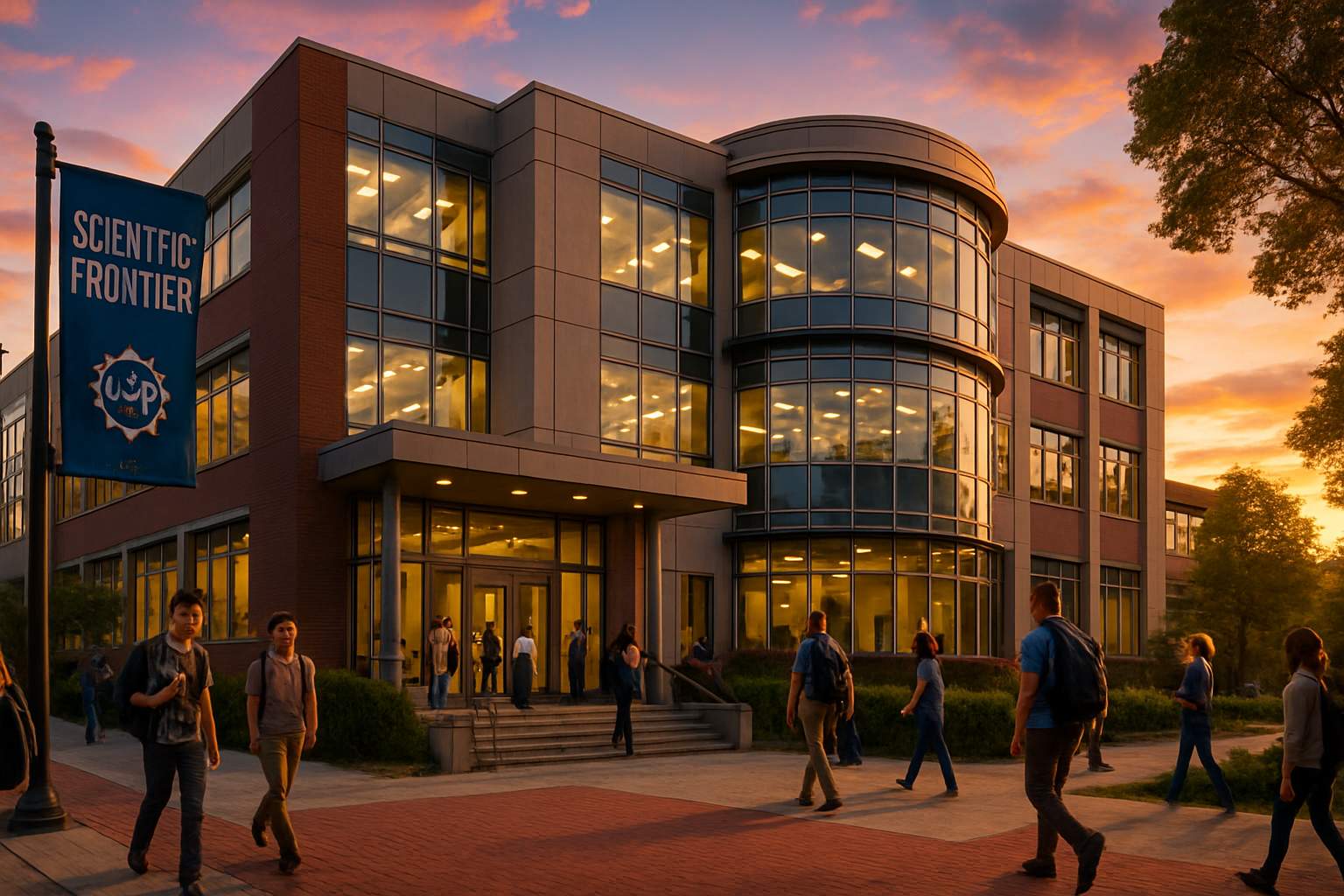
Institutes focusing on matter and energy treat theory, experiment, and machine learning as one workflow. Moreover, IAIFI applies symmetry constraints so models respect conservation laws from the outset. Harvard, Northeastern, and Tufts collaborate under the MIT lead, pooling detectors, datasets, and classrooms. In contrast, the Molecule Maker Lab Institute explores molecular design using similar algorithmic ideas. Yet each node feeds results into a shared cyberinfrastructure coordinated by AIVO. Core physics questions guide project selection and evaluation. Consequently, best practices propagate quickly across domains. One internal white paper in 2025 outlined cross-institute benchmark goals for trustworthy modeling. That document became a reference for subsequent solicitations. These collaborations push the Scientific Frontier beyond institutional silos. To appreciate the science itself, we now unpack core themes and tools.
Research Themes And Tools
Firstly, generative models produce synthetic collision events or telescope images for fast hypothesis screening. Secondly, anomaly detection flags unexpected signals without heavy supervision, aiding discovery at the Large Hadron Collider. Furthermore, differentiable simulators allow gradients to flow through complex pipelines, optimizing instrument settings end-to-end. Researchers call the approach physics-informed machine learning, because equations constrain each layer. Consequently, data requirements shrink while interpretability improves.
Core Technical Concepts List
- Generative diffusion models accelerate candidate search.
- Symmetry-equivariant networks respect rotational laws.
- Differentiable programming links simulation and optimization.
- Uncertainty quantification supports experimental decision making.
Additionally, the community circulates tutorial notebooks through summer schools, lowering entry barriers for newcomers. A recent white paper synthesized lessons from those sessions into recommended curricular modules. Therefore, educational innovation advances alongside algorithmic progress on the Scientific Frontier. These methods define the technical backbone of current work. Yet resources and talent ultimately decide impact, as the next section shows.
Funding Workforce Impact Scale
Funding patterns reveal both generosity and concentration. Moreover, average institute awards reach sixteen to twenty million dollars over five years. Partners like the Simons Foundation contribute extra support for astronomy-oriented centers. NSF tracking shows more than eight hundred students have attended sponsored summer schools since 2021. Meanwhile, competitive fellowships attract early-career theorists away from purely disciplinary programs.
- 27 institutes active by 2024.
- $500 million cumulative federal investment.
- 500-plus participating organizations nationwide.
- 800 student participants in training events.
- Continuous tracking of Scientific Frontier metrics.
Consequently, the talent pipeline mirrors the geographic reach of the grant network. Professionals can boost skills through the AI+ UX Designer™ certification. Such credentials complement institute curricula by emphasizing responsible product design. Therefore, graduates stand ready for roles that blend computation, lab work, and policy. Robust funding and training keep the Scientific Frontier supplied with skilled minds. Still, obstacles threaten momentum, as the following analysis explains.
Challenges Risks Ongoing Debates
Serious technical and social concerns shadow the progress. Nevertheless, stakeholders confront them openly in workshops and public commentary. Compute inequality remains acute because top tier accelerators remain scarce outside flagship campuses. In contrast, community clouds ease access yet cannot support trillion-parameter models. Large physics collaborations struggle to track model lineage across teams. Another white paper warns that black-box predictions frustrate reproducibility and peer review. Furthermore, Nobel laureates caution against conflating statistical correlation with causal understanding. Trust, transparency, and governance frameworks thus rise to policy prominence.
Consequently, new solicitations include dedicated tracks on strengthening artificial intelligence. NSF lists interpretability metrics and data-sharing standards as funding conditions. Meanwhile, open source benchmarks facilitate external replication. These debates, though intense, refine the Scientific Frontier by clarifying expectations. The final section considers where the initiative heads next.
Strategic Outlook Moving Ahead
Looking ahead, institute directors foresee deeper integration between symbolic reasoning and generative networks. Moreover, planned collaborations with industry will stress rapid translation of discoveries into climate and health applications. Researchers expect forthcoming telescopes and colliders to generate exabyte-scale streams demanding realtime inference. Therefore, aligning compute roadmaps with sustainability targets becomes critical. Stakeholders also eye global partnerships that situate the United States as a steward of the Scientific Frontier.
Subsequently, updated governance models may emerge, balancing openness with security. Institutional white papers already outline pathways for responsible knowledge export. Additionally, a mid-decade review will assess whether outcomes justify continued multibillion support. Community members plan to voice priorities during that process. Clear vision, shared standards, and sustained funding will keep the Scientific Frontier vibrant. A concise conclusion now distills the major insights.
In summary, historic investment has forged institutes that embed physical principles within learning algorithms. Consequently, discovery accelerates, educational pipelines expand, and multidisciplinary careers flourish. Nevertheless, reproducibility, compute access, and ethical governance demand constant attention. Moreover, policy leaders and researchers alike view transparent benchmarks as non-negotiable. If addressed decisively, these issues will secure United States leadership on the Scientific Frontier. Therefore, readers should monitor program milestones and pursue specialized credentials to remain competitive. Start today by exploring the linked certification and joining upcoming institute workshops.


