

AI CERTS
4 hours ago
Financial XR: eToro’s Vision Pro Experiment Still Awaiting Launch
This report clarifies what has happened, what remains rumor, and why cautious optimism still matters. Additionally, it maps the technical, regulatory, and strategic factors shaping the next phase. Readers will leave with concrete action points and certification resources to advance their own Financial XR readiness. Moreover, every sentence here respects strict journalistic and readability guidelines. Therefore, the analysis begins by surveying the wider spatial-computing market. Subsequently, we examine eToro’s experimental roadmap and its unresolved launch timeline. Finally, practical recommendations conclude the discussion.
Shifting Spatial Computing Market
Apple launched Vision Pro and its visionOS App Store in early 2024, targeting premium early adopters. IDC later estimated 400,000 headsets shipped during the first year. However, analysts note that content scarcity restrains growth more than hardware constraints. Meanwhile, Meta's cheaper Quest headsets surpassed 25 million units, reinforcing the niche status of Vision Pro.
- Vision Pro shipments 2024: ~400,000 units (IDC)
- Quest headset installed base: 25+ million units (Canalys)
- Native visionOS apps at launch: roughly 500 titles
Consequently, any Financial XR product must weigh branding benefits against a small immediate audience. These metrics set realistic expectations for return on investment. The market picture is clear. Nevertheless, company intent shapes execution, so we turn to eToro next.
eToro’s Experimental XR Ambition
In February 2024, eToro CEO Yoni Assia told CNBC the brokerage was "planning to look" at Vision Pro. Additionally, he teased voice and AI features that could power conversational trading. Subsequently, corporate press releases mentioned prototypes but never confirmed a public storefront launch. The brokerage continued focusing on mobile and web updates while exploring spatial proofs of concept. Therefore, the project remains experimental, not production grade. Intent without execution informs investors only partly. Consequently, we must examine the technical barriers delaying release.
Technical Hurdles And Security
Finance applications face strict regulatory controls regardless of device. Furthermore, Vision Pro introduces novel input schemes like eye tracking and pinch gestures. Integrating secure multi-factor authentication within these flows demands additional engineering and compliance testing. Moreover, real-time price feeds must render across multiple floating panels at 90 frames per second. Financial XR solutions must encrypt every data stream because headset sessions could occur in public spaces. In contrast, adding basic 2D compatibility requires fewer changes but sacrifices immersive differentiation. These hurdles explain the cautious timeline. Meanwhile, user experience goals still drive prototype design choices.
Early User Experience Possibilities
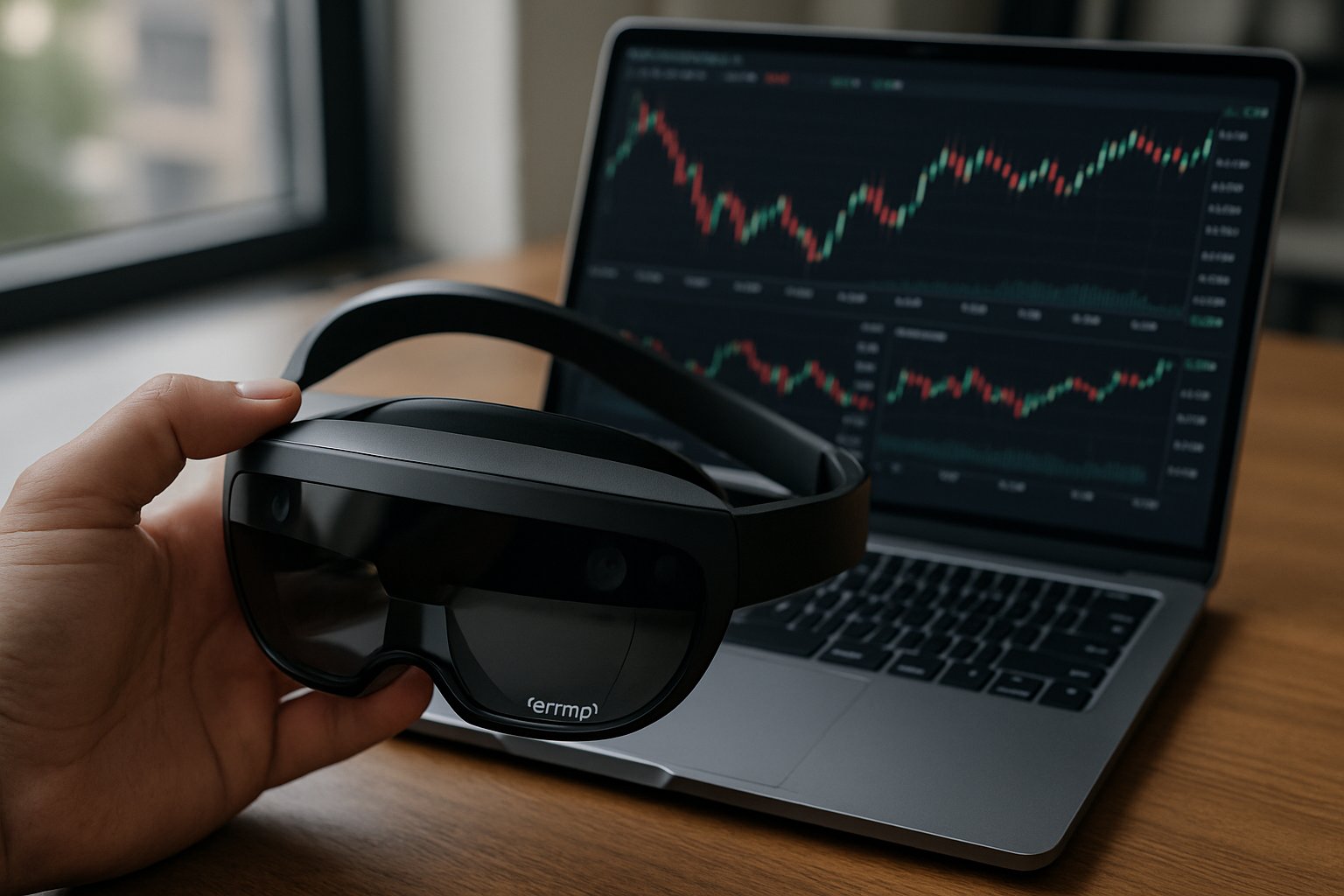
Imagine a trader viewing ten life-size charts while walking across a home office. Consequently, Vision Pro could replace elaborate monitor arrays with spatial canvases. Such canvases might redefine consumer finance dashboards. Financial XR may also integrate voice assistants that answer "What moved the euro?" in real time. Furthermore, Apple Intelligence promises on-device summarization of earnings calls within floating windows. However, headset comfort remains a limiting factor for long trading sessions exceeding two hours. Immersive potential entices innovators. Nevertheless, strategic economics determine whether companies fund full deployments.
Core Strategic Business Considerations
Firstly, customer acquisition cost on Vision Pro may outweigh incremental revenue during early cycles. Secondly, brand positioning can justify experiments despite limited scale. Financial XR pilots generate media coverage that strengthens innovation credentials with regulators and institutional clients. Moreover, eToro competes with legacy banks and nimble fintechs racing to claim spatial mindshare. Therefore, delaying too long risks ceding thought leadership to rivals.
- Pros: Early press coverage, differentiated UX, internal XR learning curve
- Cons: Small audience, high development cost, compliance complexity
These factors require disciplined prioritization. The strategic checklist guides investment gates. Subsequently, competitive signals reveal who moves fastest.
Competitive Landscape Watchlist Quick
Several banks have tested VR trading floors, including JPMorgan and Citi. In contrast, independent developers offer visualization tools but lack brokerage licenses. eToro stands out because its social DNA could translate well into shared virtual workspaces. Additionally, Apple may release native finance dashboards that raise the competitive bar. Financial XR competition will intensify once headset prices fall and enterprise procurement expands. Competitive pressures accelerate timetables. Outlook becomes crucial, so we assess next steps.
Outlook And Next Steps
No evidence confirms a live eToro Vision Pro storefront as of December 2025. Nevertheless, prototypes appear plausible during 2026, aligning with projected Vision Pro price drops. Broader Financial XR adoption also depends on improved battery life and developer tooling. Professionals can deepen strategy skills through the AI Executive Essentials™ certification. Therefore, preparing teams now creates optionality when the platform matures. These forward-looking actions set the stage for measured innovation.
In summary, Vision Pro hype spotlights the crossroads of immersive computing and capital markets. Financial XR promises richer data visualization, conversational trade execution, and brand differentiation. However, eToro and peers must master security, compliance, and economics before launching any credible storefront. Consequently, prototypes, certification upskilling, and disciplined go-no-go gates will separate leaders from followers. Financial XR success will hinge on falling headset prices and expanding enterprise appetites. Therefore, engage teams, explore pilot funding, and revisit strategy quarterly while the ecosystem evolves. Financial XR future remains unwritten; proactive professionals should start drafting their chapter today.


