

AI CERTS
4 hours ago
Investment Politics: Trump’s $500B Stargate AI Bet
Commentators quickly linked the announcement to Investment Politics, the administration’s narrative connecting capital flows and geopolitics. Global investment patterns shift when Washington signals backing at this scale. However, critics asked whether the promised dollars really exist. This article dissects the deals, the numbers, and the intense Investment Politics swirling around Stargate’s bold claims. Technical leaders, regulators, and regional officials must understand the stakes. Consequently, we evaluate funding mechanics, power demands, regulatory gaps, and emerging opportunities for professionals.
Investment Politics Spotlight Now
Political capital routinely seeks large stage moments. Stargate gave the administration exactly that. Moreover, Trump’s team immediately folded the pledge into campaign talking points on manufacturing resurgence. OpenAI’s blog mirrored the triumphal tone, promising immediate deployment of 100 billion dollars. Nevertheless, Reuters noted that only about 38 billion in firm equity was outlined between OpenAI and SoftBank. Therefore, the remaining total hinges on debt packages and external syndicates still under negotiation. In contrast, administration press releases present the full 500 billion headline without disclaimers. Such framing exemplifies Investment Politics at work, blending aspiration with partial allocations. Financial analysts advise parsing hard commitments from narrative driven projections. These distinctions set the stage for deeper funding scrutiny in the next section.
White House Launch Event
The launch unfolded in the East Room with lights, cameras, and semiconductor props. Meanwhile, Trump declared the project a "moonshot" that would "reindustrialize the heartland". Masayoshi Son, chair of SoftBank, pledged bold spending and waved a thick binder of term sheets. Sam Altman of OpenAI highlighted national security motives and thanked Oracle for cloud partnership. Consequently, mainstream outlets repeated the 100 billion immediate commitment without extensive caveats.
Television graphics compared the number to the Apollo program and interstate highway budgets. However, Investment Politics driven symbolism overshadowed fine print about incremental financing tranches. Subsequently, analysts began scanning SEC databases for definitive filings. None existed at that point, reinforcing doubts about timing. The spectacle succeeded politically yet left auditors hungry for documentation. We now turn to the deal structure underpinning those glowing speeches.
Funding Structure Questions Rise
Capital formation for megaprojects rarely arrives in one wire transfer. Therefore, Stargate relies on a layered stack of equity, debt, and vendor financing. Reuters reported OpenAI and SoftBank each committing about nineteen billion of equity. Additionally, OpenAI’s separate forty-billion round supplies liquidity earmarked partly for data centers. Media sources describe Oracle supplied infrastructure leases that defer heavy cash outlays.
Nevertheless, rating agencies have not yet graded the planned bond issuances. Consequently, Investment Politics again intersects with cash reality, as promises outpace bank approvals. Key figures revealed in public statements include:
- Equity pledged: ~38 billion combined OpenAI and SoftBank
- Private round: 40 billion led by SoftBank, valuation near 300 billion
- Target debt: up to 350 billion via staggered bonds and leases
- Power infrastructure spend: about 70 billion across utilities
These numbers illustrate a funding pyramid that may wobble if credit markets tighten. However, advocates argue rising model demand will entice investment banks. Understanding these levers is vital before assessing physical build challenges. The next section examines those gigawatt ambitions.
Scale And Power Demands
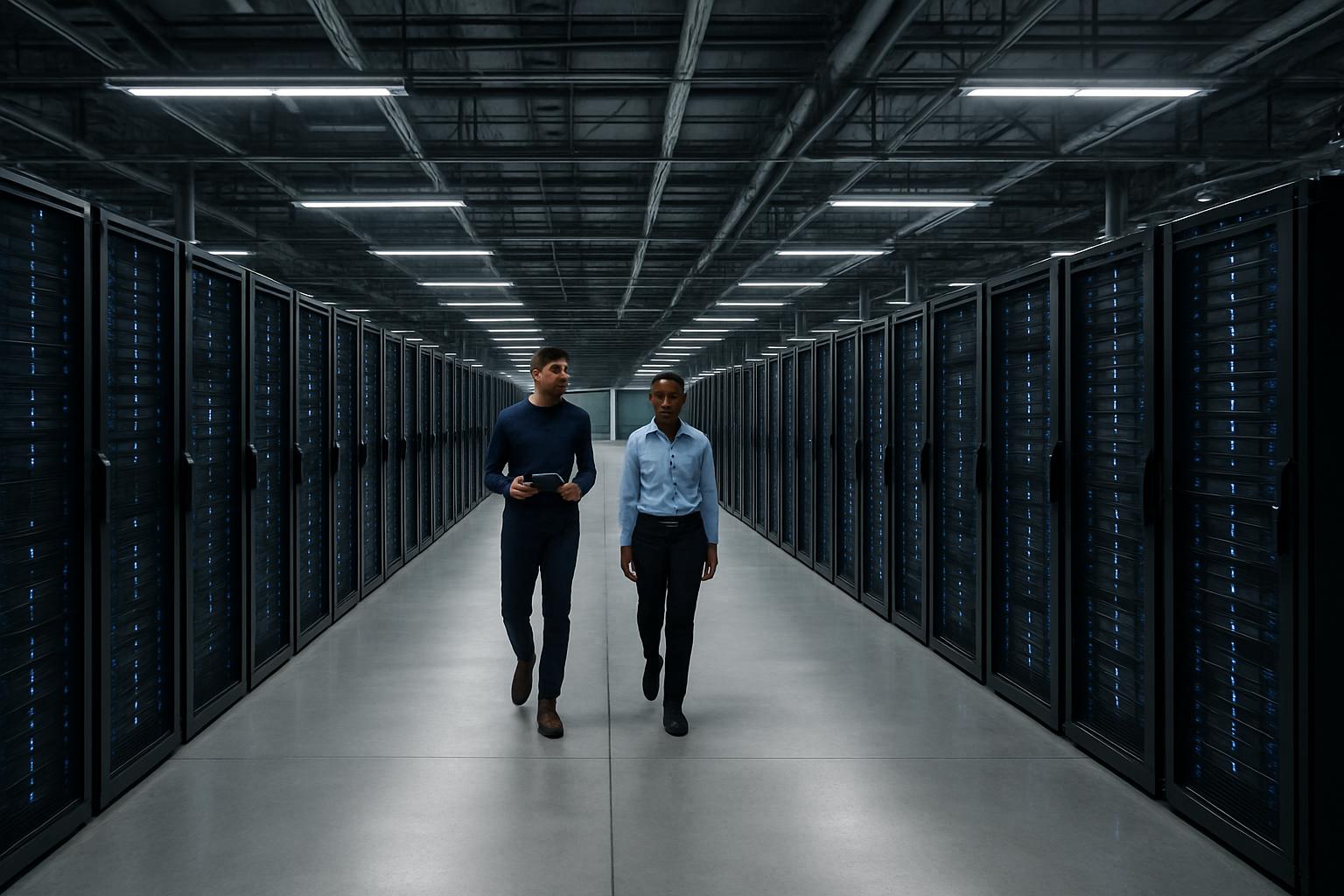
Project documents quote a ten-gigawatt goal, equal to powering several million homes. Moreover, OpenAI and Oracle already broke ground on an Abilene, Texas campus targeting over two million chips. Subsequently, July updates added 4.5 gigawatts, raising announced capacity near seven gigawatts. Grid operators warn that interconnection queues stretch for years, even with federal fast-track programs. In contrast, corporate briefings project first compute coming online within eighteen months.
Power engineers cite transformer shortages and permitting backlogs as likely bottlenecks. Nevertheless, SoftBank financial models bake in aggressive construction draws to justify expected returns. Investment Politics rhetoric assures voters that lights will stay on, yet technical hurdles remain steep. Data center sustainability also raises emission and water concerns in arid regions. These constraints directly influence national security arguments discussed next.
Economic And Strategic Stakes
Stargate boosters link domestic compute to competitiveness, jobs, and defense readiness. Furthermore, Trump insists the venture will create a hundred thousand positions across construction and operations. White House figures combine temporary and permanent roles, creating headline appeal. However, independent economists predict closer to twenty-five thousand steady jobs. OpenAI argues that faster model training accelerates breakthroughs in healthcare, energy, and security applications.
Consequently, capital inflows could cluster innovative suppliers near new sites, bolstering regional ecosystems. Such regional dynamics typify Investment Politics, where spending patterns influence electoral maps. Critics meanwhile highlight concentration risk if one joint venture dominates national AI capacity. Therefore, policymakers debate antitrust oversight and export controls. These unresolved questions feed into regulatory deliberations. The following section reviews looming policy hurdles.
Regulation And Safety Debate
Regulatory guardrails shifted when Trump rescinded a Biden-era AI safety order on announcement day. Therefore, Congress is revisiting disclosure and testing requirements for large model deployments. Civil groups argue that gargantuan compute equals strategic capability, deserving the same scrutiny as weapons systems. Meanwhile, the administration positions Stargate as private, shielding it from many federal acquisition rules. Nevertheless, grid regulators must approve each site’s power draw, embedding public hearings into the timetable. Additional oversight may emerge because the total investment figure dwarfs recent semiconductor subsidies.
Consequently, Investment Politics collides with national security politics, producing unpredictable committee dynamics. Professionals can deepen expertise through the AI Prompt Engineer™ certification. Such credentials help navigate emerging compliance frameworks around massive AI infrastructure. These policy currents close the technical narrative and return us to political framing. Regulatory uncertainty may delay timelines yet also spur safer practices. Finally, we assess next steps for involved stakeholders.
Project Stargate exemplifies modern Investment Politics, where technology, money, and power blend across sectors. That event delivered a campaign win. Venture partners secured headlines and preliminary financing. However, data center steel must still rise, and lenders must still sign binding checks. Stakeholders should track bond registrations, grid studies, and regulatory hearings throughout 2026.
Consequently, professionals who master technical and policy nuance will influence outcomes. Consider deepening skills through the linked AI Prompt Engineer™ certification and stay ahead of evolving standards. The race is on; informed leaders will shape America’s AI future.


