

AI CERTS
4 hours ago
Workforce Economics: AI Wage Premiums Explained
We examine the famous Australian 31 percent figure and rival global studies. Moreover, we explore methodological pitfalls that inflate or deflate the perceived premium. Readers will gain a clear view of demand signals and future bargaining leverage. Therefore, prepare to navigate the evolving AI labour market with data, not hype. Our journey begins with foundational Workforce Economics concepts shaping every headline.
Workforce Economics In Focus
Economists study labour supply, demand, and price formation under the banner Workforce Economics. AI adoption introduces fresh variables into these classical models. However, the core question remains constant: how much will employers pay for scarce capability?
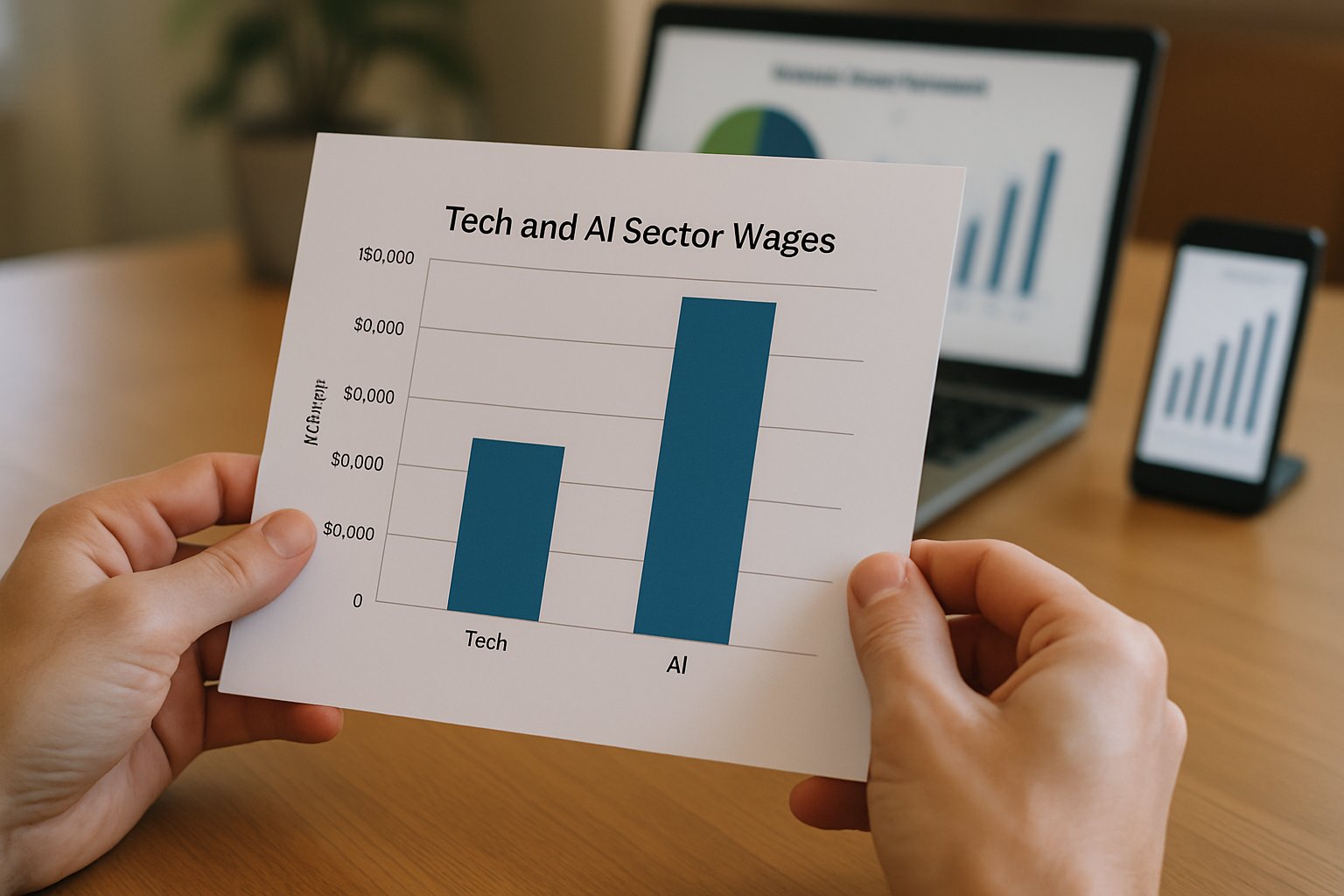
Advertised salary data offers one observable signal. Nevertheless, those figures often confound occupation mix, location, and time effects. Adjusted models attempt to isolate the impact of specific skills.
When analysts reference a 31 percent uplift, they discuss an unadjusted average. In contrast, controlled estimates sometimes shrink to single digits. Consequently, critical appraisal sits at the heart of sound Workforce Economics analysis.
AI skills influence pay, yet measurement choices shape conclusions. The next section unpacks raw numbers in Australia.
AI Pay Gap Reality
Australia provides a vivid case study. Andrew Leigh analysed SEEK job ads between 2017 and 2024. Moreover, he found AI-tagged roles advertised A$121,275 on average. That figure stood 31 percent above non-AI postings.
However, once occupation, state, and year were controlled, the premium fell near 6 percent. Recent periods show only 4 percent adjusted difference. Leigh therefore warns against naive headline interpretation.
Despite the correction, AI fluency still attracts extra dollars within similar job families. Consequently, managers cannot ignore emerging skill price signals.
Australian data shows both promise and perspective. Next, we contrast these findings with global barometer reports.
Headline Numbers Compared Today
International datasets paint a broader picture. Lightcast analysed 1.3 billion postings across multiple countries. Moreover, listings mentioning at least one AI skill offered a 28 percent salary premium. Listings with two skills displayed about 43 percent.
PwC’s 2025 Global AI Jobs Barometer produced an even stronger headline, 56 percent. Furthermore, the study linked AI exposure to triple revenue-per-employee growth. Oxford Internet Institute estimates range between 23 and 36 percent depending on occupation cluster.
In contrast, most other industry trackers land between 20 and 40 percent. Nevertheless, every report observes a positive wage differential favouring AI talent.
Global studies confirm higher advertised pay for AI knowledge. However, numbers fluctuate because inputs and methods diverge. We now examine what drives those gaps.
Drivers Behind Pay Premiums
Several factors inflate or deflate the measured premium. First, taxonomies differ on what qualifies as AI fluency. For example, one dataset counts prompt engineering, another requires deep learning frameworks. Consequently, sample composition shifts dramatically.
Second, unadjusted averages conflate occupation, seniority, and city effects. Regression controls reduce that noise, revealing a truer wage signal. In contrast, some reports still headline the bigger unadjusted number.
Third, geography matters because tech hubs already command higher baselines. Moreover, advertised salary seldom equals realised earnings after negotiation. Longitudinal worker panels would provide stronger causal evidence.
Definitions, controls, and geography explain divergent barometer readings. The following section explores organisational implications within broader Workforce Economics debates.
Implications For HR Leaders
HR teams face rising competition for AI-literate candidates in modern Workforce Economics context. Therefore, compensation frameworks must evolve quickly. Benchmarks should reference adjusted premium values, not sensational headlines. Additionally, recruiters should recognise transferable fluency across non-tech domains.
Skills based hiring can widen talent pools and mitigate wage escalation. Nevertheless, organisations still need internal training pipelines.
Thoughtful pay strategy preserves equity while attracting scarce expertise. Next, we outline upskilling routes for individuals.
Upskilling Pathways Now Available
Professionals seeking higher earning power should pursue structured credentials. For instance, they can deepen applied AI fluency through specialised programs. Moreover, professionals can enhance expertise through the following certification. They may enrol in the AI Architect™ program to validate skills.
Coursework covers model deployment, data pipelines, and responsible governance. Consequently, graduates signal immediate project readiness to employers.
- Lightcast: 28% salary uplift for one AI skill.
- PwC Barometer: 56% global wage uplift for AI capability.
- SEEK: 31% raw, 6% adjusted uplift in Australia.
Certification plus practice strengthen market positioning. Consequently, informed individuals can ride the Workforce Economics wave.
Key Takeaways And Outlook
Evidence consistently shows employers pay more when roles require AI capability. However, the exact figure swings with definitions, controls, and geography. Therefore, smart professionals treat headline numbers as directional signals, not guarantees. Within Workforce Economics, that approach aligns pay strategy with supply dynamics. Meanwhile, organisations should benchmark adjusted data and invest in training to manage wage pressure. Consequently, enrolling in certified programs like the AI Architect™ pathway converts AI fluency into verified value. By acting now, readers can secure advantage as Workforce Economics continues its rapid AI-driven evolution.


