

AI CERTS
4 hours ago
Datacenter Moratorium Spurs Political Risk Debate
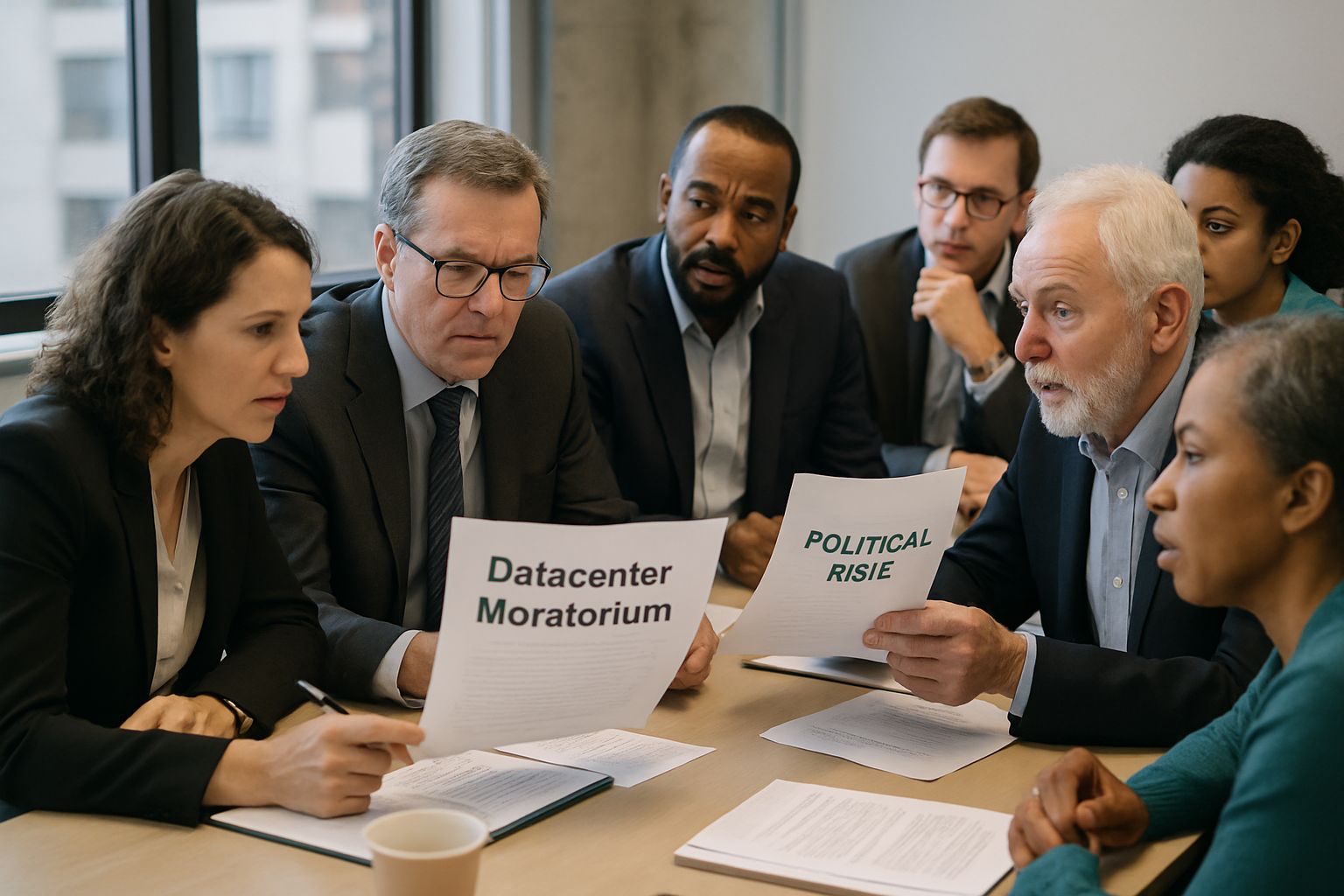
Moreover, more than 230 environmental organizations echoed his call in an open letter to Congress.
Their argument centers on rising electricity demand and water stress.
Therefore, the debate introduces significant Political Risk for cloud providers and municipalities alike.
Analysts warn that rapid decisions made today could reverberate for decades across regional grids.
Meanwhile, the White House continues promoting accelerated AI buildouts under its December policy order.
In contrast, state regulators grapple with local opposition that has already stalled billion-dollar facilities.
Moratorium Debate Intensifies Nationwide
Sanders framed the requested pause as a chance for democracy to "catch up" with accelerating technology.
During his December 28 CNN interview, he linked unchecked expansion to job displacement, mental health, and household bills.
Furthermore, the senator highlighted local examples, citing Louisiana and Texas projects projected to dwarf regional demand.
The coalition letter amplifies those concerns.
Moreover, 230 organizations argue a moratorium would prevent externalizing grid upgrade costs onto taxpayers.
They warn that AI-driven datacenters could consume as much water as midsize cities.
Consequently, congressional staffers now analyze several draft policy options, ranging from permitting freezes to performance standards.
Stakeholders acknowledge the rising Political Risk but disagree on its magnitude and timeline.
In short, political momentum for a pause is building.
Stakeholders see mounting uncertainty for capital allocation.
Next, skyrocketing energy projections intensify that uncertainty.
Sanders Joins Growing Coalition
Collaboration between Sanders and environmental groups surprised few Capitol watchers.
Nevertheless, the breadth of signatures, from Greenpeace to Physicians for Social Responsibility, startled industry lobbyists.
Additionally, municipal leaders from water-stressed regions added their endorsements after several proposed datacenters threatened aquifer supplies.
Food & Water Watch coordinated messaging that links AI servers to rate hikes in low-income neighborhoods.
Consequently, House progressives reference those talking points when drafting oversight letters to federal agencies.
Meanwhile, moderate senators signal openness to shorter review windows rather than an outright moratorium.
Political Risk escalates when previously aligned Democrats diverge over process and scope.
Investors hate ambiguity, and several analysts downgraded cloud expenditures for 2026.
Moreover, credit agencies inserted cautionary language into recent data-center bond prospectuses.
Thus, coalition growth reinforces concern across financial markets.
Legislators now demand authoritative energy numbers before taking sides.
The next section examines those projections.
Energy Demand Projections Surge
Lawrence Berkeley National Laboratory released the definitive 2024 study on datacenter electricity.
Researchers calculated 176 terawatt-hours consumed in 2023, or 4.4% of national load.
Moreover, they foresee consumption climbing to as high as 580 terawatt-hours by 2028.
That upper scenario equals the current annual usage of New York and New Jersey combined.
Consequently, grid planners anticipate major natural gas and transmission investments without policy intervention.
In contrast, efficiency improvements could limit growth, yet hyperscale AI workloads remain unpredictable.
Before listing the critical statistics, analysts emphasize transparency.
- 176 TWh in 2023, representing 4.4% of U.S. electricity
- Projected 325–580 TWh in 2028, equaling 6.7%–12% of demand
- Sixteen projects worth $64 billion delayed or blocked since 2024
These numbers clarify why energy regulators have entered the conversation.
Political Risk intensifies whenever projections widen, because investors struggle to price future rate structures.
Rising consumption forecasts provide ammunition for both critics and advocates.
However, industry leaders argue a halt would handicap US competitiveness.
Their pushback now dominates the next stage of debate.
Industry Pushes Back Hard
Cloud operators lobby daily against a federal moratorium.
Amazon, Microsoft, and Google stress that AI breakthroughs rely on domestic compute clusters.
Moreover, they promise billions in renewable procurement to offset additional energy demand.
Elon Musk added drama by labeling moratorium supporters "cowards" in a viral post.
Nevertheless, social backlash highlighted reputational hazards for outspoken executives.
Subsequently, some companies toned down rhetoric and emphasized community benefit funds.
Investors watch these communications because Political Risk affects share valuations.
Furthermore, supply-chain vendors fear pause-related order cancellations.
Consequently, lobbying expenditures have spiked during the first quarter of 2026.
Therefore, corporate resistance remains fierce yet nuanced.
Executives must also prepare for legal challenges.
Legal complexity is the focus of the following section.
Legal Complexities Loom Large
Any federal moratorium would require either new legislation or expansive executive authority.
However, the December White House order aims to preempt state patchworks, complicating prospects.
Courts could test constitutional limits around commerce and takings if construction halts.
Meanwhile, local governments have already imposed zoning freezes, creating a mosaic of rules.
Consequently, developers juggle simultaneous lawsuits in multiple jurisdictions.
Moreover, insurance underwriters adjust premiums upward to hedge Political Risk exposure.
Attorneys suggest an interim path using conditional permits tied to strict efficiency targets.
In contrast, activists doubt enforcement will prove robust without a definitive pause.
Stakeholders therefore continue lobbying for clarity before capital commitments.
Legal uncertainty stalls projects as effectively as formal bans.
Yet, negotiators are sketching compromise frameworks.
Emerging middle-ground concepts appear in the next discussion.
Possible Compromise Pathways Emerging
Policy analysts propose performance-based standards rather than blanket moratoria.
Additionally, tying approvals to one-for-one clean generation pledges attracts bipartisan interest.
DOE officials explore tax credits for retrofitting cooling systems to reduce water footprints.
Another idea caps electricity per computational task, encouraging efficiency innovation.
Furthermore, shared grid investment funds could shift upgrade costs from ratepayers to operators.
Political Risk may decline if such mechanisms stabilize forecasts.
Professionals can enhance their expertise.
They should consider the AI Prompt Engineer™ certification to deepen compliance insight.
Training helps corporate teams quantify Political Risk within evolving regulatory regimes.
These options reveal space for negotiated progress.
However, enterprises still need actionable guidance.
The final section outlines strategic steps.
Strategic Steps For Enterprises
CIOs should model multiple policy scenarios, including a one-year construction freeze.
Moreover, procurement teams must secure diversified power contracts to hedge supply shocks.
Subsequently, location analysts ought to prioritize cooler climates with existing renewable capacity.
Risk officers should integrate Political Risk metrics into capital budgeting templates.
Additionally, transparent stakeholder engagement can mitigate local opposition before permits are filed.
Companies may publish annual datacenter impact reports to demonstrate accountability.
Finally, boards must revisit ESG disclosures, emphasizing energy efficiency milestones.
Proactive communication reduces surprise, thereby lowering financing costs linked to Political Risk.
These steps convert uncertainty into manageable variables.
Consequently, leadership can focus on innovation instead of crisis response. A concise review follows. The datacenter showdown now sits at the intersection of climate policy, economic strategy, and technological ambition. Stakeholders agree that reliable data and transparent cost allocation will determine future construction momentum. However, the pace of AI model development ensures the discussion remains urgent.
Consequently, companies and lawmakers must collaborate quickly to balance innovation, grid stability, and community welfare. Readers should monitor congressional hearings, executive actions, and utility filings for actionable signals. For forward-looking professionals, building deeper regulatory literacy today prepares teams for whatever compromise emerges tomorrow. Those preparations separate reactive organizations from resilient leaders.


