

AI CERTS
3 months ago
Project Aura vs XR: Glasses Take on Heavyweight Headsets
Meanwhile, Apple, Meta, and Samsung continue refining immersive headsets with heavier onboard compute. Wearables strategy differences matter for developers, enterprises, and early adopters alike. This article compares the leading products, contextualizes market data, and highlights adoption hurdles. Moreover, readers will gain actionable insights for roadmap planning and skills development. Let us examine the momentum first.
XR Market Momentum Shifts
Global VR headset shipments declined 12% in 2024, according to Counterpoint. Nevertheless, investment in AR wearables jumped as Google unveiled Android XR. Additionally, Samsung confirmed Project Moohan, later branded Galaxy XR, for a 2025 release. Analysts interpret these events as a strategic pivot toward lighter form factors.
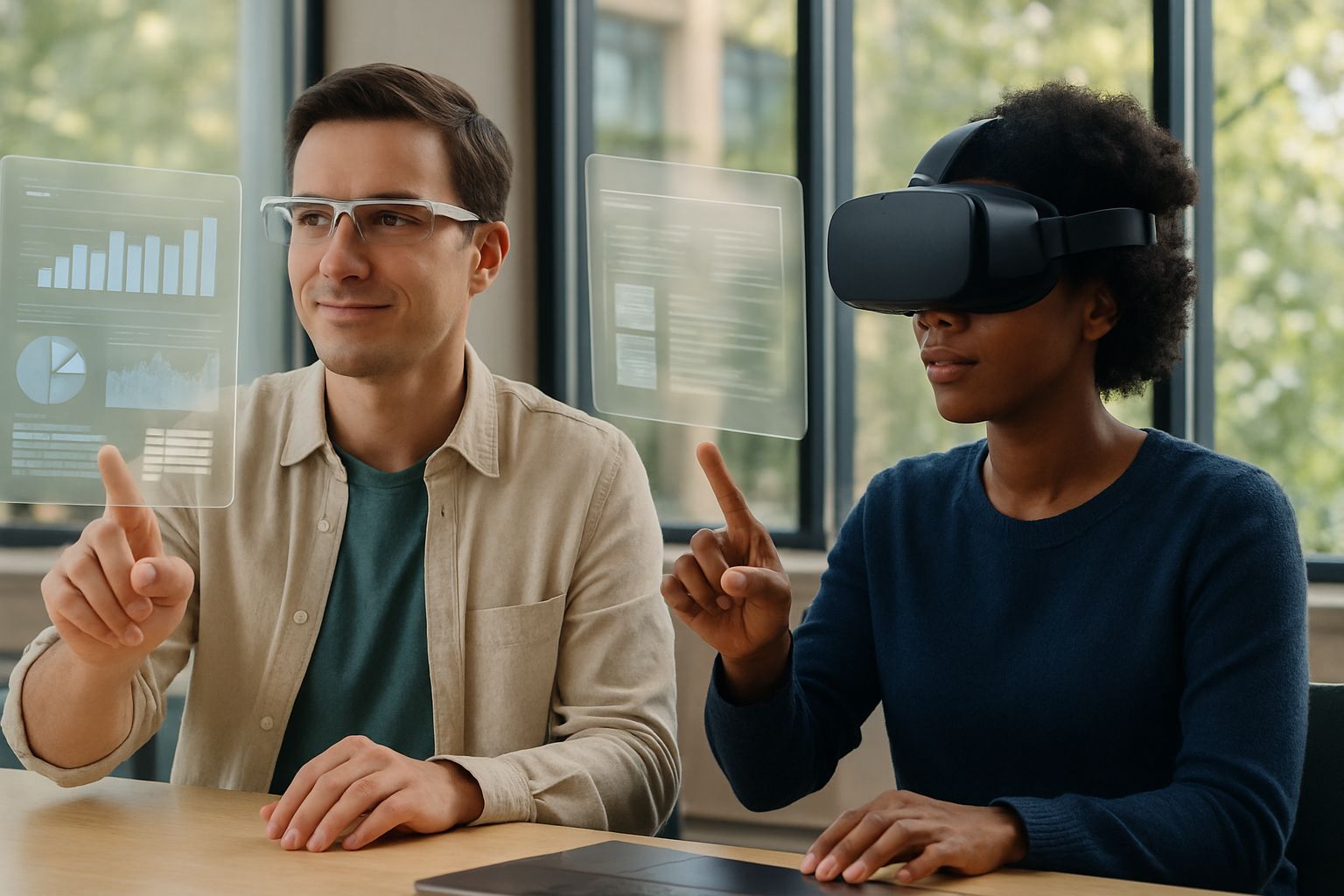
In contrast, Apple Vision Pro anchored the premium segment with micro-OLED displays and bespoke silicon. Meta maintained mass-market traction through the Quest 3 line and aggressive pricing. Consequently, competition now spans glasses, tethered pucks, and self-contained headsets. Stakeholders must navigate confusing terminology and shifting category boundaries.
Momentum is clearly moving toward diversified XR hardware portfolios. However, understanding Project Aura vs XR specifics requires a closer hardware look.
Project Aura Hardware Highlights
Project Aura glasses showcase optical see-through lenses delivering an estimated 70-degree field of view. Moreover, the tethered compute puck houses Qualcomm Snapdragon XR silicon and a robust battery. Designers traded absolute immersion for comfort, weight, and sustained wearability. Consequently, the device feels closer to everyday wearables than to a bulky headset.
XREAL’s Google I/O demo highlighted Gemini-powered voice and gesture interactions. Additionally, a floating HUD displayed emails, maps, and collaborative whiteboards without blocking real-world vision. Developers can expect Android XR APIs, Unity plugins, and fast Gemini queries for context-aware overlays. Furthermore, professionals may certify skills through the Chief AI Officer™ program to exploit these capabilities.
The Project Aura vs XR narrative prioritizes lightweight comfort and contextual AI. Therefore, comparing this design with full headsets clarifies tradeoffs.
Headset Competitor Landscape
Apple Vision Pro leads premium specifications with 23 million pixels and dual chips. Meanwhile, Meta Quest 3 balances cost and mixed-reality passthrough for mainstream gamers. Samsung’s upcoming Galaxy XR promises Android XR parity with a standalone architecture. In contrast, Project Aura vs XR highlights show how glasses trade immersion for social presence.
Each headset integrates extensive sensors, including LiDAR, hand tracking cameras, and spatial audio arrays. Recent demo videos illustrate these devices rendering life-size CAD models in real time. Moreover, thicker chassis permit larger batteries, enabling two-hour untethered sessions at minimum. However, weight often exceeds 600 grams, discouraging prolonged wear outside controlled environments.
- Vision Pro: >23M pixels, 600-gram chassis, external battery.
- Quest 3: 2064×2208 per eye, 515-gram body.
- Galaxy XR: micro-OLED rumors, estimated $1,800 price.
Headsets prioritize full immersion, rich input, and onboard compute. Nevertheless, Project Aura vs XR comparisons underscore comfort and social appearance advantages for glasses.
Use Case Divergence Explained
Enterprise pilots influence product roadmaps across categories. Field technicians value HUD overlays for manuals and sensor data while maintaining situational awareness. Consequently, Project Aura vs XR debates often rest on safety and ergonomics. Gamers and creatives prioritize display resolution and controller latency, favoring headsets today.
Furthermore, remote collaboration benefits from transparent glasses because facial cues remain visible. Training simulations still need headset fidelity for accurate physics and immersion. Additionally, location-based entertainment vendors prefer self-contained hardware that withstands constant turnover.
Different tasks dictate different display philosophies. Subsequently, the market segments will likely coexist rather than converge quickly.
Latest Analyst Market Numbers
Counterpoint estimates 9.4 million VR headsets shipped during 2024, down from 10.7 million. Meanwhile, AR smart-glasses volumes plateaued near 280,000 units, reflecting supply and pricing challenges. Statista projects combined XR revenues could reach $100 billion by 2028 if adoption hurdles fall. Investor days routinely feature demo stations showcasing productivity scenarios and immersive media.
In contrast, IDC offers a conservative $76 billion forecast for the same period. Moreover, both firms highlight enterprise spending as the fastest-growing segment. Project Aura vs XR hardware diversity underpins these forecasts, bolstering developer enthusiasm.
- Counterpoint: 9.4M VR headsets shipped 2024.
- Statista: $100B XR revenue by 2028.
- IDC: $76B conservative estimate 2028.
Numbers differ, yet the Project Aura vs XR trajectory remains upward. Consequently, investors track form-factor breakthroughs for signals of mass inflection.
Adoption Challenges Ahead Now
Price remains the loudest barrier across all categories. Vision Pro starts at $3,499, while Quest devices dip below $500. XREAL declined to reveal Project Aura pricing, fueling speculation about accessibility. Moreover, battery life expectations differ between glasses and headsets.
Wearables comfort expectations further complicate procurement decisions. Content libraries also lag, especially for enterprise HUD workflows. Therefore, Google is courting developers with open tooling, revenue incentives, and Gemini integrations. Additionally, corporate buyers demand robust security certifications before deploying sensitive data overlays.
Cost, content, and compliance still slow progress. Nevertheless, Project Aura vs XR momentum suggests solutions are actively forming.
Conclusion And Market Outlook
Spatial computing is entering a multi-form-factor era. Project Aura vs XR discourse illustrates how design choices reshape user experience and economics. Glasses emphasize comfort, HUD utility, and social acceptability. Headsets deliver maximum immersion, sensor fidelity, and standalone power. Market data shows both paths will grow as prices fall and applications mature. Consequently, professionals should monitor ecosystems, prototype early, and upskill in spatial design. Subsequently, earning credentials like the Chief AI Officer™ can unlock leadership roles. Take decisive steps now and shape the future of immersive innovation.


