

AI CERTS
4 hours ago
Genesis-1 Cloud Validation: Orbital Cloud Claims Assessed
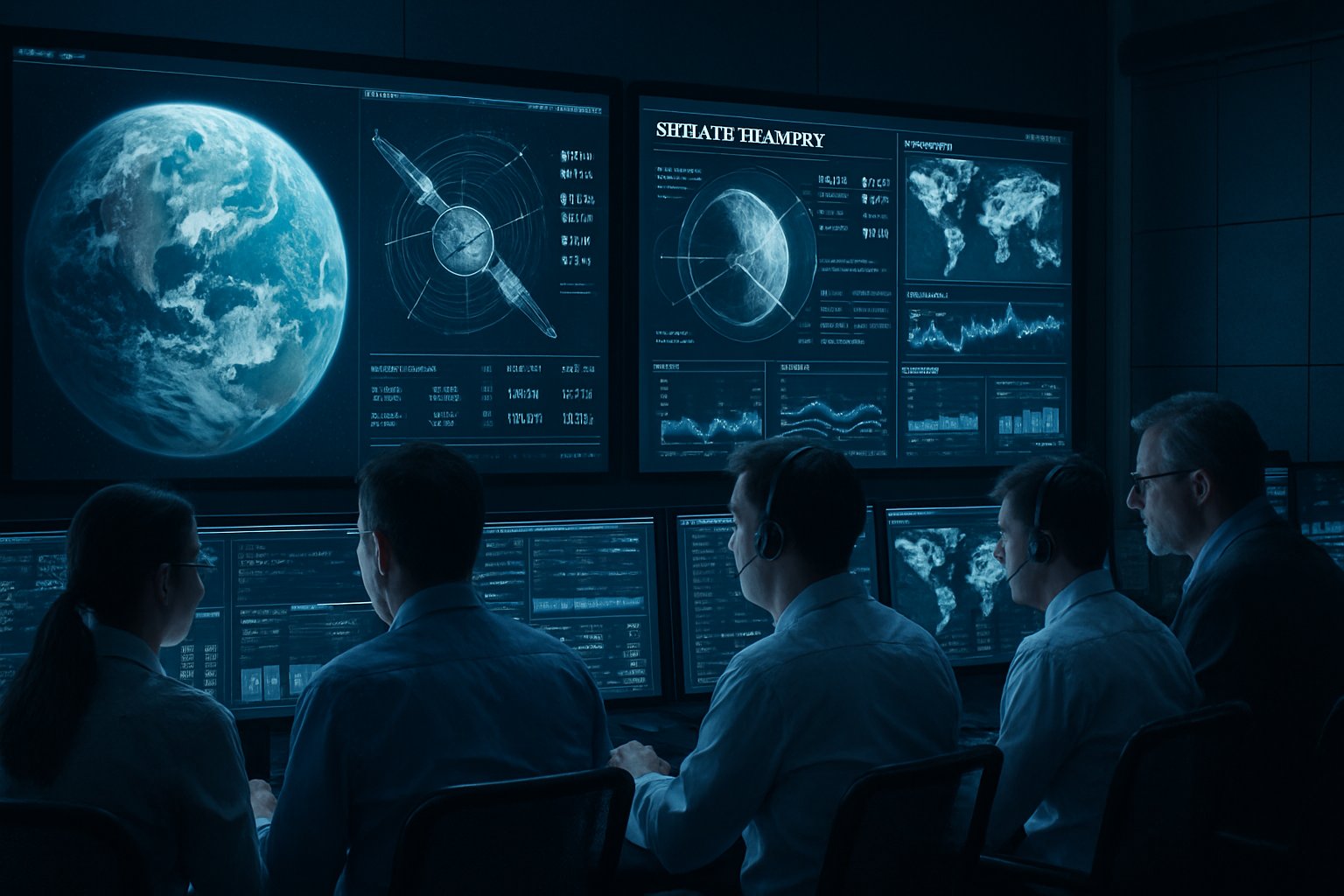
However, independent observers demanded harder evidence before accepting such disruptive infrastructure claims.
This article dissects the announcement, context, and technical realities for discerning technology leaders.
Furthermore, we outline open verification tasks and potential industry impacts.
Readers will learn how solar power, blockchain processing, and orbital compute intersect in this bold project.
Market forecasts and historical space experiments provide additional perspective.
Consequently, executives can judge whether strategic engagement or cautious distance is prudent.
Meanwhile, engineers will appreciate a concise checklist for follow-up validation.
Genesis-1 Launch Details Summary
PowerBank confirmed the rideshare flight lifted off aboard a Falcon 9 at 02:11 UTC.
Moreover, the press note stated that Genesis-1 carries an AI inference board, solar arrays, and a tiny blockchain node.
Partners claimed power generation stabilized within six orbits, enabling continuous compute during daylight passes.
In contrast, no Two-Line Element set publicly links the spacecraft to an official catalog identifier yet.
Consequently, external analysts remain cautious despite the celebratory tone.
Genesis-1 appears alive according to its operators.
However, proof outside corporate channels is still missing.
That uncertainty moves the discussion toward claim verification.
Validation Claims Under Scrutiny
Press releases describe Genesis-1 cloud validation as completed because power, compute, and a live wallet function.
However, independent catalog searches on Space-Track and CelesTrak yielded no matching object.
Additionally, amateur radio networks have not posted beacon captures.
PowerBank promised detailed telemetry after the holiday blackout period.
Meanwhile, market wires continued recycling the original announcement without added evidence.
Consequently, analysts recommend requesting the COSPAR ID, raw power curves, and a signed on-chain block.
Stakeholders value transparency over hype.
Therefore, we next examine engineering feasibility.
Key Technical Feasibility Factors
Genesis-1 cloud validation faces classic power, heat, and radiation hurdles common to any orbital compute stack.
HPE’s Spaceborne Computer demonstrated that commercial servers can survive space radiation for months, yet errors rose.
Moreover, scaling from a single experiment to commercial infrastructure multiplies radiator mass.
- Radiators must reject roughly 300 watts per kilogram of payload heat.
- Launch costs still average USD 2,700 per kilogram to Low Earth Orbit.
- Radiation shielding adds up to 20% extra mass on sensitive compute boards.
In contrast, terrestrial data centers dissipate heat via inexpensive forced air and chilled water.
Consequently, on-orbit solar arrays must grow large to drive fans and pumps impossible in vacuum.
Technical obstacles remain significant despite creative designs.
Next, we explore the wider market incentive.
Orbital Market Opportunity Outlook
BIS Research estimates in-orbit data centers could generate USD 39 billion annually by 2035.
Moreover, the broader space economy may exceed one trillion dollars within the same horizon.
Program partners argue Genesis-1 cloud validation positions them early within that curve.
Additionally, remote sovereignty concerns drive demand for ungoverned blockchain processing platforms.
- Data latency for Earth observation
- Security for inter-satellite compute workflows
- Regulatory arbitrage on sensitive payloads
Nevertheless, analysts caution that terrestrial infrastructure costs fall quickly, eroding orbital premiums.
Market projections appear enticing yet volatile.
Therefore, risk assessment deserves equal focus.
Risks And Open Questions
Radiation, debris, and licensing represent existential threats for any persistent space infrastructure.
However, Genesis-1 cloud validation offers limited insight into how future megawatt clusters will handle those hazards.
Furthermore, hardware obsolescence accelerates for AI accelerators, demanding either servicing missions or short refresh cycles.
In contrast, ground data centers swap blades daily without orbital maneuvers.
Moreover, multinational regulators could restrict blockchain payloads that exchange value while in flight.
Unanswered questions multiply as scale rises.
Consequently, systematic verification gains urgency.
Next Independent Verification Steps
Analysts propose five immediate actions before declaring Genesis-1 cloud validation fully proven.
First, request the COSPAR and NORAD identifiers from Orbit AI.
Second, gather ground station logs that confirm power levels and compute tasks.
Third, secure a signed blockchain transaction minted on orbit.
Fourth, obtain frequency licenses filed with the FCC or equivalent agencies.
Finally, commission an independent thermal model comparing solar input and radiator capacity.
Professionals can enhance their expertise with the AI Developer™ certification.
These steps convert marketing rhetoric into empirical data.
Next, we conclude with strategic guidance.
Final Insights
Genesis-1 cloud validation headlines excite investors, yet the evidence remains preliminary.
When subsequent telemetry verifies Genesis-1 cloud validation, management can weigh deeper alliances.
Until objective catalogs confirm Genesis-1 cloud validation, conservative budgets should dominate.
Therefore, teams tracking Genesis-1 cloud validation must pursue data, partnerships, and relevant certifications before committing.
Moreover, the independent actions listed earlier accelerate that clarity.
Consequently, early adopters secure thought leadership while mitigating technical and regulatory shocks.
Explore the certification link above and stay updated as the orbital cloud evolves.


