

AI CERTS
5 hours ago
NIT Rourkela patent secures low-cost interactive companion robot
Media outlets highlight an estimated price of ₹80,000–90,000, undercutting many imported alternatives. Furthermore, the underlying research earned publication in Computers and Electrical Engineering and reported gesture-recognition accuracy above 99 percent on standard datasets. This news aligns with India’s Make in India vision and signals growing academic participation in commercial robotics. Nevertheless, experts advise careful evaluation of safety, privacy and long-term support before mass deployment.
Patent Milestone Now Secured
The Indian Patent Office granted Patent No. 574589, officially titled “Robotic System for Indoor Human Interaction.” Importantly, the NIT Rourkela patent establishes priority for the institute’s multimodal design and processing pipeline. According to project lead Dr. Anup Nandy, the claim set integrates speech, gesture and facial-emotion modules with an embedded large language model. Therefore, the protection strengthens potential licensing deals with manufacturers seeking differentiated, human-like features.
Documentation lists Application No. 202531022107, filed under the institute’s intellectual property cell in 2025. Meanwhile, media reports confirm the certificate’s arrival in December. The grant marks a rare academic victory in India’s competitive companion-robot arena. Consequently, local developers gain access to novel hardware architecture without hefty foreign royalties.
In summary, the patent legally secures the design and boosts investor confidence. Moreover, it sets the stage for deeper technical exploration that follows.
Technical Design Deep Insights
The prototype uses a Raspberry Pi as the central controller, reducing cost and easing maintenance. Additionally, wheel-based mobility enables smooth indoor navigation using ultrasonic distance sensors. The vision pipeline employs a hybrid SP-CNN, Inception and LSTM network with attention for robust gesture recognition. Meanwhile, Google Text-to-Speech provides expressive voice output in multiple Indian languages.
Authors of the associated research paper report impressive dataset accuracy. Specifically, their model achieved 99.77 percent on the Jochen-Triesch ASL benchmark and 97.67 percent on a custom Indian Sign Language set. These numbers rival high-end commercial solutions despite minimal hardware overhead.
- Controller: Raspberry Pi 4 with 4 GB RAM.
- Input: Dual cameras and MEMS microphones for multimodal capture.
- Algorithms: Hybrid CNN-LSTM attention for gestures, vision-based emotion classifier, cloud-linked LLM dialogue driving robotic control.
- Power: Six-hour battery supporting continuous, interactive sessions.
- Estimated Price: ₹80,000–90,000 for pilot units.
Because the NIT Rourkela patent covers both the hardware layout and the software pipeline, third-party integrators must license the complete system. Consequently, consistency across deployments can be maintained.
Early tests confirm that the NIT Rourkela patent prototype maintains sub-200-millisecond gesture response times.
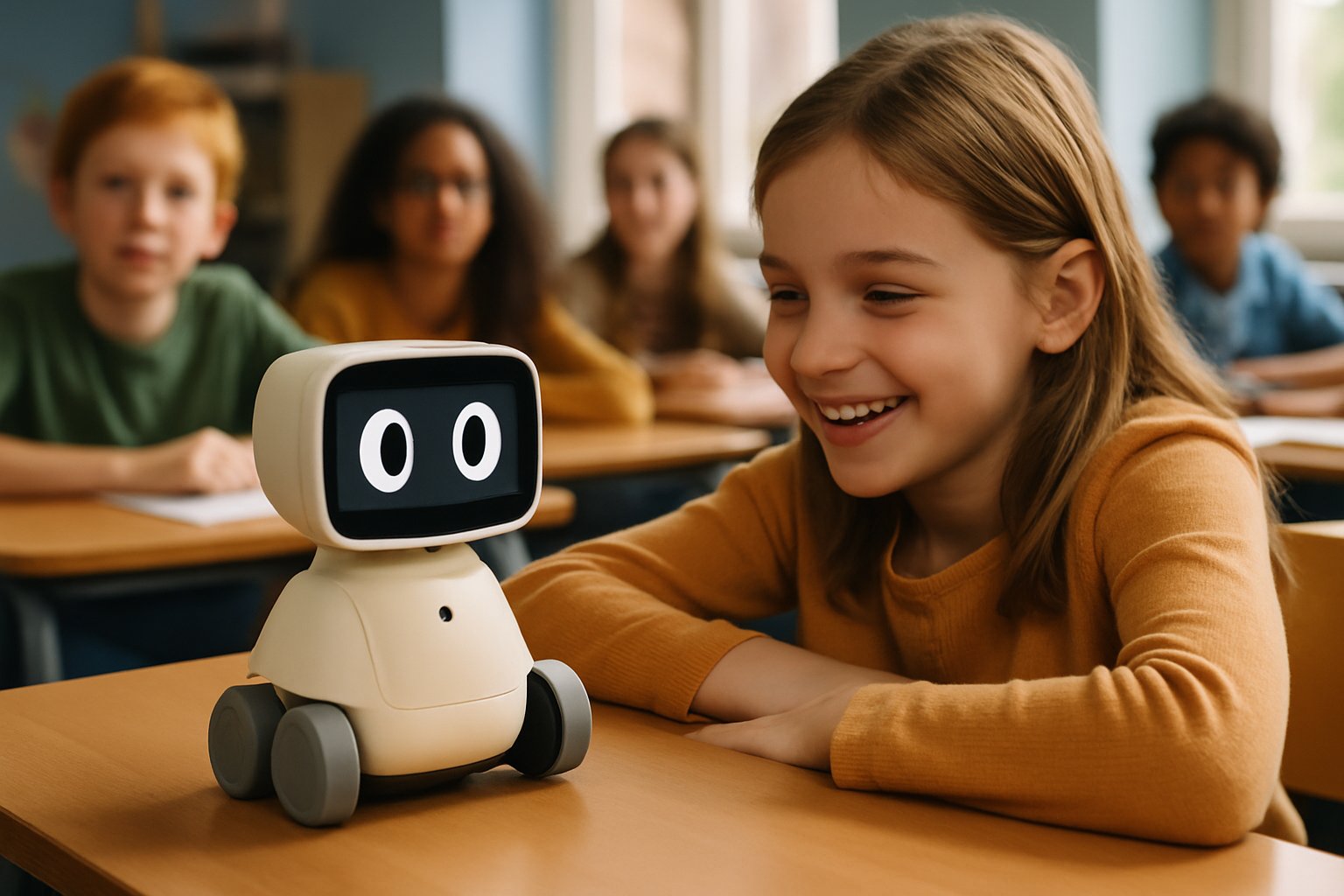
Extensive laboratory testing validated stability under fluctuating lighting and background noise. Furthermore, the team simulated classroom environments with thirty students waving simultaneously. The human-like robot maintained gesture classification accuracy above 95 percent during these stress trials, demonstrating resilient performance. Researchers attribute success to the attention layer that filters irrelevant motion. Subsequently, planned field trials will collect latency and battery metrics across full school days.
These design choices deliver an affordable, human-like experience without sacrificing accuracy. However, technical merit alone does not guarantee market traction, as the next section shows.
Market Position Analysis Report
FutureMarketInsights values the healthcare companion robot segment at roughly USD 3.1 billion in 2025. Moreover, analysts project mid-teen compound growth through 2035. Within this context, the NIT Rourkela patent underpins a product priced far below SoftBank’s Pepper or Intuition Robotics’ ElliQ. Therefore, Indian schools, clinics and community centers may finally access interactive assistance that aligns with local budgets.
In contrast, the domestic market still demands after-sales support and language localization. Consequently, NIT’s founders plan pilot deployments to validate durable robotic performance in noisy, crowded venues. They also propose subscription updates for the conversational model, ensuring the system remains contextually relevant.
Investors have signaled interest because the NIT Rourkela patent provides a clear barrier against direct replication. Nevertheless, production scaling will determine whether the promised price holds at volume.
Overall, market indicators favor low-cost, human-like helpers in diverse Indian settings. The following competitive overview highlights why differentiation remains essential.
Competitive Landscape Quick Overview
Global players dominate social robotics today. However, most offerings exceed USD 1,500 and rely on cloud services hosted abroad. ElliQ targets eldercare, SoftBank’s Pepper focuses on retail, and Invento’s Mitra handles event reception. Meanwhile, the NIT Rourkela patent supports a lighter, on-premise approach suited for fluctuating network conditions.
NIT’s design also emphasizes gesture and emotion recognition, features sometimes absent in rival devices. Additionally, open-source components reduce vendor lock-in and let local startups contribute modules. Consequently, a cooperative ecosystem could flourish around this robotic platform.
Nevertheless, established brands already possess extensive distribution and marketing channels. Therefore, NIT must secure manufacturing allies quickly to convert technical goodwill into sustained market share.
These competitive insights reveal both opportunity and urgency. Ethical and safety concerns now take center stage.
Ethical Safety Critical Considerations
Embodied LLM dialogue raises significant safety questions. Recent research in Autonomous Robots warns about hallucinations that may mislead vulnerable users. Furthermore, privacy advocates highlight risks from continuous audio and video capture inside homes. Consequently, designers must implement clear consent flows and on-device processing wherever feasible.
Experts also stress transparent data governance. Additionally, the robotic system should disclose when it consults cloud services and how long recordings persist. Professionals can enhance their expertise with the AI Ethical Hacker™ certification, ensuring secure deployment practices.
The NIT Rourkela patent outlines technical safeguards like obstacle detection and moderate speed limits. Nevertheless, regulatory compliance for medical or educational contexts will require further audits.
Addressing these ethical factors will strengthen user trust. The next section examines commercialization pathways already under discussion.
Commercial Path Forward Roadmap
NIT’s Foundation for Technology and Business Incubation is courting industry partners for pilot runs in Odisha. Moreover, letters of intent reportedly cover ten schools and two private hospitals. The institute aims to deliver twenty units during 2026, gathering performance feedback for design tweaks.
Subsequently, mass manufacturing could begin through a joint venture with a domestic electronics assembler. The goal is reaching break-even at 5,000 units annually while keeping the price below ₹90,000. Because the NIT Rourkela patent deters copycats, partners enjoy exclusive branding rights within India.
Marketing plans include subscription content packs that update the interactive curriculum monthly. Additionally, field technicians will handle battery replacements and software patches onsite, minimizing downtime.
This roadmap demonstrates pragmatic steps toward scalable impact. The conclusion now synthesizes key lessons.
Conclusion And Next Steps
The NIT Rourkela patent signals India’s arrival in affordable, human-like companion robotics. Moreover, high gesture-recognition accuracy and a versatile language engine position the system for widespread, interactive adoption. Market data shows strong demand, yet competition and regulatory scrutiny remain substantial.
Consequently, future success will hinge on ethical design, robust support, and swift manufacturing alliances. Professionals should monitor pilot outcomes and pursue advanced security training to safeguard deployments. Finally, consider exploring the linked certification to stay ahead in this dynamic field.


