

AI CERTS
3 months ago
NY platform law reshapes platform transparency and youth safety
Platforms, policymakers, and parents now share a pivotal moment. However, questions persist about long-term effectiveness, constitutional limits, and technical hurdles. The following analysis unpacks the legal architecture, stakeholder reactions, and expected milestones.
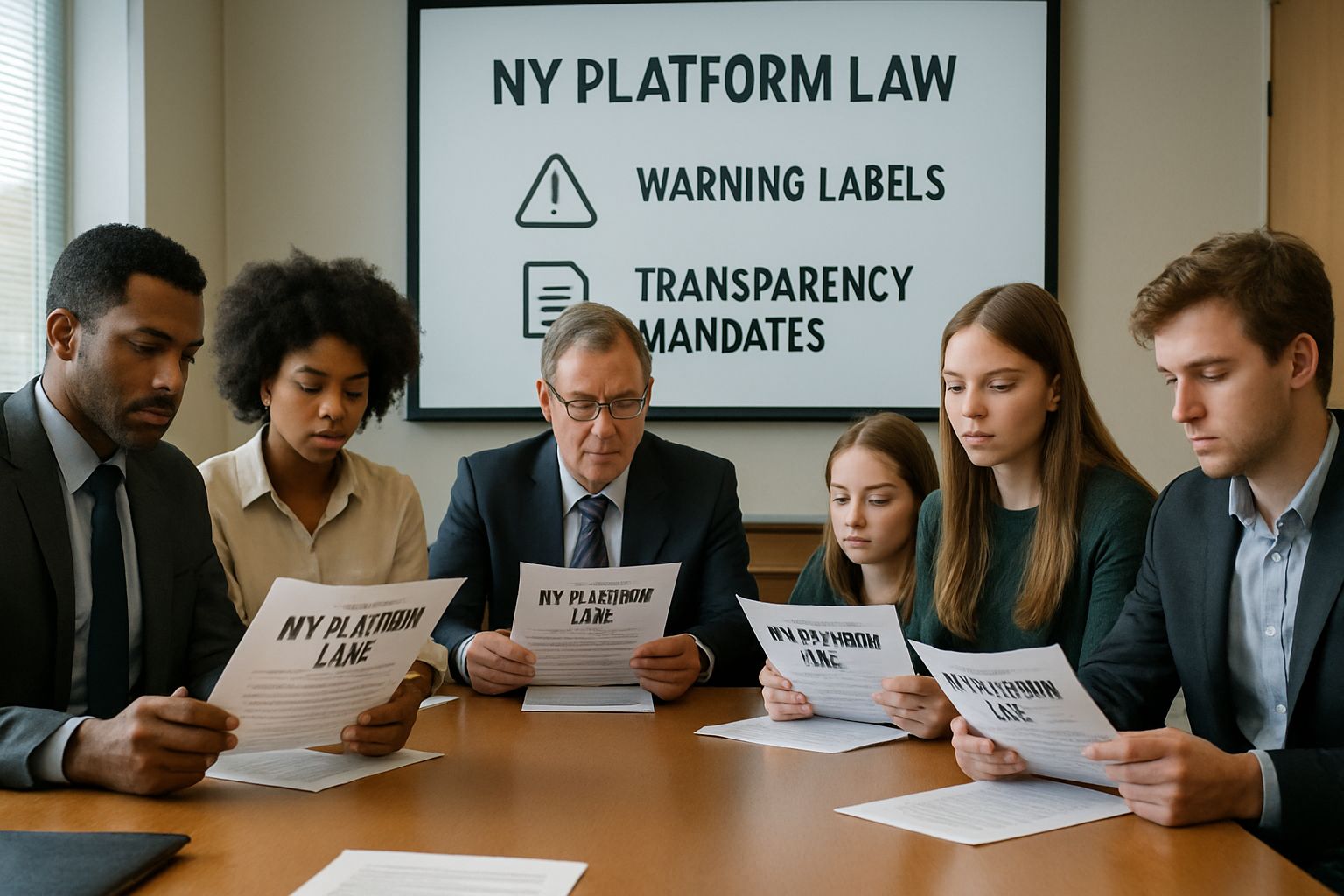
NY Platform Law Effects
The legislation S4505/A5346 targets endless scroll, autoplay, and algorithmic recommendations. Therefore, platforms must display recurring on-screen warnings flagging potential mental health risks to minor users. Labels appear at first login and repeat at timed intervals specified by regulators.
Advocates cite Surgeon General data: teens using social apps over three hours daily face doubled anxiety risks. In contrast, industry groups warn that state-by-state rules fragment national policy. Nevertheless, the statute authorizes the Attorney General to impose fines up to $5,000 per violation.
These provisions illustrate rising state regulation. Consequently, executives must audit ranking algorithms, geofence experiences, and document label delivery.
This section shows immediate functional changes. However, deeper governance shifts emerge in the companion transparency law.
Governor Signs Landmark Bill
Governor Kathy Hochul framed the move as consumer protection. “Keeping New Yorkers safe remains my priority,” she stated. Furthermore, sponsors Senator Andrew Gounardes and Assemblymember Nily Rozic compared warnings to tobacco labels.
Common Sense Media applauded the step, noting teens now spend nearly five hours daily on social apps. Meanwhile, enforcement rests with Attorney General Letitia James, who already leads content-moderation oversight.
Hochul’s signature capped a two-year push for stronger youth safeguards. Additionally, earlier measures addressed child data privacy and deceptive design.
Leaders have now codified clear duties. Consequently, businesses must treat design choices as regulated conduct, not mere UX flair.
Stop Hiding Hate Act
The 2024 transparency statute forces large platforms to report moderation metrics every six months. Reports must detail flagged posts, removals, appeal outcomes, and definitions for hate or disinformation. Moreover, the Act compels plain-language terms of service visible to every user.
Penalties reach $15,000 per violation per day for late or false filings. Consequently, compliance officers face ongoing disclosure cycles alongside warning-label work.
- 95% of teens use at least one social platform
- Up to 46% report being online “almost constantly”
- Civil fines: $5k per label breach, $15k per report breach
These numbers underscore economic stakes. Nevertheless, platforms like X have sued, alleging unconstitutional compelled speech.
The Act complements the NY platform law, weaving transparency with real-time risk alerts. However, litigation may redefine enforcement scope.
Industry Reaction And Litigation
X Corp’s federal complaint argues that both New York statutes violate First Amendment protections and conflict with Section 230. Additionally, trade groups stress interstate commerce burdens created by divergent state regulation.
California’s partial injunction on similar child-safety rules fuels their optimism. In contrast, advocacy organizations maintain that disclosure requirements merely inform the public rather than suppress speech.
Meta, TikTok, and Snap have yet to reveal label implementation details. Meanwhile, engineers must decide whether to localize warnings or roll them out globally.
The court’s preliminary ruling, expected in early 2026, will shape the future of the NY platform law. Consequently, legal teams are watching precedent from California and Florida cases.
Implementation Challenges Ahead
Technical hurdles begin with age verification. Moreover, location detection must ensure labels reach New Yorkers without breaching privacy norms. Geofencing errors could trigger penalties despite good-faith efforts.
Secondly, algorithmic complexity hampers clear identification of “addictive feeds.” Developers may need new logging systems to prove compliance. Furthermore, design changes risk lowering engagement, affecting ad revenue.
Consequently, cross-functional task forces are forming to align engineering, legal, and trust units. Professionals can enhance their expertise with the AI Ethics certification.
These operational puzzles demand swift solutions. Nevertheless, structured planning can convert compliance into consumer trust gains.
Future Compliance Milestones
The first biannual transparency reports are due March 31, 2026. Meanwhile, warning labels must display by June 2026, according to preliminary guidance.
Subsequently, the Attorney General will publish enforcement statistics, offering public insight into platform performance. Moreover, lawmakers hinted at further policy updates, including possible design bans if warnings prove insufficient.
The federal conversation also evolves. Consequently, Congressional hearings may pursue a national framework, reducing patchwork burdens.
These upcoming dates create a roadmap for risk management. However, adaptive governance will remain essential as the NY platform law matures.
Strategic Takeaways For Leaders
Executives should prioritize five actions:
- Map all addictive feed surfaces affecting youth.
- Insert compliant warnings with audit trails.
- Centralize moderation data for biannual reporting.
- Monitor litigation that could alter obligations.
- Engage policymakers to shape balanced policy.
Moreover, integrating ethics training will support transparent decision-making. The AI Ethics certification aids that mission.
These steps transform reactive fixes into strategic advantages. Consequently, firms can mitigate fines while reinforcing user trust.
The article examined legal shifts, enforcement dynamics, and corporate responses. Nevertheless, ongoing litigation may recalibrate timelines. Industry professionals should stay agile, embrace transparent design, and pursue ethics education. Therefore, explore relevant certifications and deepen your leadership toolkit today.


