

AI CERTS
3 months ago
Ututor Creative Feedback Transforms AI Critique for Designers
Readers will learn why specialized feedback engines matter, what remains unproven, and where opportunities lie. Moreover, we spotlight certifications that strengthen educator competence in AI-mediated studios. Throughout, Ututor Creative Feedback serves as a lens on broader trends in creative Education technology. Stay with us for data, perspectives, and actionable steps.
Rising Creative Teaching Demand
Global design enrolments continue climbing, yet expert critique hours remain fixed. Meanwhile, creative programs scramble to balance volume with quality. Educators note that early-stage critique often arrives days after submission. Consequently, students lose momentum and skip valuable revisions. Digital Hollywood spotted this gap in 2024 and sought an AI Partner. The result became Ututor Creative Feedback after collaboration with startup neoAI. Award jurors later praised the initiative for re-centering Creativity rather than asset generation. These insights reveal a pressing market driver. However, understanding the engine behind the promise requires deeper exploration. Therefore, the next section unpacks technical foundations.
Immediate critique addresses pacing issues and boosts learner confidence. Nonetheless, architecture choices dictate real educational impact.
How Ututor System Works
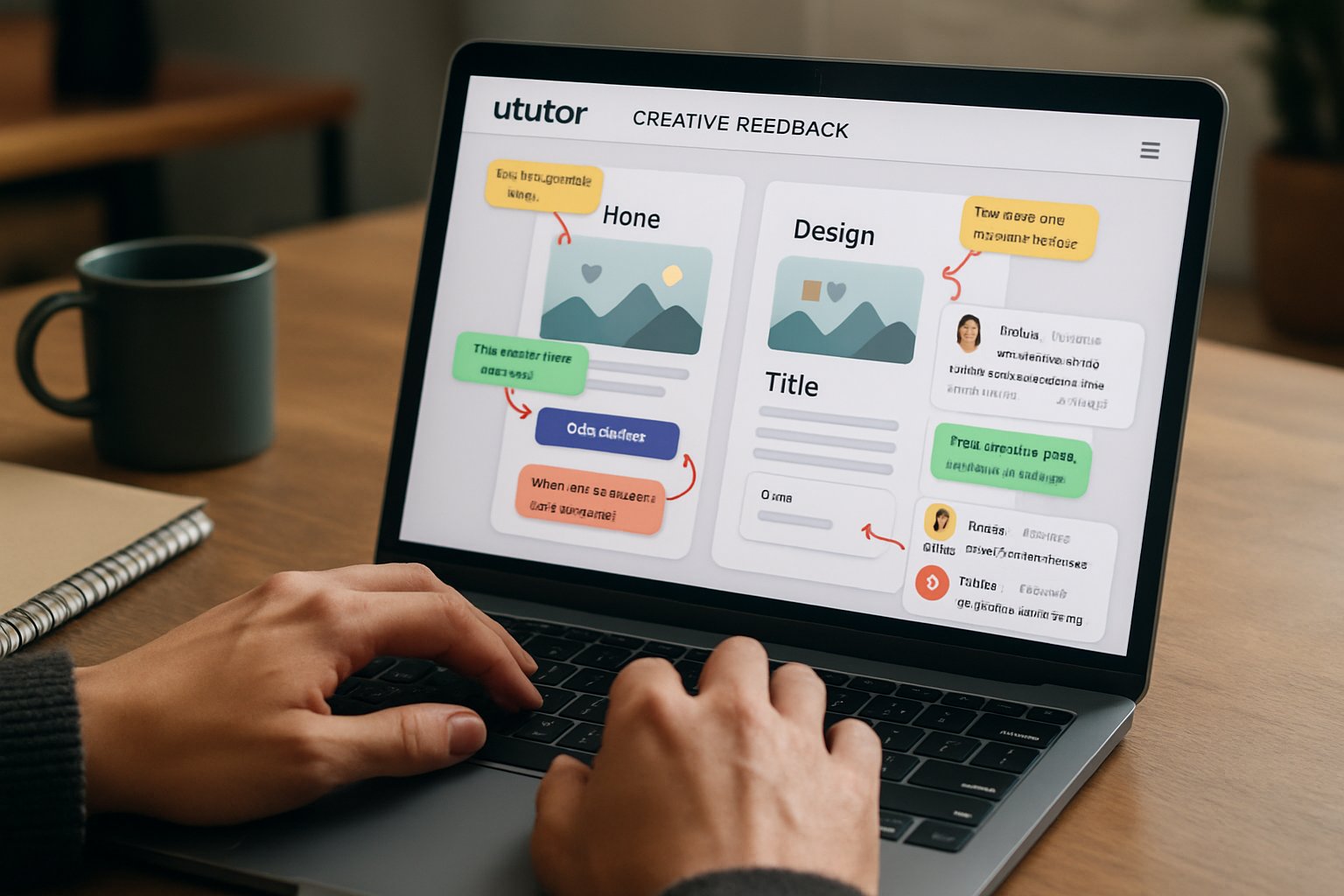
Ututor operates as a multimodal analyzer tuned for 3DCG, graphic, web, and video artifacts. Instead of creating outputs, the engine highlights strengths, flags weaknesses, and links targeted tutorials. Moreover, retrieval-augmented generation matches detected issues with Digital Hollywood's Any video library. Two evaluation modes govern strictness: Normal encourages beginners, while Hard simulates contest juries. Additionally, instructors can toggle assignment or competition settings to mirror real workflows. Visual overlays place sticky notes on images, and timeline markers annotate frame sequences. Students receive a five-point star score plus ranked improvement steps. Meanwhile, numeric signals feed dashboards that help teachers prioritize mentoring time. Importantly, the team states submissions never retrain underlying models, protecting intellectual property. These safeguards respond to growing privacy regulations in Education sectors.
The architecture blends domain data with large models to deliver actionable comments. Consequently, Ututor Creative Feedback positions itself as a trusted Learning Partner, not a creator. Next, we examine pilot outcomes validating this approach.
Pilot Results Overview
Digital Hollywood launched classroom trials between October 2024 and February 2025. Roughly thirty CG students and several graphic design learners participated. Subsequently, broader releases reached university, STUDIO, and online cohorts by October 2025. Developer surveys reported that about 90% of users found the guidance helpful. Instructors claimed the AI freed them for deeper concept coaching. Moreover, award judges recognized measurable progress evidenced by student portfolios. The product even secured an Excellence prize at Generative AI Japan 2025. Quantitative rigor remains limited because randomized control trials have not appeared yet.
Key Benefit Factors List
- 24/7 response time increases iteration loops, enhancing Creativity growth.
- Visual annotations accelerate comprehension for visual learners.
- Curriculum links transform guidance into concrete Learning pathways.
- Unlimited usage removes per-student token anxiety during projects.
These preliminary numbers encourage further scaling. Nevertheless, sceptics demand independent accuracy testing before widespread adoption. The forthcoming section balances strengths against unresolved challenges.
Reported Strengths And Limits
Several advantages separate Ututor Creative Feedback from generic LLM chatbots. Firstly, domain specialization improves terminology relevance and visual nuance detection. Additionally, immediate delivery nurtures iterative mindsets, a core Creativity principle. Furthermore, teachers regain hours to critique ideation rather than syntax. However, accuracy gaps persist, especially around subtle textures and complex lighting. Developers openly list these gaps and invite continued user reporting. In contrast, some educators fear homogenized aesthetics when students follow algorithmic advice blindly. Governance transparency also needs expansion because model architectures remain undisclosed.
Persistent Challenge Areas Noted
- Texture fidelity scoring remains inconsistent across genres.
- Bias toward studio-style compositions risks narrowing Creativity.
- Limited multilingual descriptors reduce inclusivity for global Education contexts.
Strengths clearly outweigh current flaws, according to pilot stakeholders. Yet, committed audits will determine long-term credibility. Let us place Ututor within the larger academic technology landscape.
Broader Ecosystem Context
Ututor joins a wave of domain-specific AI feedback platforms. FeedbackFruits, VTutor, and research prototypes likewise target Personalized Learning. Nevertheless, most competitors focus on text or peer review rather than multimodal design. Therefore, Ututor Creative Feedback commands a unique niche for visual mediums. Market analysts predict specialized tutors will outpace general tools in Education adoption. Consequently, vendors will face increased scrutiny regarding data handling and bias. Educators seeking best practice should pursue structured skill upgrades. Educators can enhance expertise through the AI Educator™ certification. Such credentials build confidence when integrating AI Partners into curricula.
Specialized niches are forming quickly across educational technology. Therefore, practitioners need continuous professional development. Future roadmaps reveal where Ututor will head next.
Future Development Path
neoAI engineers plan enhanced texture detection and style diversity metrics. Moreover, Digital Hollywood aims to expand deployment beyond internal campuses. Partnerships with external colleges and industry studios appear under discussion. Subsequently, broader datasets could improve cultural sensitivity and generalizability. Developers also hint at teacher dashboards showing cohort progress trends. Integration with LMS APIs should streamline assignment routing and grade syncing. However, leadership confirms the commitment to keep student works out of training loops. Consequently, privacy assurances may become a competitive differentiator. Ututor Creative Feedback will likely pursue third-party audits to verify claims.
Roadmaps focus on accuracy, scale, and trust. Nevertheless, timelines depend on funding and continued user engagement. The final section distills actionable insights for decision makers.
Strategic Takeaways Today
Leaders evaluating Ututor Creative Feedback should prioritize alignment with learning objectives. First, confirm that multimodal critique maps to course rubrics. Second, secure consent workflows detailing data retention and deletion. Third, create teacher training plans that embed AI Partner roles. Moreover, schedule periodic reviews comparing AI and human scores for fairness. In contrast, skipping such governance steps invites reputational risk. Finally, track upcoming research so adoption decisions remain evidence based. Ututor Creative Feedback offers promise when deployed with clear pedagogy and accountability.
Concrete policies turn novelty into sustainable practice. Therefore, institutions should act deliberately. Let us summarize the narrative and next moves.
Ututor Creative Feedback exemplifies a shift from generative automation to reflective coaching. Designed for Education creatives, the tool delivers fast, annotated critique that sparks iterative Learning. Pilot data, awards, and teacher testimonies indicate genuine value, although rigorous trials remain pending. Meanwhile, privacy commitments and curriculum links build early trust among stakeholders. Nevertheless, unresolved accuracy gaps and transparency shortfalls warrant external validation. Consequently, decision makers should blend cautious experimentation with structured capacity building. Pursuing certifications such as the linked AI Educator™ credential strengthens institutional readiness. Stakeholders who act now can shape ethical, high-impact creative pedagogy for the decade ahead.


