

AI CERTS
5 hours ago
Colopl Bets Big on Generative AI Games
Developed by Colopl and guided by legendary artist Kaneko, the title launched worldwide during the first week of May 2025. Moreover, its cross-save support spans Steam, iOS, and Android, ensuring broad reach across Japan and beyond. The project arrives at a moment when Entertainment firms seek fresh hooks to retain fickle audiences.
AI Roguelike Launch Details
Official listings cite a May 6–7 debut, reflecting timezone quirks between storefronts. Meanwhile, the game first surfaced in March under the code name Project MASK, followed by a two-week closed test from April 14. Subsequently, community buzz intensified across Reddit, X, and 4Gamer comment sections.
Key Development Timeline Points
Analysts trace three critical beats:
- March 31 – Reveal plus initial interviews
- April 14 – Limited player trial begins
- May 7 – Formal launch on all platforms
Each phase demonstrated a deliberate drip-feed strategy by Colopl, keeping anticipation high. These stages underscore how Generative AI Games benefit from iterative feedback loops. However, early access also surfaces design risks, as mixed Steam reviews later showed.
These launch notes highlight meticulous scheduling. Therefore, the next section examines how the AI actually works.
Card Creation Mechanics Explained
Tsukuyomi positions itself as a “card-creation roguelike,” not a simple card-game. Furthermore, every run prompts an in-world deity called Okami to craft bespoke cards. The underlying model, nicknamed “AI Kaneko,” analyses player decisions, then outputs new artwork, names, and effects.
This adaptive pipeline elevates replayability. Consequently, no deck feels identical twice, a hallmark promise for modern Generative AI Games. Players discover unexpected synergies because cards reference prior choices inside the tower. In contrast, static decks in traditional titles rarely surprise after several sessions.
Mechanically, the loop follows three steps:
- Explore branching floors and select upgrades
- Engage in turn-based battles using generated cards
- Restart upon defeat while account-level unlocks persist
Iterative generation even covers flavor text, reinforcing immersion. Nevertheless, community posts revealed occasional outputs resembling famous Disney villains, a controversy detailed later. These mechanics illustrate both innovation and risk. Meanwhile, artist involvement shapes the technical backbone.
Artist Driven Training Approach
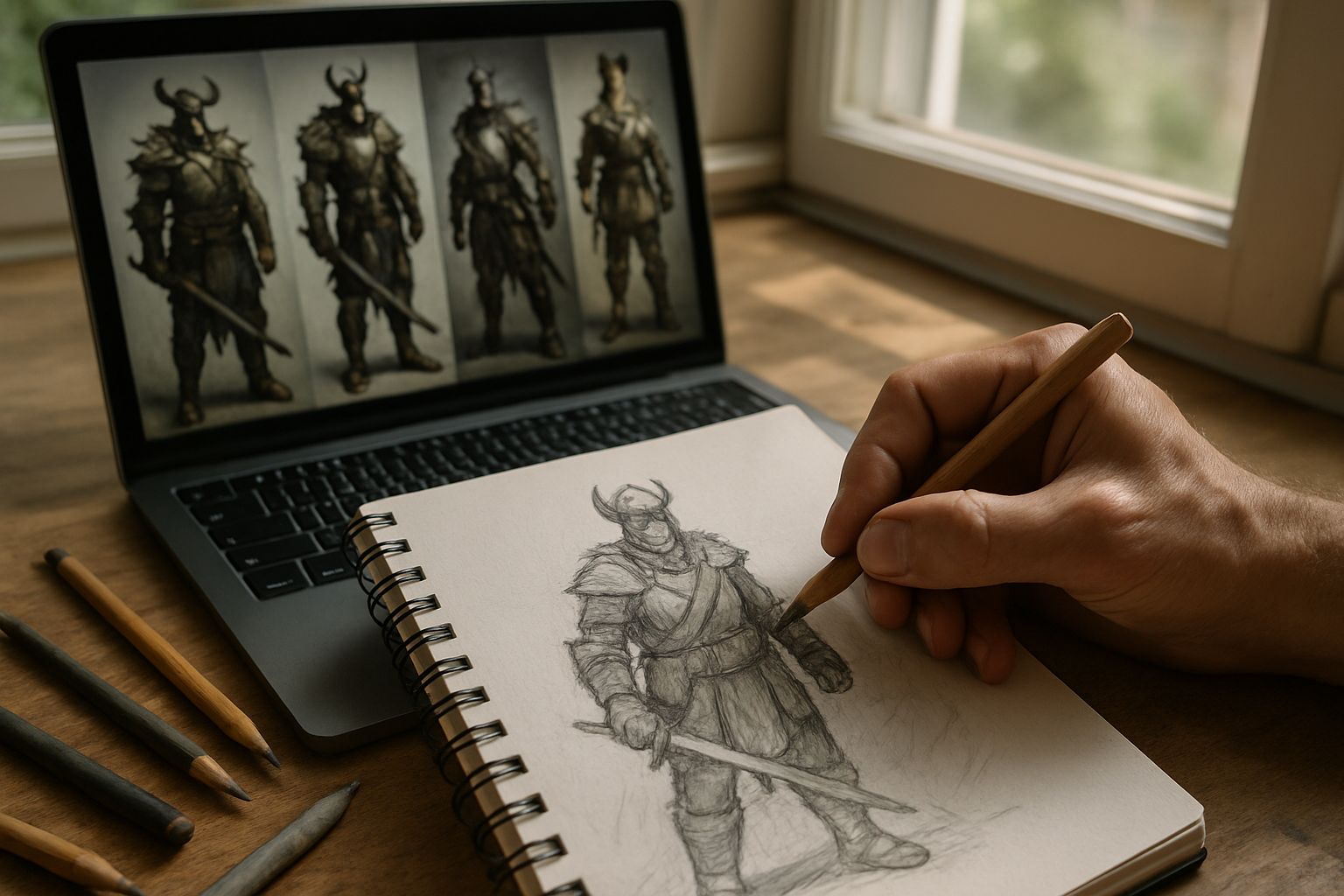
Veteran illustrator Kaneko produced dozens of original pieces solely for model training. Moreover, Colopl staff curated hundreds of thousands of generated images, discarding weak samples before retraining. This fine-tuning mirrors emerging best practices inside Entertainment studios leveraging AI.
During a 4Gamer interview, Kaneko admitted teaching the model his style felt “more time-consuming than drawing from scratch.” Nevertheless, he preferred controlled collaboration to unauthorized scraping. Therefore, Tsukuyomi offers a rare glimpse into artist-led pipelines powering Generative AI Games.
Professionals can deepen similar skills through the AI Design Specialist™ certification. Such programs address dataset curation, iterative refinement, and prompt engineering. Subsequently, teams reduce hallucinations and strengthen brand consistency.
This training approach shows respect for creator agency. Consequently, market reaction becomes the next logical focus.
Market Reception Snapshot Today
Steam listed Tsukuyomi with a “Mixed” rating based on 236 reviews, roughly 57% positive. Additionally, mobile storefront analytics suggest strong download velocity inside Japan, although official figures remain undisclosed. Early adopters praise visual variety yet critique balance swings when auto-generated cards overpower bosses.
Media outlets in the wider Entertainment sector positioned the game as a litmus test for commercial viability of Generative AI Games. Gematsu highlighted cross-save convenience, while Automaton dissected design risks. Meanwhile, influencers streamed blind runs, boosting visibility among strategy fans and the card-game community.
Key sentiment drivers include:
- Novelty of on-the-fly deck building
- Trust in Kaneko’s artistic legacy
- Concerns about copyright likenesses
These mixed reactions underline the experimental nature of the release. However, legal considerations amplify scrutiny.
Legal And Ethical Concerns
Post-launch, several players posted AI cards that echoed copyrighted icons. Consequently, Automaton West questioned whether training exclusively on Kaneko art truly prevents memorization drift. Colopl maintains that no external material entered the dataset, yet has not published a detailed provenance report.
Regulators in Japan still debate how copyright law applies to machine outputs. Moreover, global Entertainment lawyers monitor potential takedowns, especially if images replicate protected likenesses. Therefore, compliance teams inside firms exploring Generative AI Games must draft robust safeguards, including post-generation filters and artist approvals.
Experts recommend three immediate mitigations:
- Audit training data continually
- Deploy similarity detection on outputs
- Offer fast takedown channels for rights holders
Ethical diligence now shapes public trust. Subsequently, strategic planning looks ahead to sustained live-service health.
Future Roadmap And Impact
Colopl signaled ongoing balance patches, new tower branches, and seasonal events. Additionally, developers hinted at collaborative card-game challenges to broaden competitive appeal. These updates matter because live changes keep Generative AI Games feeling fresh without massive art budgets.
Industry analysts forecast wider adoption of similar pipelines across mobile Entertainment sectors. Meanwhile, rival studios in Japan prototype comparable systems, hoping to replicate Tsukuyomi’s buzz. Consequently, expert upskilling becomes urgent; certification paths such as the linked AI Design Specialist™ help future-proof creative teams.
Tsukuyomi therefore stands as both proof-of-concept and cautionary tale. In contrast, traditional releases rarely face dynamic legal exposure tied to evolving content. The coming quarters will reveal whether player excitement outweighs potential compliance costs.
This roadmap underscores AI’s disruptive momentum. Therefore, concluding insights will consolidate lessons for decision makers.
Key Takeaways
Tsukuyomi demonstrates how disciplined workflows can harness AI to enrich player agency. Moreover, the project confirms that artists like Kaneko can retain stylistic control while scaling production. Conversely, copyright ambiguity continues to shadow commercial Generative AI Games. Early market data show tempered enthusiasm, yet opportunity remains vast for bold Entertainment ventures in Japan and overseas.
Nevertheless, sustainable success demands transparent datasets, vigilant moderation, and ongoing design iteration. Professionals eager to lead similar initiatives should explore the AI Design Specialist™ credential. Consequently, teams will gain the practical governance frameworks required for next-generation releases.
Adopt structured experimentation today, and your studio could define tomorrow’s breakout Generative AI Games.


