

AI CERTS
7 months ago
Meta Conversation Focus Elevates AI Smart Glasses
Moreover, corporate buyers see productivity gains when staff hear clearly in dynamic environments. This article unpacks the feature’s mechanics, market impact, and emerging opportunities. It also highlights privacy, regulatory, and competitive dimensions shaping future development. Finally, professionals will discover certification paths to capitalize on new user experience demands.
Why Conversation Focus Matters
Open offices, trains, and trade shows share one trait: relentless acoustic clutter. Previously, AI Smart Glasses functioned mainly as cameras, speakers, and social media accessories. Additionally, v21 shifts that perception by tackling a universal pain point, speech intelligibility. The focus algorithm lifts the near speaker about six decibels, according to the company’s engineering blog. Therefore, meeting notes, sales pitches, and quick hallway debates become less taxing. Accessibility advocates appreciate consumer options that resemble everyday eyewear rather than clinical devices. Nevertheless, the company insists the glasses are not medical aids, avoiding FDA scrutiny for now.
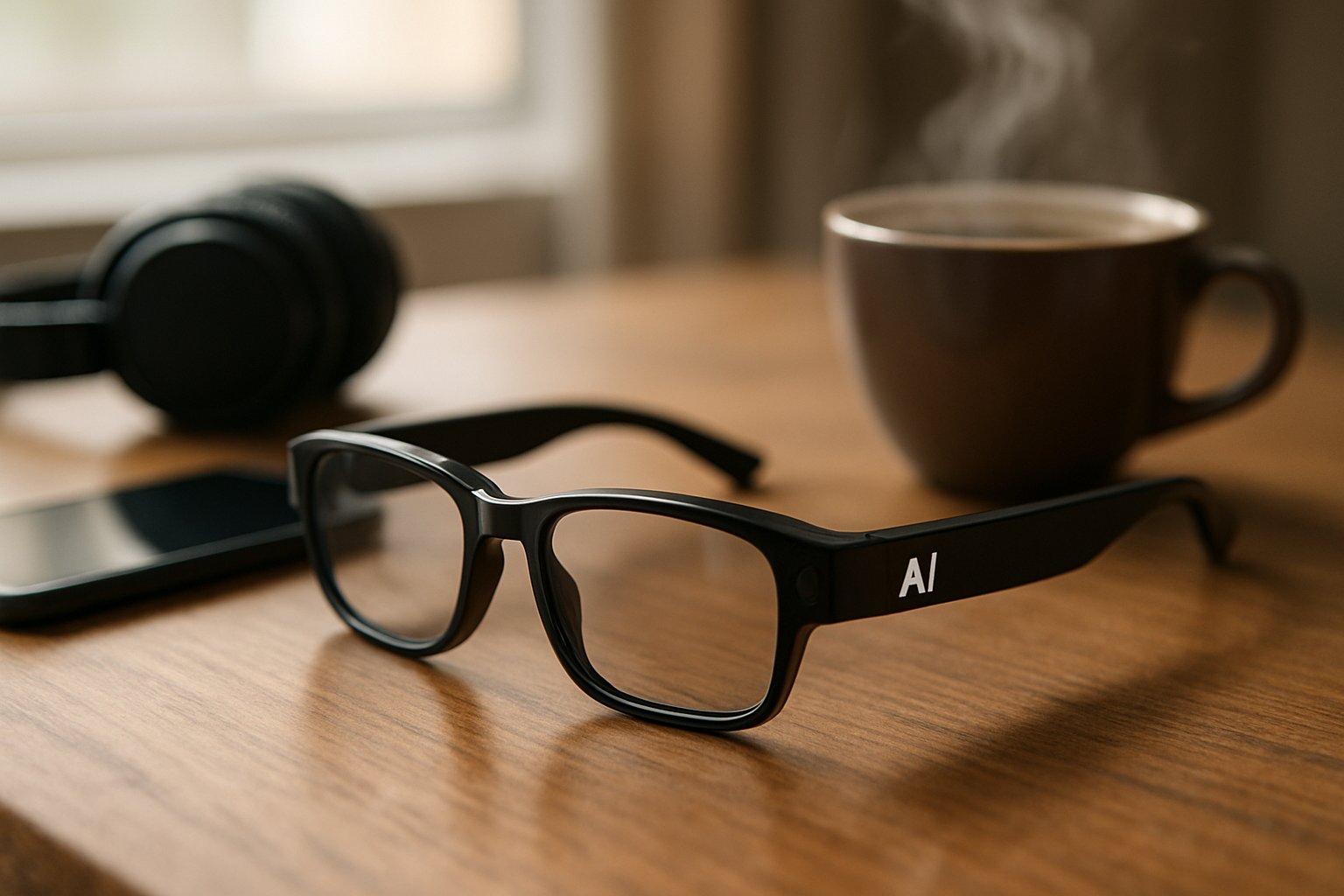
Conversation Focus addresses noise fatigue and positions the platform beyond novelty. Consequently, the feature may drive everyday adoption across offices and hospitality venues. Next, we explore the technical approach enabling this directional clarity.
Technical Magic Behind Feature
Engineers hinged the solution on a six-microphone array embedded along the frames. Moreover, digital beamforming steers acoustic sensitivity toward the wearer’s gaze direction. On-device neural networks then separate foreground speech from diffuse cafe chatter. Consequently, latency remains below twenty milliseconds, preserving conversational flow. Meanwhile, the platform processes command phrases in the cloud, but Conversation Focus audio never leaves the glasses. That architecture balances privacy expectations with resource constraints on lightweight hardware. Reviewers note that AI Smart Glasses sound as natural as open earbuds.
Battery life suffers less than two percent during typical 30-minute listening sessions, internal tests suggest. Furthermore, touch sensors on the right temple let users nudge amplification up or down.
Beamforming Explained In Brief
Traditional microphones capture sound equally from all directions. In contrast, beamforming applies phase delays to emphasize signals arriving from a chosen angle. Therefore, the algorithm effectively creates a virtual acoustic spotlight ahead of the user. Speech separation models then attenuate off-axis voices, improving signal-to-noise ratio.
Together, these layers deliver directional clarity without resorting to invasive earbuds. Subsequently, we examine how the technology influences market trajectories and investor sentiment.
Market Momentum And Signals
Financial analysts already link strong eyewear revenue to earlier AI Smart Glasses launches. Barclays projects sixty million units industry-wide by 2035, citing surging interest in wearables. Moreover, EssilorLuxottica plans to boost production capacity to ten million units annually by late 2026. Meta disclosed two million Ray-Ban devices sold since launch, with sales tripling year over year. Additionally, the v21 update arrives via the Early Access Program, encouraging loyal users to evangelize.
- Release date: 16 December 2025
- Supported models: Ray-Ban Gen-2, Oakley HSTN
- Initial markets: United States and Canada
- Estimated latency: <20 ms
- Projected category sales: 60 M units by 2035
Many purchasing managers pilot AI Smart Glasses to evaluate speech relief in cafeterias. Consequently, investors view Conversation Focus as more than a niche accessibility tweak. It signals a roadmap of continuous software value that can lengthen product life cycles.
Market data reveals real demand and expanding supply pipelines. Therefore, stakeholders should track sales acceleration as new features launch globally. The next section contrasts Meta’s strategy with rival offerings.
Comparisons And Competitive Landscape
Apple’s AirPods Pro deliver Conversation Boost, yet they block ears and invite fatigue. In contrast, AI Smart Glasses leave the canal open, preserving spatial awareness. Several cyclists prefer AI Smart Glasses because wind noise masks regular headphones. Nuance Audio frames from EssilorLuxottica secured FDA clearance, positioning them squarely within medical regulations. However, that approval introduces paperwork, labeling costs, and channel restrictions absent from Meta’s consumer approach. Samsung, Google, and several startups experiment with micro-display wearables, though few prioritize audio clarity.
Moreover, the Spotify scene-match feature underscores how media partnerships differentiate ecosystems. Users can ask the glasses to play music matching a sunset, blending vision, sound, and machine prediction.
Competitive products offer strong alternatives yet reveal distinct trade-offs. Nevertheless, Meta leverages iterative updates to maintain perceived leadership. Privacy implications now demand equal scrutiny.
Privacy, Policy, And Regulation
Microphones, cameras, and cloud services provoke persistent concern. However, Meta emphasizes that Conversation Focus processing stays local, shielding spoken content from remote storage. Furthermore, users may review and delete voice commands, yet default retention policies still vary by region. Regulators could revisit definitions as consumer wearables approach medical performance thresholds. Accessibility researchers urge clearer labeling so buyers understand capabilities and limitations. Enterprises deploying AI Smart Glasses must document consent policies for recorded environments.
In contrast, Nuance’s FDA oversight requires outcome tracking and audiology data submissions. Consequently, Meta avoids regulatory friction but inherits responsibility for transparent marketing.
Data governance remains fluid, and compliance obligations could stiffen suddenly. Therefore, enterprises should audit policies before deploying glasses to staff. Practical guidance can mitigate many of these uncertainties.
Practical Tips For Professionals
Deployment success depends on thoughtful pilot programs rather than impulsive bulk purchases. Start with employees who already favor AI Smart Glasses for hands-free photography. Additionally, train champions to adjust Conversation Focus gain and explain privacy toggles to colleagues. Furthermore, evaluate battery endurance under real shift conditions before authorizing wider rollouts.
Consider acoustic mapping of key venues, noting especially loud machinery or reflective surfaces. Consequently, staff can position themselves for maximum clarity during critical discussions. Organizations focused on accessibility should consult audiologists when designing inclusive communication policies.
Professionals can enhance their expertise with the AI+ UX Designer™ certification. Learning human-centric AI interfaces prepares teams to craft compelling future wearables experiences.
Structured pilots, staff training, and certification elevate deployment outcomes. Subsequently, decision makers can scale confidently across departments and geographies. We now synthesize the article’s central insights.
Final Takeaways
AI Smart Glasses have moved from novelty to necessity through the Conversation Focus update. Moreover, on-device audio processing delivers real utility while maintaining acceptable privacy boundaries. Market forecasts, production scaling, and investor enthusiasm illustrate sustained momentum within wearables. Nevertheless, regulatory scrutiny and data governance will intensify as consumer features approach medical benchmarks. Consequently, organizations must craft clear policies, train users, and monitor each future update. Furthermore, professionals should pursue advanced design credentials to shape inclusive, human-centered experiences. Visit the AI+ UX Designer™ pathway and turn these insights into career advantage. Adopt the glasses, refine deployments, and let innovation amplify every crucial conversation.
Disclaimer: Some content may be AI-generated or assisted and is provided ‘as is’ for informational purposes only, without warranties of accuracy or completeness, and does not imply endorsement or affiliation.


