

AI CERTS
7 months ago
Pancreatic Cancer AI accelerates therapeutic pipeline
Recent studies reveal two compelling outputs from these algorithms. Moreover, a computationally crafted RNA Molecule named Apt1 disrupts DNA repair in pancreatic tumor cells. Meanwhile, an AI-generated MAT2A inhibitor, ISM3412, has already reached first-in-patient clinical testing.
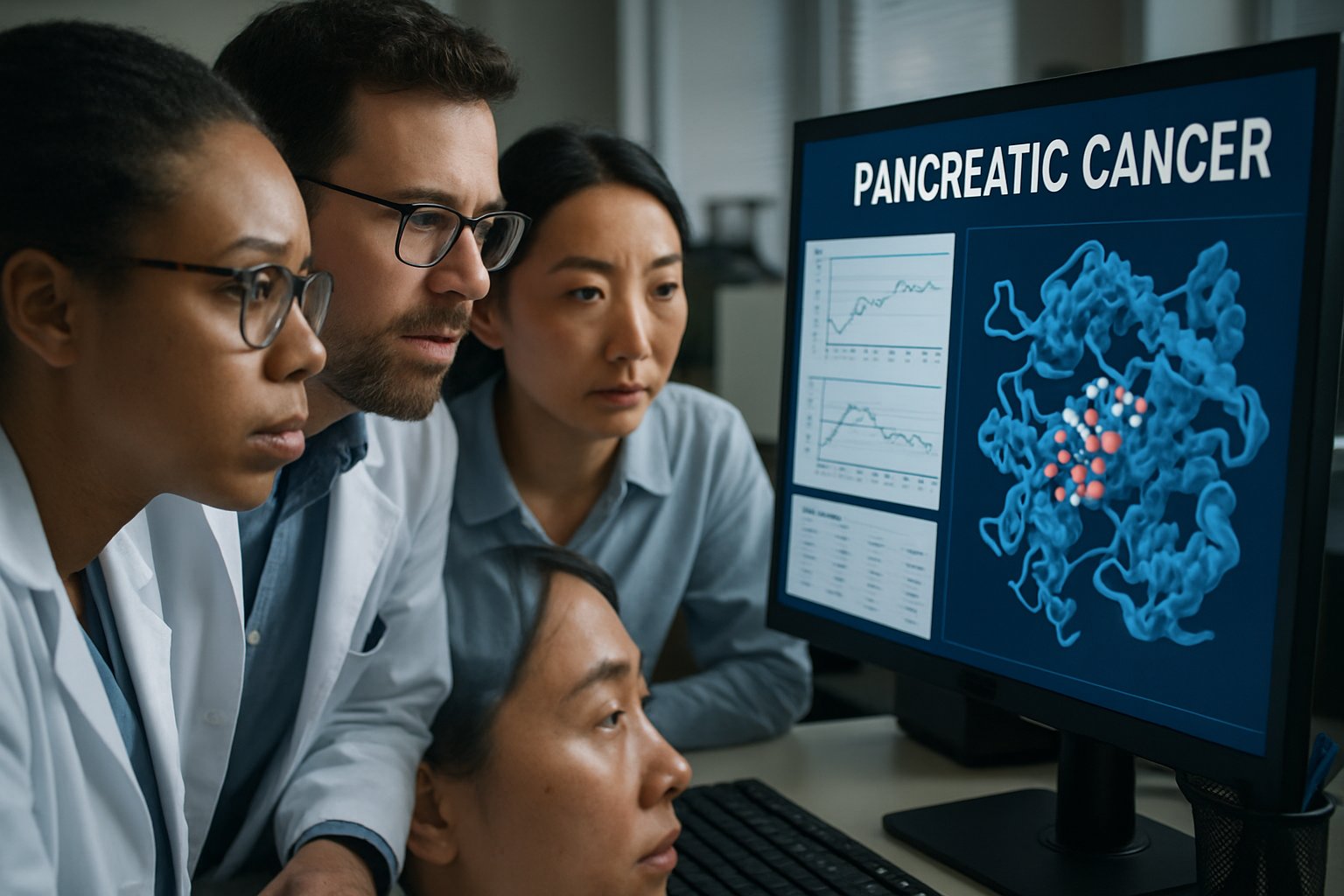
Both programs illustrate how data-driven Design can shorten preclinical timelines and expand therapeutic modalities. Furthermore, public institutions such as NIH showcase complementary AI pipelines that prioritize synergistic drug combinations. This article dissects the science, commercial implications, and remaining barriers for professionals navigating this Breakthrough field.
Pancreatic Cancer AI progress
Historically, discovering a new oncology therapy required thousands of synthesized compounds and many years. In contrast, generative algorithms now propose optimized candidates after analyzing protein structures, patent landscapes, and ADME data. Researchers subsequently synthesize dozens, not thousands, thereby saving capital and scarce laboratory time.
The Apt1 aptamer emerged from such an approach using IIT’s catRAPID platform to screen millions of sequences in silico. Similarly, Insilico Medicine relied on its Chemistry42 engine to generate ISM3412 within eighteen months. Consequently, investors and pharmaceutical executives cite these timelines as evidence of tangible AI value.
Nevertheless, each program still followed traditional validation including potency assays, selectivity panels, and pharmacokinetic studies. These hybrid workflows couple machine speed with experimental rigor. Therefore, Pancreatic Cancer AI strategies complement, rather than replace, established bench science.
Early successes spotlight AI efficiency and cost advantages. However, understanding specific mechanisms remains critical, leading into Apt1's mechanistic story.
Aptamer targets DNA repair
Apt1 is a 36-nucleotide RNA Molecule selected to bind RAD51 with nanomolar affinity. RAD51 partners with BRCA2 to orchestrate homologous recombination, a pathway often overactive in Chemotherapy-resistant tumors. By blocking the interaction, Apt1 cripples DNA repair and renders pancreatic cells vulnerable to PARP inhibition.
Moreover, the Nature Communications study reported synthetic lethality when Apt1 combined with olaparib across 3D spheroid models. Tumor viability dropped more than eighty percent compared with olaparib alone. Additionally, researchers observed minimal toxicity in non-transformed pancreatic epithelial cultures.
Delivery, however, remains unsolved because aptamers degrade quickly in serum and must reach nuclear targets. Investigators propose lipid nanoparticles or chemical modifications to improve half-life, but definitive solutions are pending. Nevertheless, Apt1 exemplifies rational Design of molecules tackling protein-protein interfaces once considered undruggable.
Apt1 shows promise within current Pancreatic Cancer AI pipeline but still faces pharmacology hurdles. Consequently, attention shifts toward another AI-originated candidate already dosing patients.
MAT2A inhibitor enters trials
ISM3412 targets methionine adenosyltransferase 2A, an enzyme essential in MTAP-deleted tumor metabolism. MTAP loss occurs in roughly thirty eight percent of pancreatic ductal adenocarcinomas, providing a clear biomarker. Moreover, MAT2A inhibition depletes SAM pools, indirectly suppressing PRMT5 and epigenetic survival programs.
Insilico Medicine announced first-in-patient dosing on twenty seven June 2025 under trial NCT06414460. Furthermore, regulators in both the United States and China cleared the Investigational New Drug applications within 2024. Company co-CEO Feng Ren stated the milestone validates generative Design principles in modern Oncology.
Early safety cohorts will evaluate dose-limiting toxicities, pharmacokinetics, and exploratory efficacy in solid tumors. Consequently, investors expect preliminary data readouts during late 2026. Pancreatic Cancer AI proponents view ISM3412 as the field’s first small Molecule validation in humans.
Clinical dosing marks a pivotal Breakthrough for algorithmically created candidates. However, combination strategies may further enhance benefit, as the next section explains.
AI selects drug combinations
NIH’s NCATS group built a pipeline that evaluated 1.6 million two-drug hypotheses against pancreatic cancer cells. Subsequently, laboratory screens confirmed over three hundred synergistic pairs, several outperforming standard Chemotherapy regimens. Moreover, the workflow integrated transcriptomic signatures, toxicity filters, and repurposing potential to prioritize combinations.
- 1,785 approved drugs assessed
- 1.6 million combinations scored in silico
- 300+ synergistic hits validated experimentally
- Top pairs reduced tumor viability by 90%
Researchers Alexey Zakharov and Sankalp Jain highlighted AI’s role in reducing trial-and-error guesswork. Consequently, Pancreatic Cancer AI frameworks now encompass both monotherapy discovery and combination optimization.
Validated synergies may rescue existing drugs from obsolescence. In contrast, commercial competition influences which partnerships progress, as the next section describes.
Industry momentum and rivalry
Start-ups including Exscientia, Recursion, and BenevolentAI race to claim Oncology leadership in generative chemistry. Exscientia’s CDK7 Molecule GTAEXS617 entered adaptive Phase 1 trials with pancreatic cohorts planned. Meanwhile, larger pharmaceutical companies partner or invest, seeking platform access without building internal algorithms.
Market analysts estimate AI-enabled drug Design deals exceeded seven billion dollars during 2024 alone. Consequently, financial pressure accelerates milestone announcements, yet clinical proof remains the ultimate yardstick. Pancreatic Cancer AI projects therefore function as critical bellwethers for the sector.
Competition fuels rapid iteration and headline Breakthrough claims. Nevertheless, scientific rigor must prevail, prompting discussion of outstanding risks next.
Translational hurdles and risks
Preclinical success does not guarantee human efficacy, especially within heterogeneous pancreatic tumors. Additionally, aptamers face delivery challenges, while small molecules encounter off-target toxicities. Regulatory agencies will scrutinize manufacturing, immunogenicity, and companion diagnostics for MTAP selection.
Moreover, AI models can be opaque, complicating reproducibility and peer review. Some investors worry about hype cycles overshadowing sober risk assessment. Pancreatic Cancer AI developers counter by releasing code, datasets, or peer-reviewed publications when feasible.
Transparency will underpin sustained investor confidence and regulatory trust. Therefore, attention also turns toward workforce skills addressed in the final section.
Future outlook and skills
Demand grows for professionals capable of bridging computational biology, medicinal chemistry, and clinical Oncology. Consequently, specialized training programs now emphasize algorithm interpretation, biomarker strategy, and regulatory science. Professionals can validate expertise through the AI Researcher™ certification offered by AI Certs.
Moreover, universities integrate real trial datasets, including Pancreatic Cancer AI case studies, into graduate curricula. Cross disciplinary fluency will therefore differentiate candidates within an increasingly data-centric drug Design economy. Breakthrough therapies depend not only on models but also on people translating insights responsibly.
Upskilling the workforce amplifies innovation momentum. Meanwhile, Pancreatic Cancer AI projects continue providing real-world learning laboratories.
In summary, AI platforms have delivered both an aptamer and a small Molecule into the pancreatic spotlight. Moreover, combination mapping shows further potential to enhance efficacy using existing Chemotherapy backbones. Nevertheless, delivery, toxicity, and biomarker precision remain unresolved risks. Consequently, transparent data sharing and rigorous clinical trials will decide whether enthusiasm converts to patient survival. Industry rivalry guarantees resources, yet also demands disciplined evidence to avoid another hype cycle.
Professionals who build interdisciplinary skills can guide this transition and capture emerging career opportunities. Therefore, consider formal training, such as the linked AI Researcher™ program, to stay ahead. Breakthrough treatments for pancreatic cancer may then arrive sooner, benefiting patients who urgently need options.
Disclaimer: Some content may be AI-generated or assisted and is provided ‘as is’ for informational purposes only, without warranties of accuracy or completeness, and does not imply endorsement or affiliation.


