

AI CERTS
3 months ago
Medical Data Science: Aligning Health Predictions to Regulations
Defining Alignment In Practice
Alignment means far more than raw accuracy. Moreover, calibrated probabilities, fairness, robustness, explainability, and monitored updates all factor in. WHO and FDA documents stress lifecycle views that integrate every stage, from data curation to deployment. Therefore, alignment represents both technical engineering and socio-technical governance. Clinicians demand tools they can interrogate during hectic ward rounds.
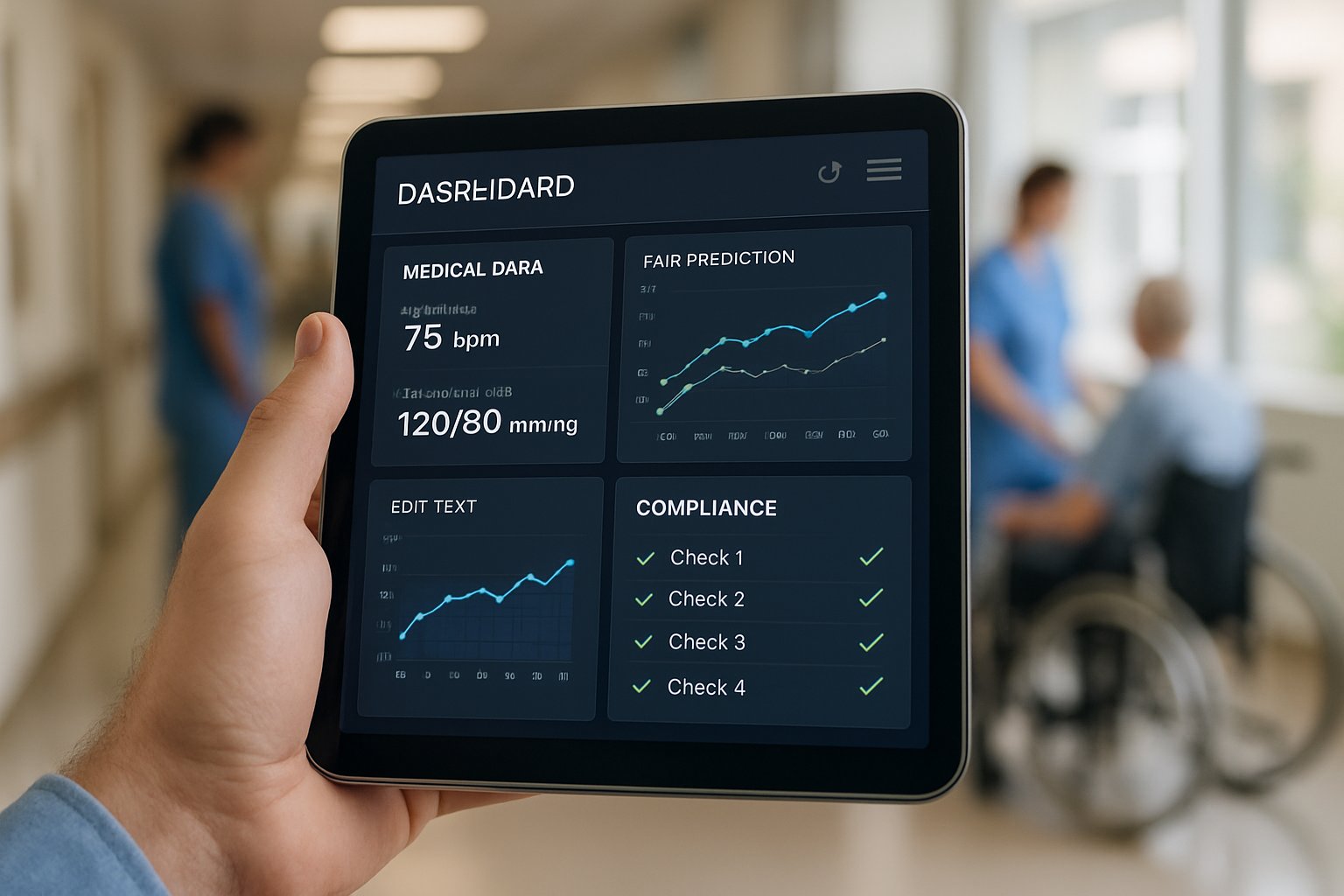
Accurate Prediction alone is insufficient without context. Key concepts clarify the scope. Calibration matches predicted risk with observed outcomes, enabling safe therapeutic thresholds. Fairness fights subgroup bias using preprocessing, constrained training, and post-processing. Meanwhile, robustness testing guards against distribution shifts across hospitals and time.
Together, Medical Data Science translates these pillars into responsible model behavior. However, regulation now sharpens this responsibility further.
Regulatory Landscape Rapidly Evolves
Regulators accelerated action during 2024 and 2025. The FDA released final guidance on predetermined change control plans and draft lifecycle rules. Public comment periods showed broad support for transparent performance reporting. Consequently, developers must pre-specify update logic and real-world monitoring procedures. WHO’s GI-AI4H initiative supplements this with Medical Data Science governance around large multimodal models. Prediction systems now require documented change plans.
European regulators implement the incoming EU AI Act for health software. In contrast, national agencies add context-specific clearance pathways. Bakul Patel summarizes the philosophy as total product lifecycle oversight. Therefore, compliance now intertwines with technical design from day one.
These measures convert abstract ethics into enforceable checkpoints. Emerging frameworks now answer the technical how.
Emerging Technical Frameworks Rise
Research teams respond with new Medical Data Science toolkits. HumanELY standardizes human evaluation across relevance, coverage, coherence, and harm. Furthermore, FAIR-AI outlines governance checklists for hospital committees. LLM digital twins such as DT-GPT show modest performance gains between 1 and 3 percent.
Calibration layers include focal loss and post-hoc scaling. Fairness pipelines span rebalancing, constrained optimization, and probability adjustments. Additionally, robustness techniques detect out-of-distribution inputs and trigger safeguards. Researchers embed uncertainty estimates to flag low confidence outputs. Consequently, health teams gain granular levers to tune model behavior. Importantly, Medical Data Science calibration benchmarks now live on shared leaderboards.
Frameworks make Alignment measurable and repeatable. However, market pressures test their adoption.
Market Adoption And Impact
Investment in Medical Data Science remains exuberant. Grand View Research projects healthcare AI to reach roughly USD 187 billion by 2030. Meanwhile, McKinsey estimates automation could absorb fifteen percent of health work hours. Therefore, executives anticipate workflow-embedded predictors across imaging, triage, and operations. Start-ups advertise rapid integration with electronic health record vendors.
- Digital twin Prediction models improved forecasting by up to 3.4 percent on benchmark tasks.
- Bias metrics appeared in only 12 percent of 2025 evaluation studies.
- Hallucination tracking was present in just 7 percent of papers.
- Hospitals deploy Medical Data Science platforms to pilot sepsis alerts.
Professionals can enhance their expertise with the AI Data Specialist™ certification.
Nevertheless, modest performance gains rarely guarantee clinical benefit. Hospitals thus demand evidence through prospective trials and post-market monitoring. Consequently, commercial value now hinges on demonstrable patient outcomes.
The market rewards trustworthy deployment, not novelty alone. Persistent evidence gaps illustrate the remaining hurdles.
Critical Gaps And Needs
Systematic reviews expose striking Medical Data Science blind spots. Research still under-represents global populations. HumanELY found harm metrics seldom measured during evaluation. Moreover, fairness studies cluster around a few high-income hospital datasets. In contrast, low-resource settings largely lack representation.
Prospective clinical trials remain scarce. Therefore, translation from bench to bedside continues slowly. Moreover, equity audits often omit socioeconomic variables. Operational tooling for logging, feedback, and retraining also lags commercial hype. Subsequently, regulators hesitate to approve high-risk adaptive systems.
Closing these gaps demands multidiscipline collaboration. The next section outlines practical steps.
Actionable Steps For Leaders
Executives should embed Medical Data Science governance early. Create internal review boards that mirror FDA lifecycle guidance. Deploy Prediction dashboards that surface calibrated probabilities at decision thresholds. Additionally, mandate external validation on diverse sites before rollout. Monitor drift continuously and recalibrate when performance drops.
Clinicians need transparent explanations supporting shared decision making. Consequently, designers must prioritize succinct, actionable narratives over opaque scores. Data teams should version datasets, code, and evaluation reports for auditability. Meanwhile, upskilling remains vital across analytics and ethics. Survey teams periodically to capture usability pain points.
Conclusion
Medical Data Science now stands at a regulatory and ethical crossroads. Nevertheless, aligned Prediction systems can transform care, improve equity, and raise trust. Regulators, clinicians, and developers must collaborate through transparent Research, validation, and monitoring. Consequently, leaders should embed governance, invest in workforce skills, and pursue evidence over hype. Explore certifications such as the AI Data Specialist™ program to accelerate your next step. Act now to guide algorithms toward better patient futures.


