

AI CERTS
3 months ago
Grove Unveils Open Source Carbon Formula for AI Emission Tracking
However, Gravity Climate partnered with the retailer to turn academic research into a practical spreadsheet. The pair project only 17.8 tCO2e of AI emissions for 2025, about six percent of 2024 travel. Importantly, Grove will integrate the estimate into forthcoming Scope 3 disclosures and purchase nature-based offsets. Meanwhile, regulators in California and Europe prepare stricter climate reporting rules that include digital operations. Therefore, early adopters gain strategic advantage by measuring AI footprints today. This article explains the method, examines benefits and risks, and outlines next steps for decision makers.
AI Footprint Urgency Today
Data centers already contribute roughly three percent of global emissions, according to recent estimates. Moreover, analysts expect AI electricity demand to double before 2027, straining grids and budgets. In contrast, few vendors share model energy statistics, leaving sustainability leaders with guesswork.
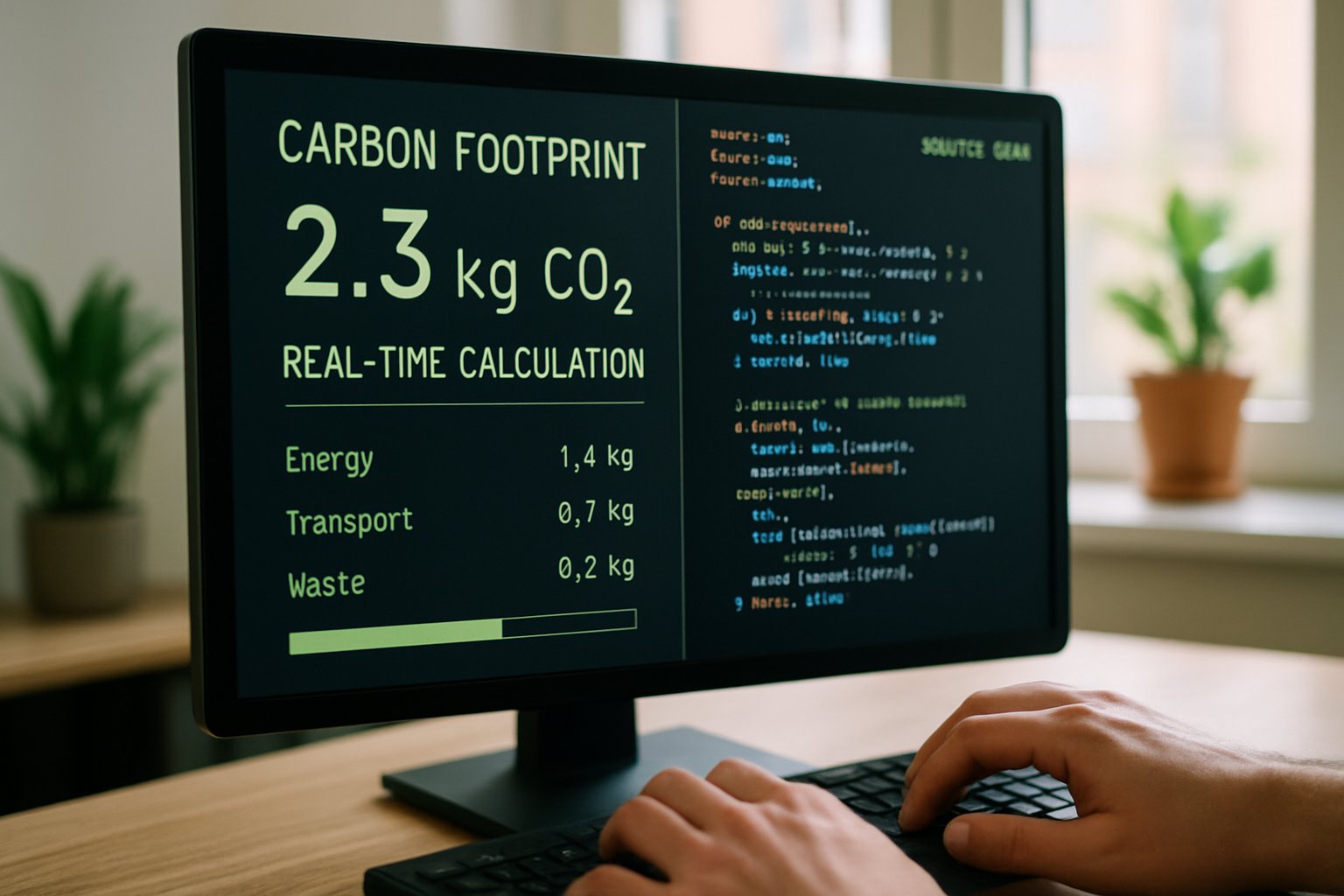
Therefore, the Open Source Carbon initiative delivers a long-needed baseline for enterprise accounting. By open-sourcing assumptions, the project invites peer review and rapid iteration.
- 17.8 tCO2e: Projected 2025 AI inference emissions.
- 299 tCO2e: 2024 business travel footprint baseline.
- 6 percent: AI share of previous travel emissions.
- 50 scenarios: Latency and utilization combinations modeled.
These snapshots contextualize the method’s outputs for busy executives. Consequently, they underscore why prompt measurement matters.
Understanding the calculation’s architecture now becomes paramount.
Inside Grove's New Formula
The calculation begins with observed or estimated query duration. Subsequently, maximum hardware wattage is multiplied by utilization to derive active power draw. A PUE factor then adds cooling overhead, producing kilowatt-hours per query.
Additionally, three output length buckets—short, medium, long—avoid undercounting verbose responses. Weighted averaging across fifty latency-utilization pairs yields a conservative per-query energy figure. After conversion with the United States grid coefficient, totals scale by annual query counts. That chain forms the spine of the Open Source Carbon methodology.
The team labels the model conservative because unknown provider splits are assumed equal. Nevertheless, transparency outweighs precision at this early stage.
In summary, time multiplied by power equals emissions. Moreover, every constant is visible for auditors.
The following section details why a time model remains practical despite data gaps.
How Time Model Works
Traditional counters need proprietary access to server telemetry. Conversely, duration is observable through application logs or browser dev tools. Therefore, companies can collect necessary inputs without vendor permission.
Because datacenter locations stay undisclosed, Gravity applies the average U.S. grid factor. However, organizations operating abroad may substitute regional coefficients for better accuracy.
Furthermore, ISO working groups prefer transparent equations to black-box provider numbers. The Open Source Carbon template thus aligns with emerging norms.
Professionals can deepen governance knowledge through the AI Ethics Business™ certification. Such credentials bolster credibility during sustainability audits.
Time-based accounting favors inclusivity over perfect precision. Consequently, adoption barriers stay low.
The next section compares strengths with outstanding limitations.
Benefits And Key Limitations
Open publication fosters external critique and improvement cycles. Moreover, minimal data requirements let small teams implement the model quickly.
- Drives competition on model efficiency.
- Easily integrates into Scope 3 reports.
- Supports internal carbon pricing pilots.
Nevertheless, exclusions remain significant. Training emissions, embodied hardware, and offset integrity sit outside current scope. Additionally, average grid factors can misrepresent workloads run in coal-heavy regions.
Experts caution that many land-based offsets lack permanence. In contrast, Grove pledges independent verification of its projects.
Even with gaps, the Open Source Carbon roadmap offers a credible baseline for iteration.
Strengths outweigh weaknesses for early adopters. However, transparent revisions must continue.
Industry reactions reveal growing appetite for such openness.
Industry Reactions And Context
Coverage from BusinessWire to ESGTimes spread within hours of the press release. Meanwhile, analysts applauded the open-source documentation and urged hyperscalers to follow suit.
Sasha Luccioni noted task-specific models can be thousands of times more efficient than general LLMs. Consequently, she advised buyers to consult benchmarks alongside the Open Source Carbon formula.
Regulators also observe the trend. California’s draft disclosure bill references digital services, making open-source tools attractive for compliance.
Saleh ElHattab stressed that measurement exposes efficiency levers for immediate action. Therefore, per-query data can guide workload placement on renewable grids.
Industry voices converge on a single message: transparent math accelerates responsible AI adoption.
Enterprises now must decide whether to wait or to act.
Next Steps For Companies
Begin by cataloging every account that accesses generative AI services. Subsequently, apply the open-source spreadsheet to calculate inference emissions.
When regional grids differ, replace the average coefficient inside the Open Source Carbon sheet. Moreover, document any substitutions for audit trails.
Adopt an internal carbon price to translate emissions into financial language. The formula’s simplicity allows seamless budgeting integration.
The project GitHub repository also accepts pull requests for new scenarios. In contrast, many proprietary calculators remain closed to improvement.
Finally, upskill staff through recognized ethics credentials. Such training strengthens governance culture across development teams.
Practical steps exist today. Consequently, proactive firms can reduce risk and build climate credibility.
The concluding section reinforces these lessons.
Conclusion
Grove and Gravity prove that responsible AI measurement is achievable with publicly available inputs. The Open Source Carbon framework demonstrates that clear methods can thrive even amid vendor opacity. Moreover, open-source licensing invites global experts to refine constants as better data appear. Nevertheless, future updates must address training emissions and embodied infrastructure.
Therefore, pilot the Open Source Carbon template during your next AI deployment to build internal capability. Subsequently, share findings with the wider community to accelerate collective learning. Finally, reinforce accountability by pursuing the previously linked AI ethics certification. Open Source Carbon scrutiny starts with you—measure, report, and lead.


