

AI CERTS
5 months ago
GPU Cluster Demand Drives Nvidia’s Record Shipping Surge
Jensen Huang called Blackwell sales “off the charts,” and major cloud vendors confirmed sold-out inventories. Moreover, management guided Q4 revenue toward $65 billion, reinforcing confidence in sustained momentum. Independent trackers echo the narrative, estimating Nvidia with nearly 98 percent data-center share during 2023. Nevertheless, export controls, power bottlenecks, and single-vendor worries temper the euphoria. This article unpacks the numbers, risks, and strategic implications powering the current shipment surge.
Nvidia Unprecedented Shipping Surge
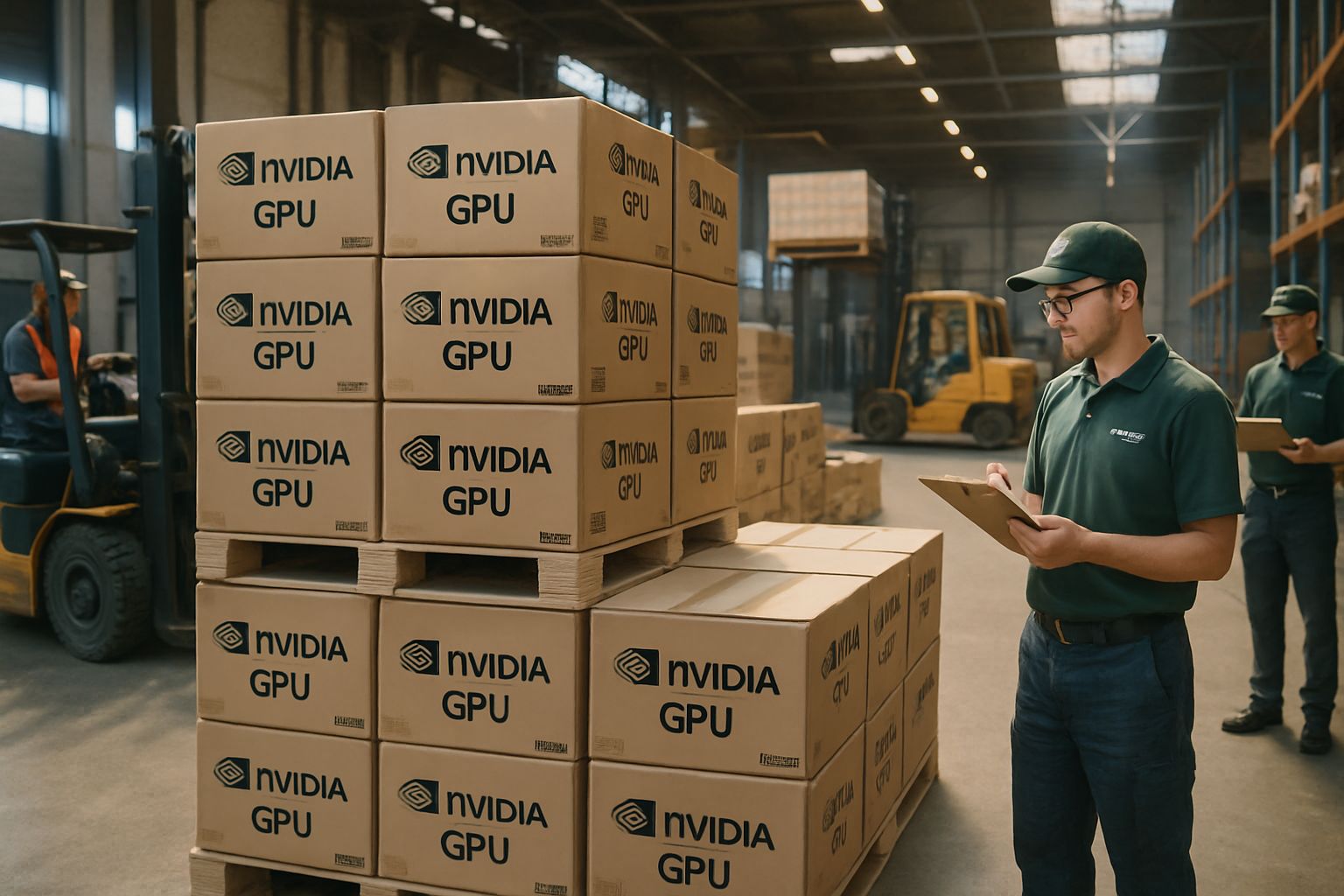
During Q3 FY2026, Nvidia moved hardware at historic scale. Blackwell accelerators led shipments, while networking systems amplified rack value.
- $51.2 billion Data Center revenue, up 66 percent year over year.
- GAAP gross margin reached 73.4 percent, reflecting premium accelerator mix.
- Management reported visibility to $500 billion Blackwell and Rubin revenue through 2026.
These metrics confirm Nvidia’s shipping prowess. Consequently, investors view the backlog as structurally durable.
Next, we examine the forces propelling that appetite.
Key Financial Metrics Snapshot
Gross margin expansion underpins strategic pricing power. Furthermore, EPS of $1.30 highlighted operating leverage despite record capex. Consequently, Wall Street upgraded full-year outlooks, expecting momentum to persist.
Stable profitability strengthens Nvidia’s hand when negotiating wafer allotments. Therefore, suppliers prioritise Blackwell orders despite industry constraints.
These numbers reinforce leadership durability. However, demand origins explain the true growth engine.
Drivers Behind Cluster Demand
Hyperscalers now treat large-scale training complexes as core infrastructure. GPU Cluster Demand stems from model sizes that double every few months.
- Foundation model training requires thousands of tightly linked accelerators.
- Inference workloads scale outward as applications launch publicly.
- Sovereign AI programmes pursue digital autonomy through domestic compute.
- Enterprises integrate copilots, elevating baseline cluster requirements.
These drivers magnify cluster spending across sectors. Therefore, suppliers see multi-year visibility.
Yet unprecedented appetite strains global capacity, as the next section shows.
AI Factory Project Scale
Nvidia announced AI factory projects aggregating roughly five million accelerators. Moreover, some single sites target gigawatt power envelopes, eclipsing prior record builds. CoreWeave, AWS, Microsoft, and several sovereign clouds headline the roster.
Management described visibility into half-a-trillion dollars of potential Blackwell and Rubin revenue. Consequently, construction partners scramble for transformers, chillers, and land permits.
Announced projects cover diverse geographies and owners. Nevertheless, physical buildouts face material constraints.
Supply chain realities therefore deserve scrutiny.
Evolving Supply Chain Headwinds
TSMC’s CoWoS packaging lines remain the tightest gate. GPU Cluster Demand intensifies pressure on glass substrate supplies and high-bandwidth memory. Additionally, logistics teams juggle worldwide rack deliveries.
Furthermore, power availability caps deployment speed at many hyperscale campuses. Consequently, utilities schedule multi-year substation upgrades to support future clusters. Professionals can enhance planning skills with the AI Supply Chain Strategist™ certification.
Supply limitations could delay actual rack arrivals. However, Nvidia aims to diversify manufacturing nodes.
Geopolitics introduces further uncertainty.
Geopolitics And Export Risk
Washington continues refining export rules governing advanced GPU shipments to China. Reuters reported a review that could restrict H200 deliveries. Consequently, Chinese cloud firms accelerate local accelerator projects.
In contrast, U.S. and European customers escalate orders to secure scarce capacity. Moreover, allies consider joint cluster investments to mitigate single-vendor risk.
Policy turbulence may cap Chinese installations. In contrast, domestic builds can offset near-term gaps.
Investors also seek outside validation of shipment claims.
Strategic Market Outlook Summary
TechInsights estimates 3.76 million data-center accelerators shipped during 2023, granting Nvidia roughly 98 percent market share. Jon Peddie Research observed quarterly spikes as buyers raced ahead of tariff changes. Meanwhile, Mizuho forecasts 7 million units for 2025, citing improved CoWoS yields.
GPU Cluster Demand therefore appears structural, not cyclical. Moreover, vertical integration around CUDA, NVLink, and Spectrum-X cements platform stickiness. Nevertheless, concentration risk invites competitor and regulator attention.
External trackers corroborate Nvidia’s dominance. Consequently, skeptics focus on sustainability rather than scale.
Forward-looking forecasts signal durable growth. However, execution hinges on supply resilience.
Overall, Nvidia sits at the epicentre of AI infrastructure spending, backed by staggering backlogs yet shadowed by policy and capacity caveats.
Disclaimer: Some content may be AI-generated or assisted and is provided ‘as is’ for informational purposes only, without warranties of accuracy or completeness, and does not imply endorsement or affiliation.


