

AI CERTS
3 months ago
Goldman Signals Data Center Infrastructure Power Shift
Therefore, understanding the new projections is essential for planners, investors, and technologists. This article unpacks the numbers, examines regional impacts, and suggests strategic responses. In contrast, previous forecasts understated AI’s intensity, making fresh insights vital. We draw on industry research, IEA findings, and utility deal flow. Moreover, we highlight certification opportunities for teams building resilient facilities. Read on for a concise, actionable briefing. Solid decisions begin with accurate data; let us provide that clarity.
AI Driven Demand Spike
Recent notes from Goldman paint a striking picture of accelerating load. Specifically, the bank expects Data Center Infrastructure electricity demand to rise about 175% versus 2023. IEA corroborates the trajectory, forecasting consumption to double, reaching 945 TWh by 2030.
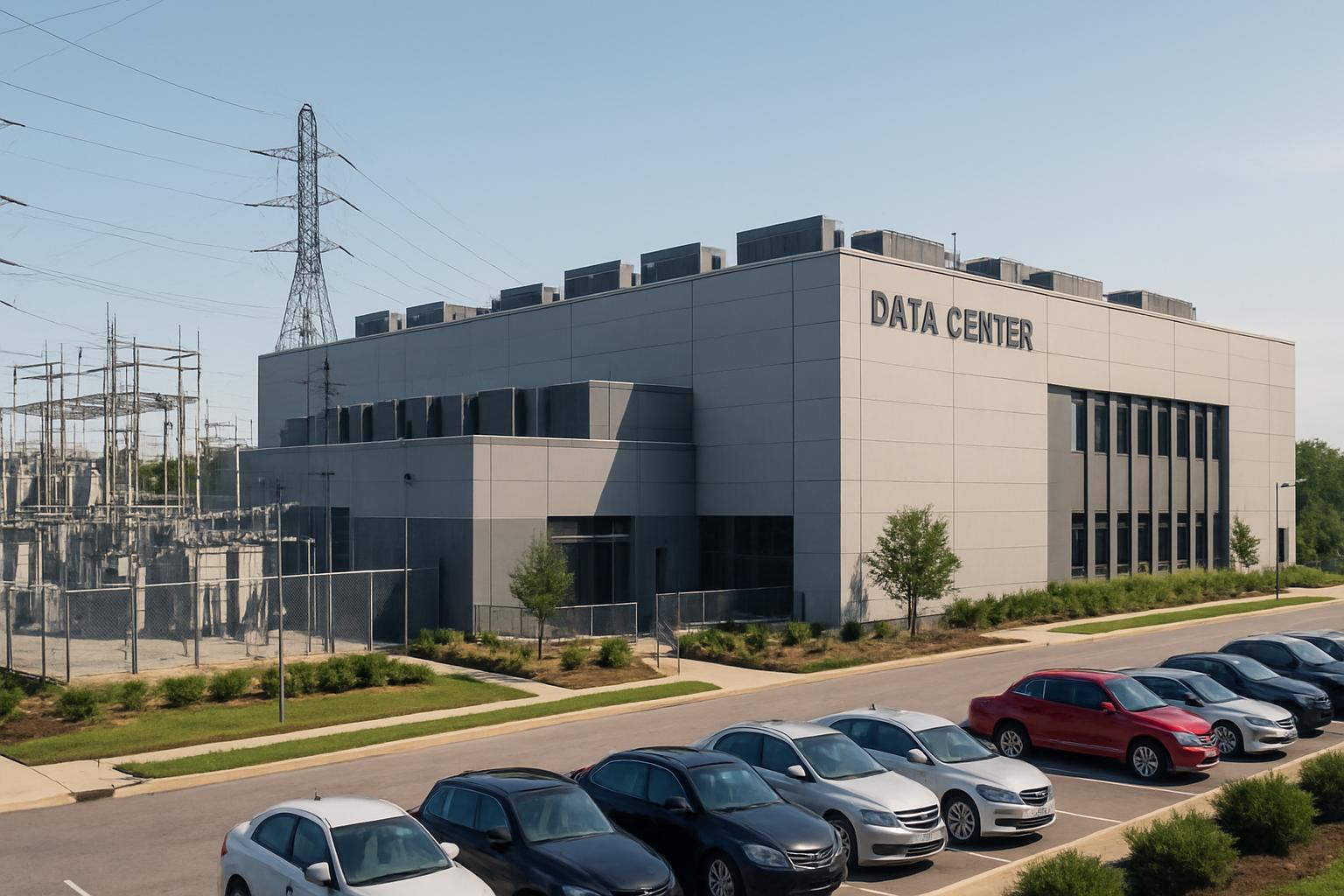
Furthermore, the model estimates capacity rising from 55 GW today to 122 GW inside five years. Such growth means average site density will escalate, requiring novel cooling and distribution designs. Consequently, even incremental efficiency gains cannot offset the absolute load expansion.
Nevertheless, the headline percentages hide regional nuances explored later. For now, the message is clear: AI is rewriting electricity math for operators.
These projections underscore a structural demand shift. Subsequently, financial forecasts for vendors and utilities are recalibrating upward.
Goldman Forecasts Explained
Goldman released three milestone updates between 2024 and 2025. Initially, the May 2024 paper signaled a 160% jump by decade end. Later memos edged the figure to 175%, reflecting updated AI adoption rates.
Moreover, analysts translated percentages into concrete wattage for Data Center Infrastructure planners. They project 84 GW demand by 2027 and 122 GW capacity by 2030. Therefore, commissioning schedules must accelerate to avoid backlogs.
The firm also warns about permitting bottlenecks and supply-chain shortages for transformers. Meanwhile, James Schneider highlights sensitivity to efficiency improvements that could reshape curves.
Goldman scenario details enable precise budgeting for developers. However, turning budgets into steel requires fresh attention to the Grid.
Grid Investment Imperatives
IEA and Goldman converge on a sobering investment tally. Specifically, the world needs roughly $720 billion for transmission expansion before 2030 to uphold Data Center Infrastructure. About $50 billion targets United States generation dedicated to hyperscale campuses.
Additionally, utilities have locked multi-gigawatt Power purchase agreements with cloud giants. NextEra, AES, and Exelon each announced deals exceeding two GW. Consequently, equipment vendors from switchgear to advanced cooling see swelling order books.
Some utility filings already embed an 8% annual load growth assumption for hyperscale customers. Yet financing alone fails without permitting acceleration. Nevertheless, several states now streamline siting for high-density data parks near strong Grid nodes.
- 84 GW projected demand by 2027
- 122 GW global capacity by 2030
- 945 TWh annual consumption per IEA
The capital challenge is formidable yet solvable. In contrast, social license risks could complicate timelines further.
Regional Hotspot Analysis
United States holds about 45% of global data-center electricity, says IEA. Meanwhile, China follows with roughly 25%, and Europe accelerates quickly. Analysts estimate U.S. data centers could reach 8% of national load by 2030.
Consequently, Northern Virginia, Texas, and Iowa remain pressure points for land and water within Data Center Infrastructure corridors. Europe’s Nordics offer abundant hydro but limited Grid headroom on cross-border lines. Furthermore, Spain and France leverage nuclear fleets to supply consistent Power for AI clusters.
Asia sees diversification toward Malaysia and India, chasing favourable tariffs. Nevertheless, coastal China provinces still dominate thanks to integrated industrial policies.
Regional differentiation influences siting economics and risk profiles. Subsequently, developers refine portfolios toward resilient, low-carbon markets.
Risks And Constraints
Every boom hides systemic constraints that threaten schedules and budgets. Firstly, Grid transmission pipelines lag request volumes, delaying energization for new campuses. Secondly, water availability for cooling invites environmental scrutiny.
Moreover, Data Center Infrastructure emissions could double if generation portfolios rely on fossil inputs. Such growth undermines corporate climate commitments and attracts regulatory penalties. Nevertheless, ramping renewable procurements could mitigate exposure when paired with flexible storage.
In contrast, overbuilding facilities risks stranded capital should AI monetization slow. Market cyclicality already surfaced during previous server refresh cycles.
Therefore, analysts recommend phased construction and modular Power blocks. These designs allow right-sizing before full commitment.
Water stress could rise above 8% of local supply during peak summer months.
Managing constraints demands holistic engineering and realistic demand forecasting. Consequently, attention now shifts toward actionable playbooks for executives.
Strategic Action Playbook
Executives must align procurement, siting, and finance with credible load forecasts. Furthermore, joint planning with utilities reduces scheduling surprises and enhances tariff certainty. Stakeholders should incorporate 8% national load scenarios into integrated resource plans.
Moreover, adopting high-density liquid cooling curtails floor space and improves energy efficiency. Modular transformers and on-site solar reduce reliance on distant Grid infrastructure. Consequently, resilience increases, and carbon exposures shrink.
Data Center Infrastructure Surge
Additionally, portfolio diversification across geographies hedges policy and weather risks. Some operators even investigate small nuclear reactors to secure stable Power bulks.
Nevertheless, any capital allocation must reflect realistic Data Center Infrastructure performance metrics. Continuous monitoring helps teams fine-tune deployments over time.
These strategies build agility in an uncertain environment. Meanwhile, skills development remains the overlooked pillar of success.
Skills And Certifications
Technical teams must master emerging architectures and energy management principles. Therefore, professional development remains critical. Professionals can elevate expertise through the AI Architect™ certification. Additionally, curricula cover energy-aware workload placement and cost optimization.
Leaders should embed training milestones into Data Center Infrastructure roadmaps. Consequently, organizations build internal talent capable of aligning design with corporate sustainability goals.
Skilled people maximize technology and capital efficiency. Next, we synthesize the article’s key lessons.
Ultimately, AI growth recasts electricity planning for every operator and investor. Independent forecasts align on a steep trajectory through 2030. Consequently, financing, permitting, and supply chains must accelerate in unison. Meanwhile, unresolved constraints could stall expansion and erode returns. Stakeholders should integrate Data Center Infrastructure metrics into corporate energy strategies today. Moreover, continuous skill development ensures organizations navigate volatility confidently. Explore the certification and elevate your team’s readiness for the AI era. Act now to secure competitive advantage before capacity tightens.


