

AI CERTS
3 months ago
Geopolitical AI Conflict: Russia Demands Peace Plan Changes
Over six weeks, drafts have shrunk from 28 to 20 points, yet objections persist. Moreover, divergent demands on territory, troop caps, and frozen assets dominate every corridor discussion. Kremlin aides state the document “cannot be accepted in its current form,” signalling intricate bargaining ahead. In contrast, Kyiv insists that public backing through a referendum remains non-negotiable. Grasping these evolving positions is essential for firms tracking risk within the wider Geopolitical AI Conflict.
Explaining Rapid Timeline Shifts
Reports first surfaced on 19 November when a 28-point framework leaked. Subsequently, media outlets noted several clauses favouring Russia, including territorial recognition and NATO limits. Therefore, Ukraine and European capitals demanded revisions within days. U.S. envoys, led by Steve Witkoff, began shuttle meetings across Geneva, Warsaw, and Ankara. By 24 December, Zelensky unveiled a condensed 20-point list before cameras in Kyiv. However, Moscow replied that many sections “will require reworking,” leaving uncertainty around a final signing ceremony. Independent think tanks, like the Atlantic Council, observed that each redline mirrored frontline realities. Consequently, every new paragraph became a bargaining chip over artillery positions, air defence coverage, and nuclear plant oversight. The rhythm of leaks, rebuttals, and soft denials demonstrates information warfare’s role within the Geopolitical AI Conflict. These timeline details reveal negotiation velocity. Nevertheless, they also highlight structural distrust that undercuts lasting Peace. In summary, six frantic weeks produced slimmer drafts but hardened rhetoric. The next section examines the unresolved sticking points shaping the Geopolitical AI Conflict.
Core Negotiation Sticking Points
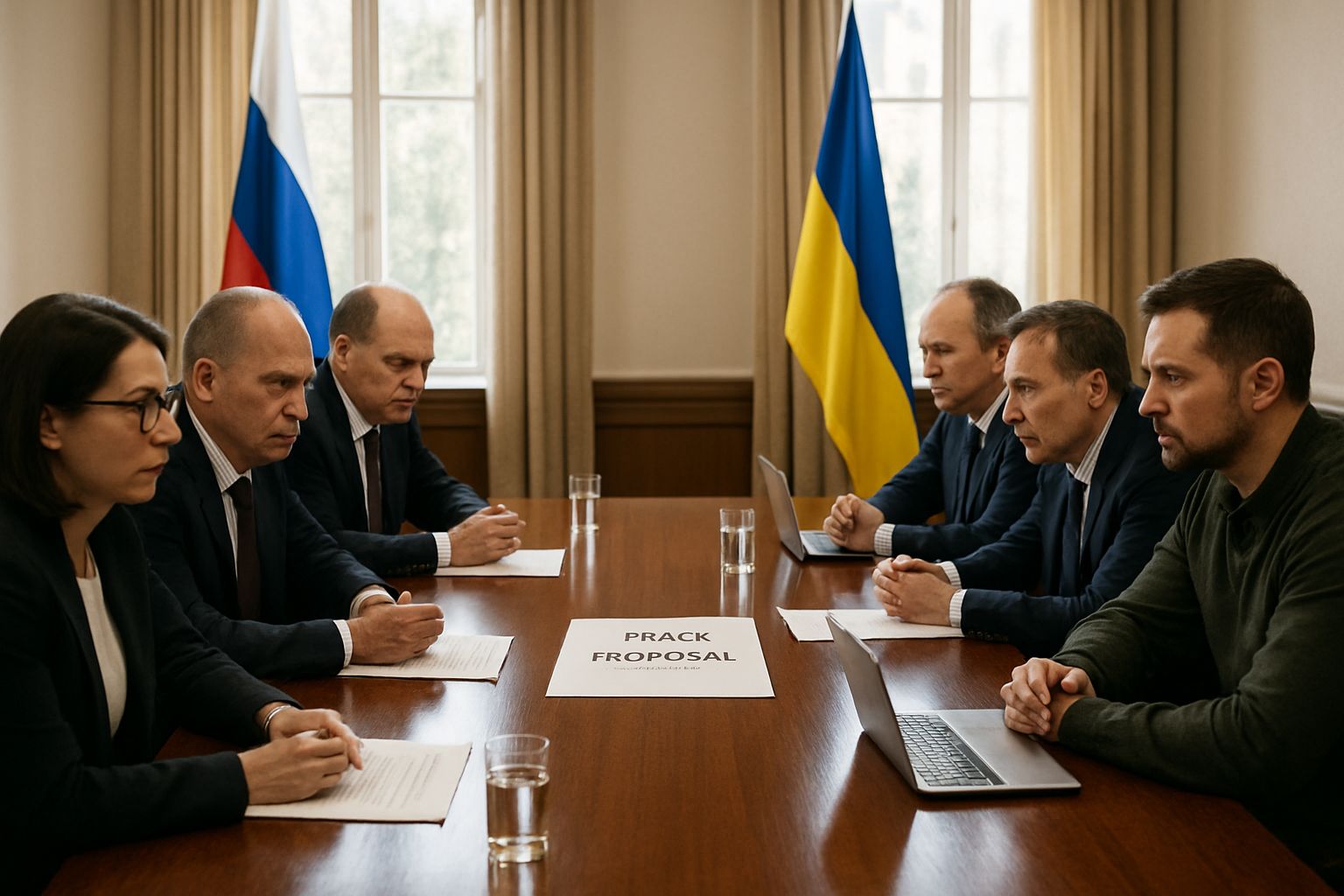
Territory remains the foremost obstacle. Russia seeks de facto recognition of Crimea and occupied Donbas districts totaling about 5,000 square kilometres. Meanwhile, Ukraine insists any boundary change must pass a national referendum. Additionally, troop caps divide the parties. Early drafts proposed reducing Ukrainian forces to roughly 600,000; Kyiv’s latest text allows 800,000. In contrast, Moscow still argues for lower numbers plus strict artillery bans. Security guarantees present another riddle. Western sponsors offer political assurances yet stop short of NATO Article 5. Consequently, Ukrainian officials fear a paper shield lacking enforcement teeth. Frozen assets worth up to $300 billion also hang over discussions; Moscow links asset release to troop withdrawals. Moreover, control of Zaporizhzhia nuclear plant triggers safety concerns and IAEA oversight questions. Each unresolved clause fuels social media narratives inside the broader Geopolitical AI Conflict. These sticking points underscore deep divides. Therefore, understanding Kremlin signalling becomes vital next.
Kremlin Countermove Signals Emerging
Public statements from Dmitry Peskov and Yuri Ushakov outline Moscow’s tactical messaging. However, officials simultaneously claim no official text has reached their desks. This dual line enables flexibility while avoiding firm commitments. Moreover, President Putin noted that the proposal “could form the basis” of settlement, yet demanded details. Analysts interpret the phrasing as a calibrated invitation for concessions. Consequently, the Kremlin gains time to consolidate battlefield positions. Independent data shows Russia’s artillery activity continuing despite winter conditions. In contrast, U.S. envoys hope that presenting incremental edits might coax Moscow into written counteroffers. Nevertheless, Sergei Ryabkov warns the document cannot stand “in its current form.” These signals ripple through commodity markets, cybersecurity postures, and diplomatic calendars, reinforcing the Geopolitical AI Conflict narrative. Collectively, counter-signals suggest prolonged bargaining. Subsequently, Western skepticism intensifies.
Western Skepticism Grows Loud
European Union leaders criticize being sidelined during drafting. Furthermore, Brussels argues that continental security architecture should not hinge on bilateral U.S.–Russia talks. Think tanks like Carnegie warn that forced neutrality could unravel Ukraine’s sovereignty. Meanwhile, the Institute for the Study of War tracks ongoing clashes that contradict Peace declarations. Consequently, investors question timetables for reconstruction financing. Atlantic Council researchers label the original plan a blueprint for “statehood erosion.” Moreover, sanctions relief without verifiable withdrawal risks rewarding aggression. The skepticism feeds media framing within the Geopolitical AI Conflict, influencing public opinion algorithms. These concerns flag structural weak points. Therefore, implementation hurdles deserve close inspection.
Implementation Hurdles Analyzed
Draft clauses sound tidy on paper; practice differs sharply. Demilitarized zones require monitoring technology, funding, and mutually accepted personnel. Therefore, experts outline several operational barriers:
- Satellite verification may be jammed by electronic warfare within the Geopolitical AI Conflict.
- Ground observers risk shelling in disputed corridors lacking Peace-keepers.
- IAEA teams need safe passage to the nuclear plant near front lines.
Additionally, legal scholars debate referendum procedures amid occupied districts. Frozen asset release poses another intricate compliance puzzle across jurisdictions. Consequently, financial institutions demand clear indemnities before unfreezing accounts. Professionals can enhance their expertise with the AI+ Government™ certification. Moreover, the certification deepens understanding of governance challenges inside any Geopolitical AI Conflict. Implementation barriers appear formidable. Nevertheless, strategic outlooks offer pathways if incentives align.
Strategic Outlook Moving Forward
Scenario planners outline three plausible trajectories. First, accelerated talks could yield a provisional ceasefire by spring. Second, stalled diplomacy may freeze lines, prolonging attritional costs for Russia and Ukraine. Third, battlefield surprises could collapse negotiations entirely. Consequently, companies monitoring supply chains should adopt flexible contingencies. Moreover, cyber risk escalates as narrative warfare intensifies across the Geopolitical AI Conflict. Investors still eye reconstruction bonds but tie disbursement to verifiable Peace milestones. U.S. policymakers weigh domestic election calendars against foreign policy reputational stakes. These outlooks stress adaptive planning. In contrast, the conclusion synthesizes actionable takeaways.
The evolving draft saga illustrates negotiation speed and volatility. However, core disputes over territory, troop levels, and sanctions remain unresolved. Western skepticism, mirrored by think tanks, questions enforceability and Ukrainian sovereignty. Meanwhile, Kremlin ambiguity secures bargaining leverage while battlefield realities shift daily. Consequently, the Geopolitical AI Conflict will continue shaping diplomatic, economic, and cybersecurity domains. Professionals should track official texts, verification mechanisms, and asset-release frameworks.
Additionally, continuous learning enhances strategic foresight. Consider deepening policy fluency through the AI+ Government™ certification. Such expertise positions leaders to navigate complex global negotiations and safeguard organizational interests. Act now to stay ahead in an unpredictable landscape.


