

AI CERTS
6 months ago
Groq Independent Cloud Continues After Nvidia Licensing Deal
Market watchers quickly asked one central question. Nevertheless, Groq offered a direct answer: “GroqCloud will continue to operate without interruption.” The pledge eased immediate customer concerns, yet observers wonder how long the promise can hold. Meanwhile, regulators are scanning the arrangement for antitrust implications. The following report unpacks the facts, risks, and next steps.
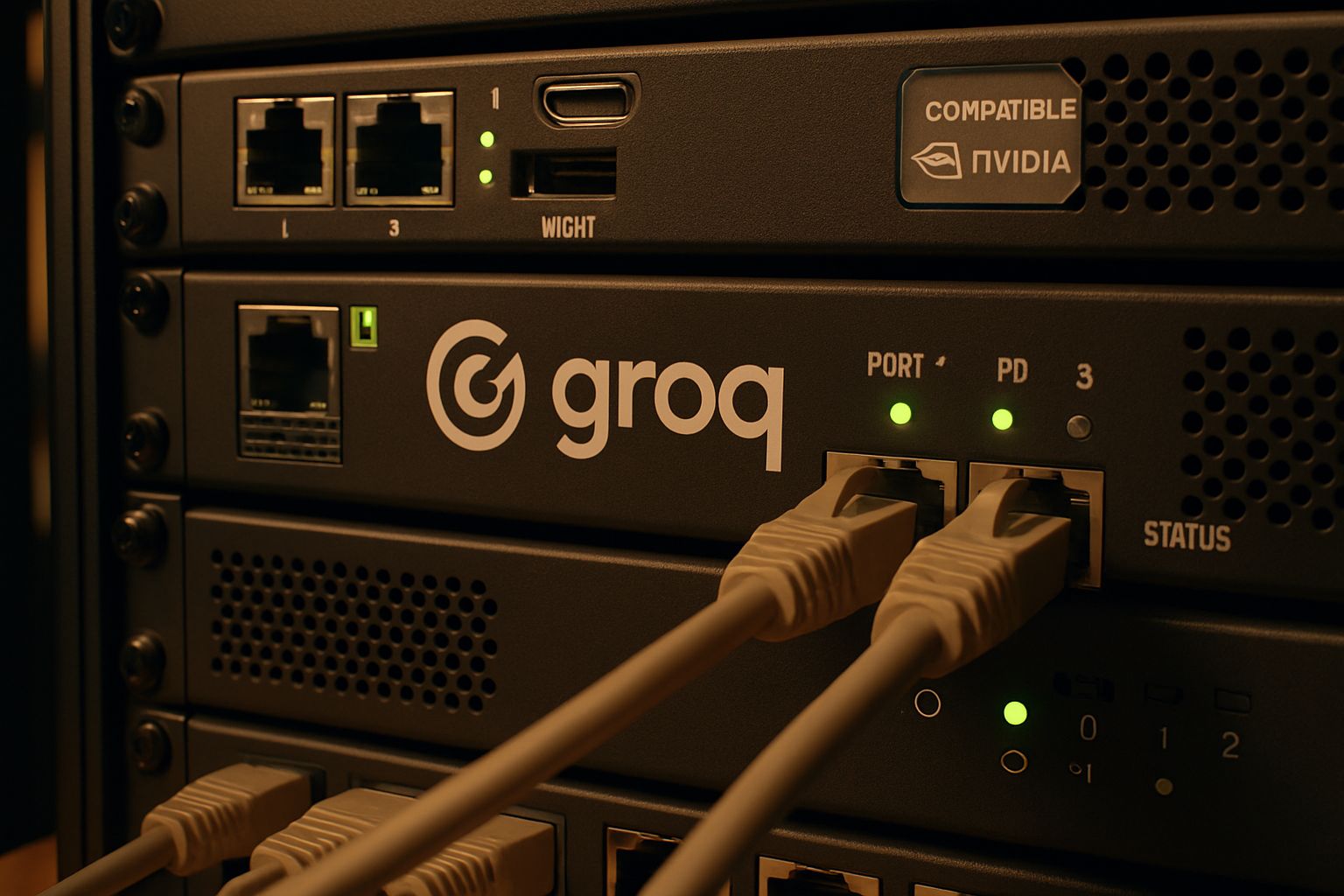
Strategic Licensing Deal Explained
Groq disclosed the non-exclusive license on 24 December 2025. Additionally, multiple outlets cited investor sources valuing the transaction near $20 billion, though neither company confirmed any figure. Therefore, official details remain thin beyond Groq’s release and Nvidia’s brief acknowledgment.
The transfer of senior engineering talent amplifies the strategic weight. Furthermore, Nvidia gains direct access to Groq’s deterministic LPU architecture without undertaking a full acquisition. In contrast, Groq gains a global commercialization partner while maintaining corporate Independence.
Analysts consider this model a “license plus acquihire.” Consequently, questions arise regarding competitive balance because know-how shifts even if ownership does not. Still, Groq states that Groq Independent Cloud will continue building on its LPU road map.
These deal contours clarify intent yet leave financing and governance opaque. However, transparency matters for customers planning multi-year deployments. These uncertainties frame the arguments explored in later sections.
The move secures immediate scale. However, it also tests regulatory patience. These dual pressures set the tone for our next focus on daily service continuity.
GroqCloud Remains Fully Operational
Groq emphasized that GroqCloud APIs, consoles, and tokens stay live. Subsequently, developers reported no downtime during the holiday week. The company earlier claimed more than two million developers on the platform, indicating material usage momentum.
Regional clusters also appear unaffected. Moreover, Saudi Arabia’s $1.5 billion commitment to expand Dammam capacity remains on schedule according to local partners. Therefore, current Operations continue under existing service-level agreements.
Key service facts include:
- GroqCloud hosts Llama 4 and other large models at day-zero availability.
- Public console advertises deterministic latency below 60 milliseconds for 70-billion-token models.
- Pricing follows a transparent “Tokens-as-a-Service” menu pegged to token volume.
Professionals can enhance their expertise with the AI Cloud certification, which aligns with Groq’s emerging infrastructure standards.
Observers still ask how leadership departures might influence future feature velocity. Nevertheless, Groq assigns dedicated product leads to the cloud unit, according to internal memos reviewed by industry analysts. Consequently, short-term continuity appears credible.
The service remains stable today. However, leadership transitions introduce medium-term uncertainty that investors are already modeling.
Investor Reaction Valuation Insights
Disruptive, BlackRock, and other September investors have not commented publicly. Meanwhile, CNBC’s $20 billion figure circulated widely, powering speculation about outsized returns. In contrast, Groq’s last disclosed valuation stood at $6.9 billion after the September financing.
Some investors view the deal as rapid validation of Groq’s differentiated inference thesis. Additionally, they note that keeping Groq Independent Cloud separate preserves optionality for later capital raises or even an IPO.
Valuation chatter captured headlines. However, the absence of confirmed numbers leaves risk analysts working with assumptions.
These mixed investor signals feed into broader policy debates, addressed next.
Antitrust Concerns Emerge Quickly
Regulators scrutinize any transaction touching Nvidia’s market power. Moreover, antitrust experts highlight that transferring top engineers could curb meaningful Independence despite legal separation.
Bernstein analyst Stacy Rasgon labeled regulatory action “the primary risk.” Furthermore, Constellation Research argued the license may effectively neutralize a competitive challenger. Consequently, agencies in the United States and European Union may investigate market concentration effects.
Groq counters that the license is non-exclusive and that Groq Independent Cloud stays active, preserving competition. Nevertheless, watchdogs will examine whether remaining staff can innovate at the prior cadence.
Potential remedies could include operational firewalls or reporting obligations. Additionally, regulators may require public disclosures on roadmap commitments. These safeguards would aim to keep inference costs low for downstream developers.
Regulatory reviews move slowly. However, perceived risk already influences purchasing decisions, as covered in the next section.
Technical Roadmap Moving Ahead
Groq maintains a published LPU roadmap that targets doubled on-chip SRAM and higher clock speeds by late 2026. Meanwhile, Nvidia plans to integrate Groq’s compiler approach into its own AI Factory initiative.
Industry engineers see complementary strengths. Consequently, cooperative optimization work could speed inference across both ecosystems. Still, customers need clarity on which innovations will appear first inside Groq Independent Cloud.
Groq asserts that the cloud unit retains architectural decision rights. Moreover, incoming CEO Simon Edwards reportedly instructed product leaders to lock the 2026 feature slate within Q1. Therefore, stakeholders should receive public updates soon.
The roadmap appears ambitious. Nevertheless, funding and staffing realities will determine eventual delivery pace.
Customer Impact And Roadmap
Enterprise buyers value predictability. Furthermore, many signed multi-year contracts based on Groq’s deterministic latency promises. Consequently, any perceived deviation triggers risk committees.
Procurement teams interviewed by TechCrunch said they will require formal reassurances. Additionally, some requested contract riders guaranteeing personnel continuity for critical support tiers.
To maintain trust, Groq outlined a transparent engagement strategy:
- Quarterly roadmap briefings for top accounts.
- Dedicated migration engineers for model onboarding within 48 hours.
- Public status dashboards covering capacity expansions.
These measures aim to shield revenue while leadership stabilizes. Moreover, they support broader Business development initiatives in healthcare, finance, and defense verticals.
Customers now weigh the combined benefits of Nvidia scale and Groq’s focus on ultra-low latency. Therefore, some plan to pilot hybrid deployments that span both platforms.
Client confidence is steady but not locked. However, regular transparency could convert uncertainty into loyalty.
Enterprise Lessons And Actions
Technology leaders confronting similar deals can extract three immediate lessons. Firstly, always secure contractual clarity on intellectual property stewardship. Secondly, monitor regulatory filings for clues on future obligations. Thirdly, diversify critical workloads across at least two inference providers.
Enterprises following these practices weather partner transitions with minimal disruption. Additionally, certification programs strengthen internal talent. For instance, architects pursuing the previously mentioned AI Cloud credential align skills with deterministic inference trends.
Groq Independent Cloud users should run internal risk reviews within the next quarter. Moreover, they should map any roadmap shifts against application latency budgets.
These proactive steps fortify resilience. Consequently, organizations can exploit new performance gains while guarding against unforeseen service changes.
The broader cloud market is evolving rapidly. However, disciplined planning ensures firms stay ahead of turbulence.
Summary of Section Takeaways: Groq’s license offers scale, yet talent migration and regulatory scrutiny inject volatility. Meanwhile, clear communication and diversified architectures provide practical cushions. Therefore, vigilant monitoring remains essential as the situation unfolds.
Overall Transition: These diverse perspectives converge on one theme: durability of the Groq Independent Cloud proposition hinges on transparent execution during leadership change.
Conclusion And Outlook
Groq’s bold license positions its technology inside Nvidia’s vast ecosystem. Meanwhile, the company pledges to protect Groq Independent Cloud and uphold seamless Operations. Additionally, investors relish potential upside, yet regulators examine competitive impacts. Consequently, customers must balance optimism with pragmatic risk checks.
Future clarity will arrive through roadmap briefings, regulatory findings, and service metrics. Therefore, technology managers should monitor announcements, review contracts, and empower teams through recognized credentials such as the linked AI Cloud program.
Stay informed, stay agile, and leverage these insights to secure your organization’s AI Business edge.
Disclaimer: Some content may be AI-generated or assisted and is provided ‘as is’ for informational purposes only, without warranties of accuracy or completeness, and does not imply endorsement or affiliation.


