

AI CERTS
6 months ago
BISC Neural Implant Redefines Wireless Brain-Computer Interfaces
Additionally, the work rekindles debate over privacy, security, and long-term safety. Another Neural Implant milestone may now be within reach for patients battling paralysis and epilepsy.
Monolithic Chip Design Breakthrough
Traditional BCIs rely on multiple implanted modules and bulky wiring. However, BISC integrates recording, stimulation, power management, and radio on one silicon die. Therefore, total implant volume shrinks to roughly 3 mm³. Kenneth L. Shepard notes, “By integrating everything on one piece of silicon, we’ve shown how brain interfaces can become smaller, safer, and dramatically more powerful.” The Neural Implant now resembles a flexible postage stamp rather than a titanium canister. Subsequently, manufacturing leverages the standard TSMC 0.13 µm BCD process, promising lower cost and faster scale.
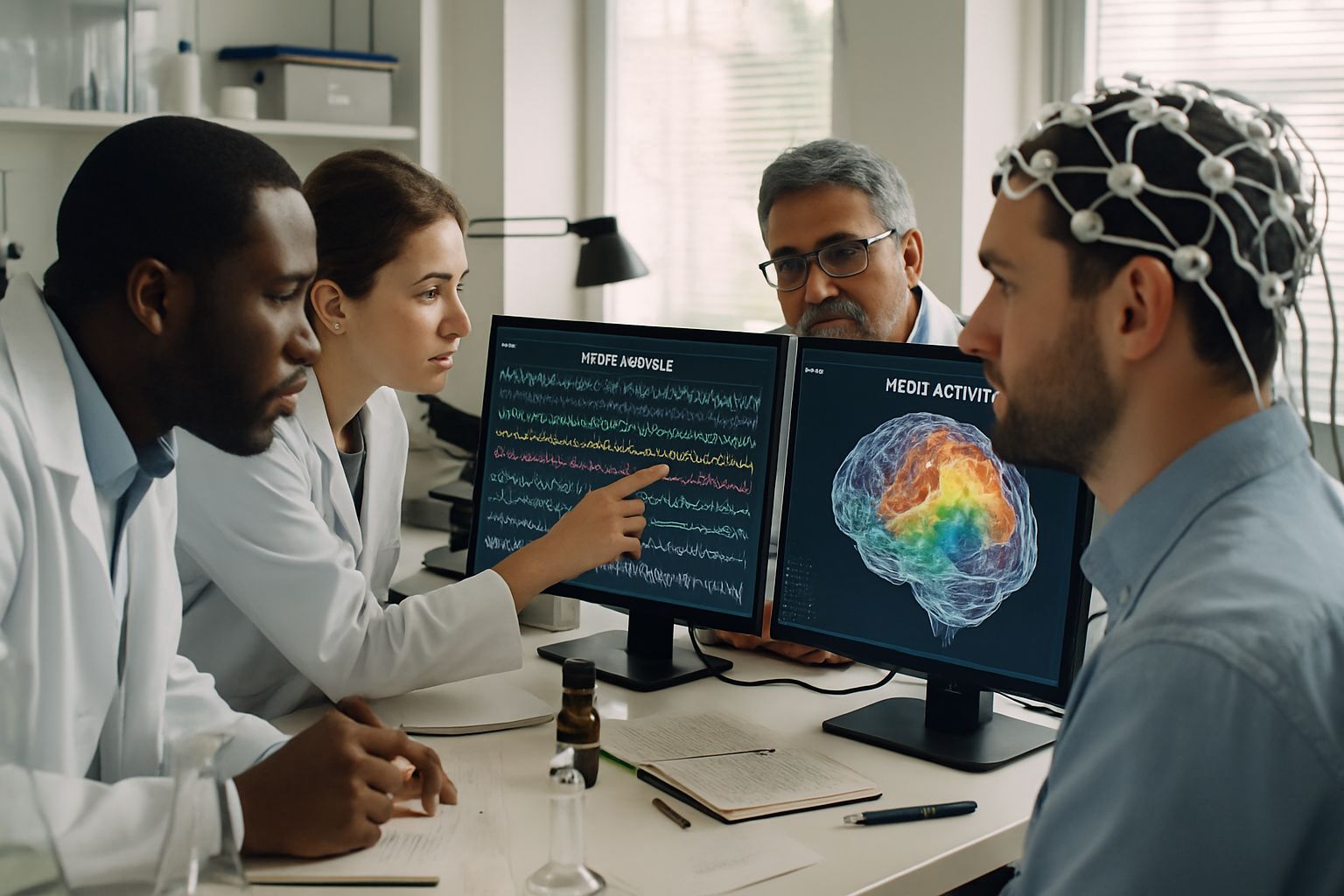
These engineering choices simplify surgery and reduce infection risk. Nevertheless, long-term biocompatibility in humans still needs proof. The section highlights BISC’s core innovation. Meanwhile, next we examine how that design boosts data flow.
Wireless Bandwidth Electrode Density
BISC deploys an ultrawideband radio link providing about 100 Mbps. Furthermore, the team states this is one hundred times faster than prior Wireless BCIs. Electrode density also leaps forward. The array hosts 65,536 micro-electrocorticography contacts arranged in a 256 × 256 grid. Consequently, decoders can access richer spatial patterns without aggressive compression.
Core Technical Numbers List
- Selectable recording channels: 1,024 simultaneous
- Stimulation capability: 16,384 channels
- Stable pig recordings: two weeks
- Stable NHP recordings: two months
- Data/code availability on GitHub and Zenodo
Collectively, these figures map the scale of the Wireless leap. However, raw performance must translate into clinical benefit. The following timeline shows where trials stand.
Early Clinical Trials Timeline
Preclinical studies began in pigs during 2024. Subsequently, non-human primate tests covered motor, sensory, and visual cortices for two months. Short intraoperative human recordings started in late 2025 at NewYork-Presbyterian. Brett Youngerman highlights the minimally invasive insertion approach for epilepsy mapping. Moreover, Kampto Neurotech aims to launch chronic human trials in 2027, pending FDA discussions.
Regulators will scrutinize safety endpoints such as tissue response, signal stability, and device failure modes. In contrast, investors focus on manufacturing readiness and reimbursement paths. These parallel pressures define the next milestones. Therefore, ethical and security frameworks must keep pace.
Security Privacy Ethical Stakes
High-bandwidth BCIs widen attack surfaces. Consequently, cybersecurity experts urge strong encryption, firmware update controls, and fail-safe shutdown protocols. Scientific American commentators warn about cognitive liberty erosion if neural data leak. Furthermore, long-term bidirectional stimulation raises manipulation fears. Professionals can enhance their governance skills with the AI Ethics certification.
Nevertheless, comprehensive policies remain sparse. DARPA’s NESD program demands security audits, yet public radio specifications stay vague. Therefore, watchdog groups press Columbia and Kampto Neurotech for transparency. These concerns will shape adoption. Meanwhile, competitors observe closely.
Competitive Landscape And Market
Neuralink, Synchron, Paradromics, and Precision Neuroscience pursue parallel goals. However, BISC’s monolithic sheet contrasts with Neuralink’s thread electrodes and Paradromics’ canister arrays. Market analysts forecast the broader Brain-Computer sector hitting US$3.1 billion by 2030. Additionally, standard semiconductor fabrication could grant BISC significant cost leverage.
Moreover, DARPA backing provided early validation. Venture capital followed as Kampto Neurotech formed. Consequently, we may see licensing deals for surgical tools and relay stations. These dynamics illustrate how a Neural Implant can transition from grant-funded science to scalable product.
Roadmap And Next Steps
Researchers plan months-long human implants to verify chronic stability. Moreover, firmware hardening and encryption details must surface before large trials. Independent neuroethicists advocate neurorights legislation protecting mental privacy. Meanwhile, Kampto Neurotech drafts manufacturing partnerships beyond TSMC to secure supply.
Subsequently, integration with AI decoders will demand cloud pipelines compliant with medical data rules. The team also hints at closed-loop seizure intervention studies. Therefore, each milestone combines engineering, clinical, and regulatory hurdles. These steps will determine when the second generation Neural Implant reaches everyday clinical use.
In summary, BISC melds monolithic CMOS design, high electrode density, and Wireless throughput into a compact Neural Implant. Additionally, early animal data suggest stable surface recordings and powerful stimulation options. However, long-term human safety, cybersecurity, and ethical governance remain unresolved. Consequently, industry professionals should monitor upcoming trials and policy debates. Explore certification paths to deepen expertise and help steer this transformative field.
Disclaimer: Some content may be AI-generated or assisted and is provided ‘as is’ for informational purposes only, without warranties of accuracy or completeness, and does not imply endorsement or affiliation.


