

AI CERTS
3 months ago
Corporate Oversight in AI Governance
The International AI Safety Report warns that capability growth outpaces controls across biothreat, misinformation, and economic displacement domains. Meanwhile, the IAPP survey shows 77% of firms building governance programs although 23.5% cite severe talent shortages. This article synthesizes the latest evidence and offers practical steps for leaders charged with Corporate Oversight.
We examine regulations, design principles, metrics, talent issues, and future scenarios through a concise, board-focused lens. Additionally, we link to certifications that equip executives with structured AI ethics knowledge. Readers will leave with a roadmap to turn lofty intentions into verifiable governance outcomes.
Shifting Governance Landscape Trends
Historically, AI governance conversations centered on ethical charters and aspirational values. Moreover, the debate has now moved toward measurable obligations and proof of performance. EU lawmakers codified that shift in Article 14 of the AI Act, demanding demonstrable human oversight.
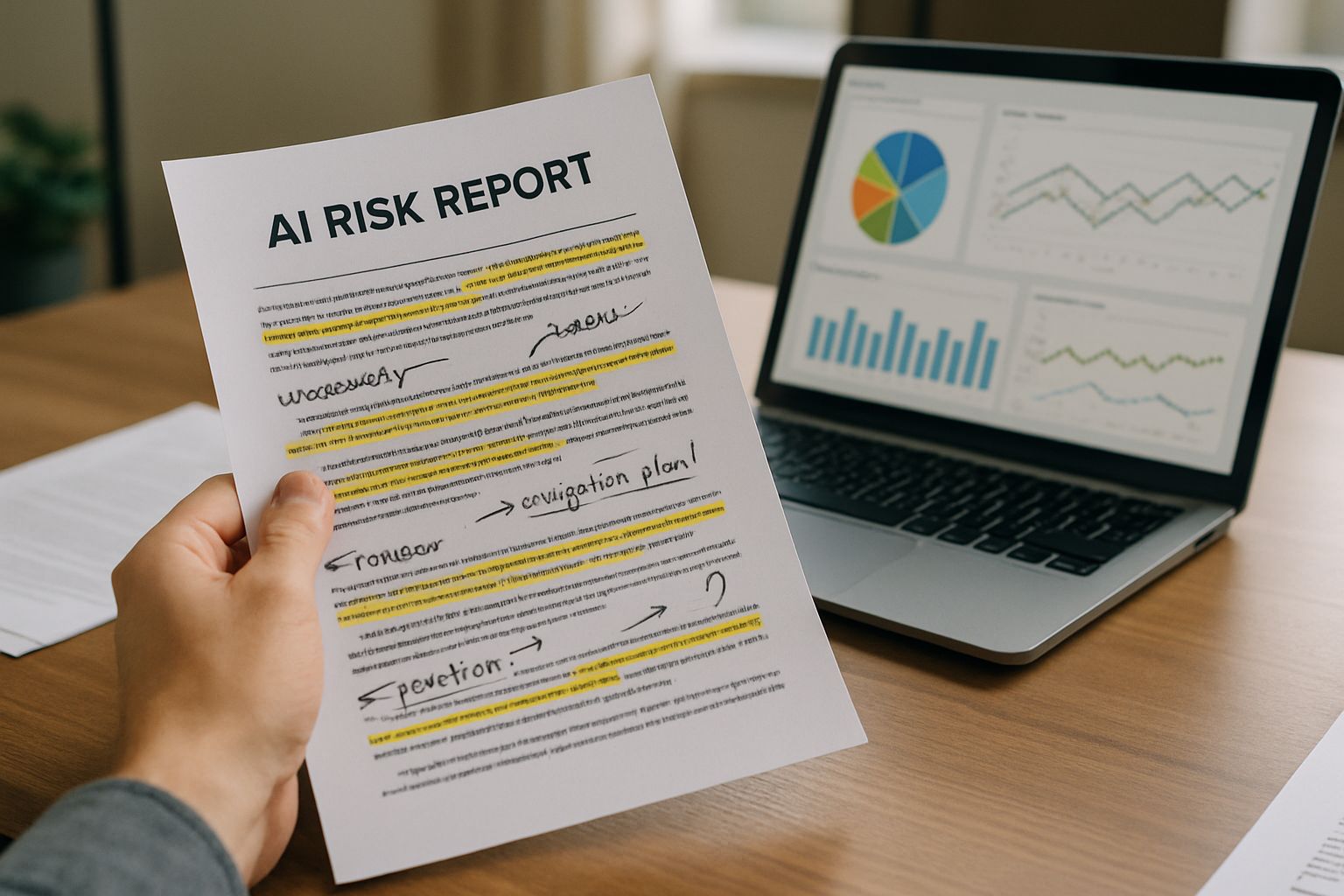
Similarly, NIST released a Generative AI Profile and TEVV tools to guide operational assurance. Consequently, companies must show that human supervisors have authority, information, and time to intervene. Corporate Oversight will increasingly be judged on logged interventions, not glossy policy slide decks.
Regulators now expect observable controls rather than aspirational slogans. However, many firms still lack evidence pipelines.
The next section details these regulatory demands and their impact on the boardroom.
Regulatory Demands For Oversight
Across jurisdictions, rulemakers converge on four core requirements. First, systems must be classified by Risk tiers aligned with ISO or NIST guidance. Second, every high-tier deployment needs meaningful human oversight with recorded decision logs. Third, organizations must run continuous TEVV to verify oversight works under load. Finally, independent auditors or regulators may test kill-switch functionality and escalation procedures.
In contrast, voluntary frameworks such as NIST RMF still shape procurement expectations despite lacking statutory force. Boards adopting these frameworks early often negotiate regulatory inquiries more smoothly. Therefore, Corporate Oversight should map each requirement to responsible teams, metrics, and deadlines.
Legal obligations now describe concrete artifacts, not abstract principles. Consequently, teams must operationalize oversight before launching any sensitive model.
We next explore how human oversight can be designed to satisfy those expectations.
Human Oversight Design Principles
Meaningful oversight begins with clear trigger points for human intervention. Moreover, practitioners recommend specifying latency windows and fallback actions. A finance chatbot, for instance, may route large transactions to a human under strict thresholds. Automation bias research warns that operators will often accept AI outputs unless interfaces highlight uncertainty.
Therefore, dashboards should display confidence scores, change history, and override shortcuts. Logs must attribute every override to a named individual to support Ethics investigations later. Corporate Oversight thrives when the Board receives monthly summaries of override rates and downstream outcomes.
Importantly, human Judgment quality depends on training, domain context, and authority to halt systems. Professionals can enhance their expertise with the AI Ethics Certification to master oversight heuristics.
Well-designed interfaces empower timely and accountable human actions. Nevertheless, controls must be measured continually.
Operational metrics reveal whether those design choices truly mitigate Risk.
Operational Controls And Metrics
NIST maps controls into Govern, Map, Measure, and Manage functions. Moreover, practitioners track four key indicators. These include override frequency, time-to-intervene, alert precision, and post-intervention outcome deltas.
- IAPP survey: 77% building AI governance, yet 23.5% report talent shortage.
- Stanford Index: 59 federal AI regulations proposed in 2024, rising legislative Risk visibility.
- International AI Safety Report flags capability growth surpassing existing controls across critical sectors.
Consequently, Corporate Oversight must integrate these metrics into quarterly reporting dashboards. Boards gain early warning signals when override rates spike or intervention times drift upward.
Metrics transform abstract oversight into measurable performance. However, performance depends on skilled people.
We therefore examine the talent and training gaps hindering sustained performance.
Talent And Training Gaps
Skills shortages remain the top barrier to operational AI governance. IAPP data shows 23.5% cannot find qualified professionals for oversight roles. Moreover, existing staff often lack AI literacy, creating Judgment errors or automation complacency.
Organizations address the gap through targeted upskilling, cross-functional rotations, and external certifications. Consequently, Corporate Oversight budgets increasingly allocate funds for ethics training and scenario drills.
Talent shortfalls threaten control effectiveness. Nevertheless, structured training programs close gaps quickly.
Global standards further assist by offering common alignment steps.
Global Standards Alignment Steps
ISO/IEC 42001 and 23894 supply management and Risk guidance aligned with NIST RMF. Moreover, OECD and OECD members reference these standards in procurement language. Adopting one framework simplifies cross-border audits and accelerates market entry.
Corporate Oversight teams should map each control to relevant clauses, creating a living compliance matrix. Consequently, auditors can trace evidence quickly, reducing assessment costs.
Standards harmonize expectations and streamline audits. However, dynamic profiles demand ongoing updates.
The final section explores future governance scenarios and emerging challenges.
Future Governance Outlook Scenarios
AI capability forecasts suggest increasing autonomy and cross-domain integration within three years. Therefore, oversight mechanisms must evolve toward layered monitors, simulation sandboxes, and kill-switch redundancy. International collaborations like the AI Safety Report consortium will likely shape baseline protocols.
Meanwhile, whistleblower protections and mandatory disclosure regimes may expand, adding fresh Governance Risk to neglectful firms. Corporate Oversight should pilot horizon scanning workshops and red-team exercises to anticipate these shifts.
Future controls will be adaptive and multi-layered. Therefore, preparation must start today.
The concluding insights consolidate actions boards can initiate immediately.
Effective Corporate Oversight demands more than policy pledges. It integrates clear human Judgment triggers, real-time metrics, and continuous training. Moreover, regulators want auditable proof that each safeguard works under realistic stress. Boards that align with NIST RMF and ISO standards gain resilience, investor confidence, and faster approvals.
Additionally, linking dashboards to override logs turns Ethics goals into measurable outcomes. Talent development, including the earlier referenced AI Ethics Certification, closes skill gaps quickly. Therefore, executives should assign owners, fund TEVV, and report progress at every quarterly meeting. Start now, and your organization will navigate evolving AI threats with accountable control and strategic advantage.


