

AI CERTS
1 week ago
Campus Security AI Force Multiplier: Market, Vendors, Governance
This article examines Campus Security AI adoption across the United States. We analyze market momentum, vendor capabilities, governance gaps, and ethical debates. Additionally, practitioners will find practical guidance for balanced deployments. Finally, readers can explore professional upskilling opportunities through certified training. In contrast, limited budgets and cybersecurity threats remain stubborn obstacles. Therefore, understanding real benefits versus perceived risks has never been more urgent.
AI Trend Overview Today
EDUCAUSE surveys show accelerated AI rollouts between 2024 and 2025. Moreover, video analytics, gun detection, and license-plate recognition lead spending priorities. Mordor Intelligence values the broader video analytics market near USD 12.39 billion for 2025. Meanwhile, niche research places the education slice around USD 4 billion with mid-teens growth. Campus Security teams adopt cloud-edge hybrids to avoid forklift camera replacements. Furthermore, Verkada, Honeywell, and ZeroEyes cited dozens of new campus deals during 2025 earnings. Subsequently, vendors intensified messaging that AI functions as an effective force multiplier. Nevertheless, governance frameworks lag behind technology investment at many institutions.
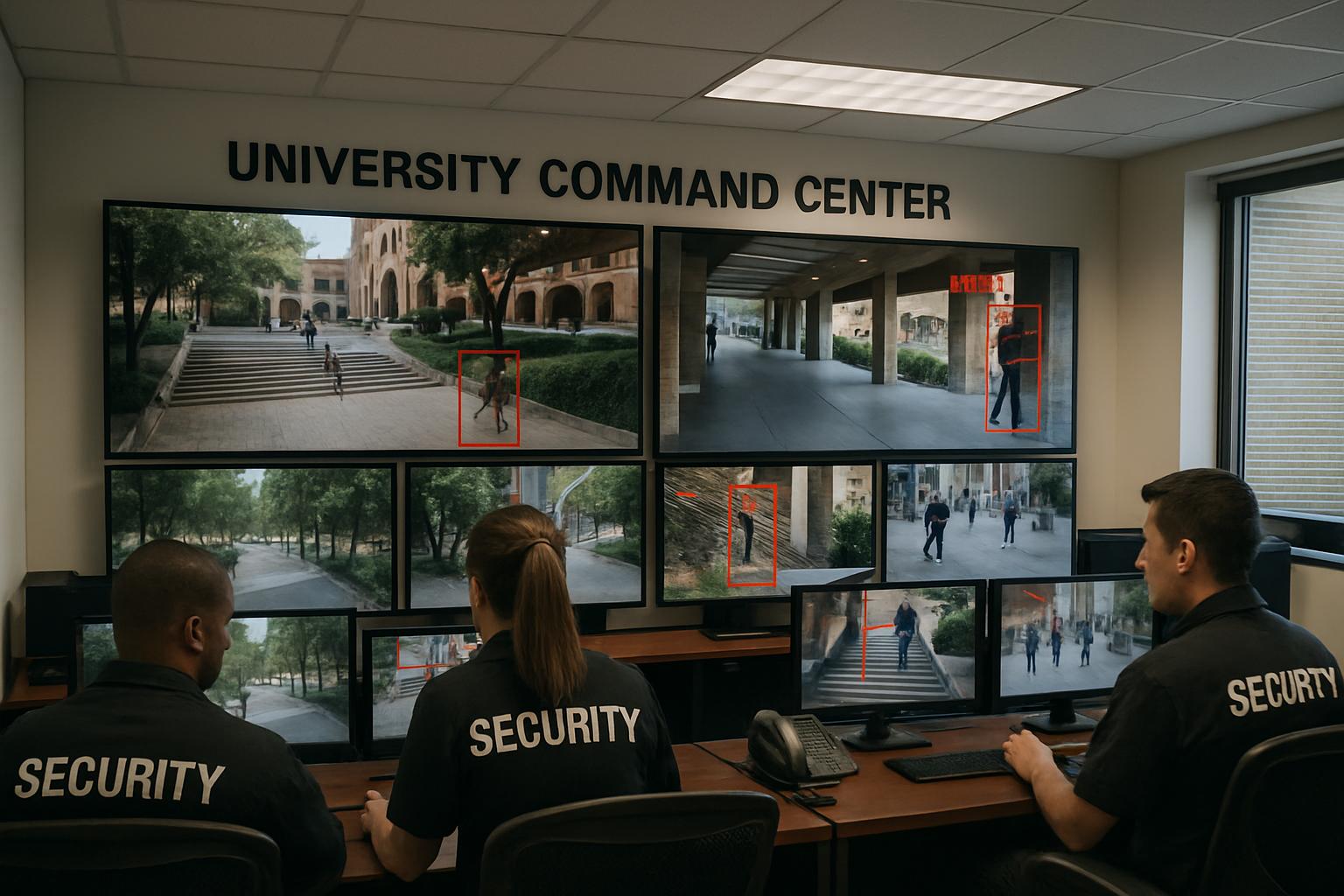
AI adoption is clearly accelerating. However, understanding the vendor landscape is imperative next.
Market Size Snapshot 2025
Fortune Business Insights projects roughly 20 percent CAGR through 2030 for video analytics. Consequently, campuses represent an attractive recurring-revenue vertical for integrators. Vendor press releases highlight camera counts surpassing 1,500 units at Tuskegee University alone. In contrast, smaller community colleges often upgrade incrementally, starting with critical entrances. Campus Security budgets remain stretched; therefore, subscription pricing gains traction. Additionally, buyers weigh cloud storage costs against on-site hardware refresh cycles. List prices vary widely, yet operators report savings when AI reduces overtime hours. Independent Review of total cost remains scarce, complicating procurement.
These figures establish commercial stakes. Subsequently, we examine practical benefits claimed by vendors.
Force Multiplier Benefits Explained
ZeroEyes states validated gun alerts reach dispatchers within five seconds on average. Similarly, Avigilon appearance search trimmed investigator footage Review time from hours to minutes. Moreover, multi-sensor fusion pairs audio with video to prioritize genuine threats. Consequently, small Campus Security departments can expand coverage without hiring additional officers. Eagle Eye Networks emphasizes fewer false positives due to human verification loops. Furthermore, unified dashboards consolidate alarms, door events, and location data for quicker Response. Operators describe reduced radio chatter because incidents arrive pre-classified. These operational gains illustrate measurable productivity improvements. Nevertheless, benefits rely on accurate models and stable networks. Next, we map key supplier offerings shaping those results.
Emerging Vendor Landscape Analysis
Verkada introduced Operator View, combining ticket workflows with AI alerts. Meanwhile, Honeywell integrated LenelS2 access control for unified badge and video management. ZeroEyes secured DHS SAFETY Act designation, boosting credibility among risk-averse buyers. Motorola Solutions, Genetec, and Eagle Eye compete on open APIs and cloud choice. Additionally, Flock Safety pushes ALPR subscriptions tailored for parking operations. Campus Security officials often pilot multiple platforms before long-term contracts. Therefore, certifications and standards help validate maturity claims. Professionals can enhance design literacy through the AI+ UX Designer™ certification.
Subsequently, we turn to governance and ethical concerns.
Privacy And Governance Debates
Aug 2025 saw 30 civil-liberties groups urge universities to dismantle intrusive Surveillance systems. Will Owen argued that cameras chill free speech and expose activists to reprisal. Moreover, biased facial recognition may misidentify students of color, triggering unfair discipline. Consequently, policy transparency and auditing become essential safeguards. EDUCAUSE research found 42 percent of institutions lacking formal AI policies in 2025. In contrast, Tuskegee publicized data-retention limits and third-party breach Response protocols. Nevertheless, cybersecurity risks persist as IoT cameras expand attack surfaces. These tensions underscore the need for balanced oversight. Next, we outline implementation best practices derived from campus trials.
Implementation Best Practice Checklist
Successful rollouts pair technology with disciplined processes. Therefore, experts recommend adhering to the following checklist.
- Define clear Campus Security objectives and measurable Response benchmarks.
- Conduct privacy impact Review and engage student stakeholders early.
- Establish data retention, access, and Surveillance audit controls.
- Integrate multi-sensor alerts into existing dispatch workflows to reduce noise.
- Train operators continuously and simulate incident playbooks quarterly.
Following these steps reduces operational friction and legal surprises. Consequently, attention shifts toward long-term strategic planning.
Strategic Planning Recommendations Ahead
Decision makers should map desired outcomes against evolving threat models annually. Additionally, budgeting must account for algorithm refresh fees and bandwidth upgrades. Independent academic Review can validate accuracy claims and foster community trust. Moreover, procurement contracts should mandate breach disclosure and timely patch Response. Campuses may join purchasing consortia to secure better pricing and shared expertise. Campus Security leaders can benchmark progress through REN-ISAC tabletop exercises. Subsequently, transparent reports keep governance boards informed. These recommendations position institutions for sustainable, rights-respecting safety programs. Finally, our conclusion distills essential insights and next actions.
Conclusion
AI continues to reshape Campus Security operations through rapid detection and actionable intelligence. However, privacy worries and governance gaps demand equal attention. Educators must weigh force-multiplier gains against Surveillance overreach and bias. Independent Review, transparent policies, and robust Response playbooks balance innovation with accountability. Moreover, cross-disciplinary teams should update assessments as threats and regulations evolve. Consequently, proactive Campus Security leaders will allocate funds for training and certifications. Professionals eager to deepen design thinking can pursue the linked AI+ UX Designer™ credential. Take action today by benchmarking programs, refining policies, and elevating skill sets. Campus Security success hinges on continuous learning and transparent stakeholder engagement.


