

AI CERTS
7 months ago
Shield AI Doubles Valuation Amid Strategic Defense Investments
Founded in 2015, the company develops an AI pilot called Hivemind and field-deploys the V-BAT drone. Furthermore, customers range from the U.S. Coast Guard to allied partners in Asia and Europe. Rising geopolitical tensions keep Military buyers hungry for autonomous systems that reduce risk to personnel.
Therefore, analysts spotlight Shield AI as a bellwether for private defense financing cycles. CEO Ryan Tseng argues the firm’s edge lies in full-stack autonomy, not hardware alone. Nevertheless, private market opacity clouds revenue multiples, leaving some investors cautious. This article unpacks the funding surge, strategic drivers, looming risks, and realistic exit paths.
Shield AI Funding Surge
March 6, 2025 marked the pivotal moment. Meanwhile, the start-up disclosed a $240 million F-1 round. That capital lifted the enterprise to a $5.3 billion valuation. Previously, an October 2023 Series F valued the firm at roughly $2.7 billion. Consequently, private investors witnessed a near doubling within 17 months. Analysts attribute the escalation to clear revenue traction and strategic investor participation. In contrast, peer rounds during 2024 often priced smaller autonomy ventures far lower. Importantly, Shield AI signaled it would deploy proceeds into scaling Hivemind Enterprise. Such allocation reassures investors chasing software-like margins inside defense procurement.
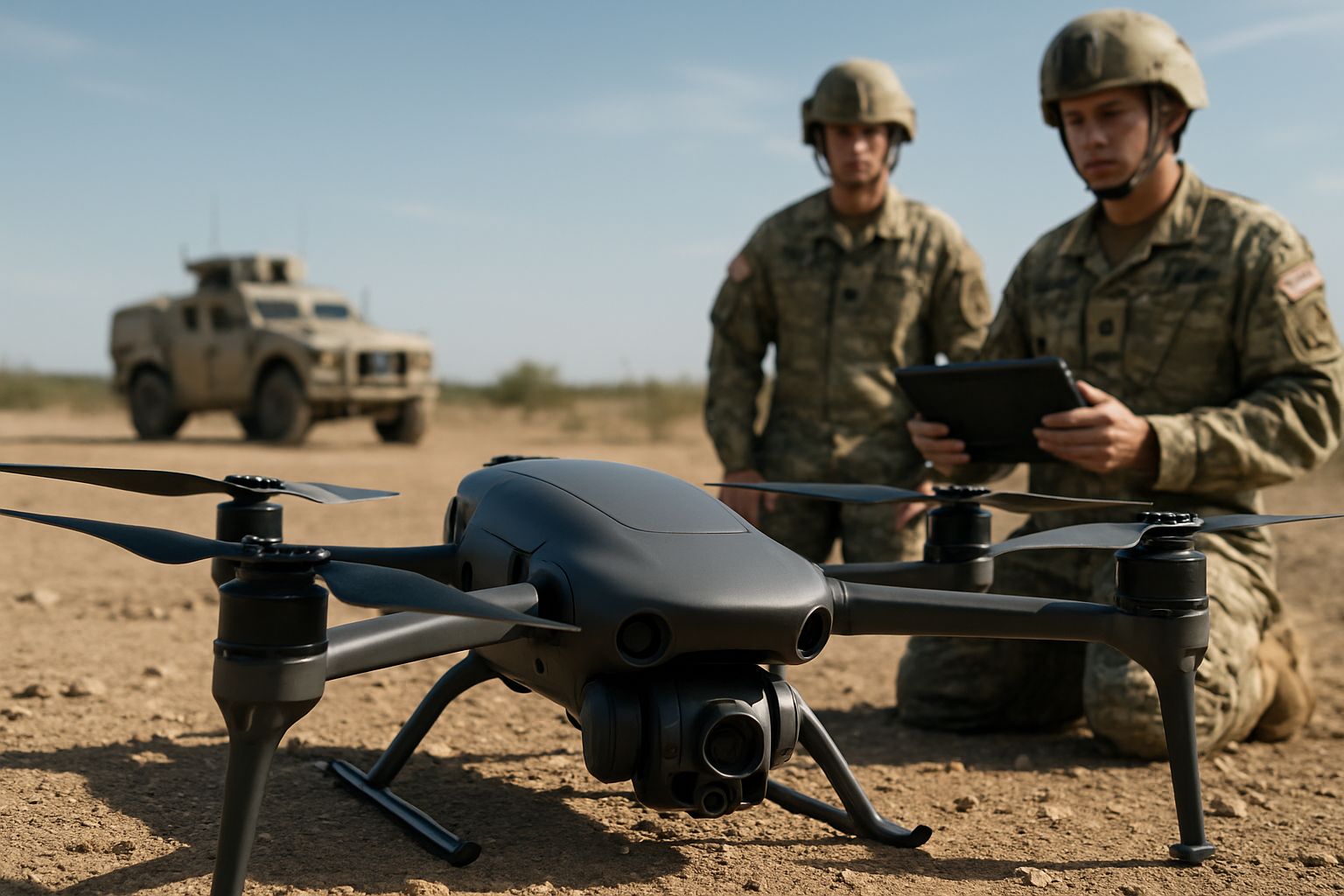
Ultimately, the funding surge underscores perceived momentum and market appetite. Investors rewarded real contracts and platform potential with higher multiples. Next, strategic investors’ roles reveal why the multiple expanded so rapidly.
Strategic Investors Shape Shield AI
L3Harris and Hanwha Aerospace anchored the March 2025 round. Moreover, both companies bring distribution networks, engineering muscle, and manufacturing scale. Their endorsement provides commercial validation beyond traditional venture capital. Consequently, board observers view the tie-ups as de-risking integration for future programs. Andreessen Horowitz and the U.S. Innovative Technology Fund also reinvested. That continuity signals confidence from earlier backers. Shield AI therefore gains immediate pathways into joint bids with these primes. CEO Brandon Tseng noted that primes accelerate deployments through existing contract vehicles. In contrast, many autonomy start-ups struggle to navigate acquisition rules alone.
Strategic dollars secure market channels and technical resources. Additionally, they improve perceived exit optionality for shareholders. The next section explores how concrete contracts translate hype into deliverable revenue.
Government Contracts Boost Credibility
The Coast Guard’s June 2024 award stands as a major milestone. Subsequently, the service inked an IDIQ worth up to $198.1 million. The deal covers cutter-based V-BAT intelligence and surveillance through 2029.
- IDIQ ceiling: $198.1 million through 2029
- Platform: V-BAT vertical take-off drone
- Primary mission: maritime intelligence and surveillance
This contract creates multi-year revenue visibility and production rhythm. Additionally, allied pilots with Singapore and Japan showcase growing international Military adoption. Ukraine field experience further demonstrates battlefield resilience under GPS denial. Shield AI cites these deployments as proof that autonomy can lower operational risk and cost. Consequently, procurement officers gain confidence when evaluating the platform for new missions.
Real contracts convert technology promise into booked dollars. Moreover, operational success strengthens bargaining power during future competitions. That traction feeds directly into the firm’s product expansion roadmap.
Hivemind Product Expansion Strategy
Hivemind began as an onboard AI pilot for small drones. Now, the Enterprise edition positions the stack as a cross-platform licensing product. Furthermore, the model mirrors traditional SaaS revenue, promising higher gross margins than hardware. OEMs can integrate Hivemind through application programming interfaces and development tools. Shield AI plans to market the suite to primes, governments, and even commercial robotics firms. Professionals can boost expertise via the AI+ Quantum™ certification. CEO Ryan Tseng argues that software scalability underpins long-term margin expansion. Nevertheless, full vertical integration remains essential for battlefield reliability.
Licensing diversifies revenue and attracts software-oriented multiples. Consequently, each integration partner broadens market reach beyond direct sales. Yet, lofty projections invite scrutiny around execution risk and Valuation sustainability.
Valuation Risks And Counterpoints
Private companies seldom disclose audited revenue, and Shield AI is no exception. Moreover, third-party trackers disagree on 2024 revenue, ranging from $160 million to $270 million. Therefore, investors must infer revenue multiples using imperfect data. Procurement unpredictability can delay cash flows because Military buyers often change priorities. Additionally, export controls may constrain foreign license deals, pressuring growth. Ethical debates around lethal autonomy could influence policy and dampen demand. CEO critics also question whether leadership can manage simultaneous manufacturing and software scaling.
These vulnerabilities could compress future Valuation multiples. Nevertheless, strategic investors mitigate several operational gaps through shared resources. With those caveats noted, potential exit scenarios still appear diverse.
Future Outlook And Scenarios
Two primary exit paths dominate analyst discussions. Firstly, an IPO could provide liquidity while preserving independence. Secondly, acquisition by a prime like L3Harris may deliver synergies and rapid scaling. Moreover, active strategic stakes make that route plausible. Market forecasts suggest the global Military drone segment could reach $87 billion by 2030. Consequently, platform providers with proven autonomy should capture outsized share. Shield AI appears positioned to capitalize if execution aligns with projections.
The company’s options remain open yet interdependent with partner priorities. In contrast, macroeconomic shocks or regulatory changes could alter timelines. The final section distills essential insights for decision makers.
Key Takeaway Summary Points
Shield AI valuation doubled within 17 months, driven by strategic capital and contract momentum. Strategic investors supply integration advantages, while government deals validate technology at operational scale. Licensable software expands margins, yet manufacturing and regulatory risks threaten future Valuation upside. CEO stewardship and transparent metrics will remain vital as external scrutiny intensifies. Meanwhile, sustained Military demand and rising budgets support optimistic revenue projections.
Together, these factors frame a nuanced investment thesis. Consequently, ongoing performance updates will shape sentiment quarter by quarter. That reality leads investors to track execution metrics closely.
The company’s rapid ascent illustrates how autonomy, strategic capital, and government demand converge in modern defense technology. Moreover, partnerships with primes validate capabilities while offering paths to production scale. Nevertheless, unverified revenue figures and geopolitical uncertainties remind stakeholders to temper exuberance with diligence. Consequently, tracking contract deliveries, margin trends, and export approvals will be crucial over the coming quarters. Industry professionals should stay informed and deepen technical skills through recognized programs to remain competitive. Explore the AI+ Quantum™ certification and related resources to position yourself at the forefront of autonomous innovation.
Disclaimer: Some content may be AI-generated or assisted and is provided ‘as is’ for informational purposes only, without warranties of accuracy or completeness, and does not imply endorsement or affiliation.


