

AI CERTS
3 months ago
Memory Surges Squeeze Console Makers Amid AI Demand
The mix of tight Supply, booming hyperscale budgets, and retreating consumer lines like Micron’s Crucial brand creates unusual tension. In contrast, memory vendors enjoy rising margins. This report unpacks the forces, hard numbers, and strategic responses shaping the current Gaming hardware crunch.
AI Demand Reshapes Supply
AI inference clouds now grab every wafer possible. Moreover, NVIDIA accelerators require stacks of HBM, LPDDR, and DDR5. That shift squeezes commodity parts that feed Gaming systems. TrendForce noted a 5–10 percent NAND jump for Q4 2025, while Counterpoint projects DRAM could nearly double by mid-2026. Meanwhile, Samsung reportedly lifted DDR5 contract quotes from $7 to $19.50 per gigabyte. Analysts attribute these leaps to wafer reallocation, not pure shortages. Memory Surges therefore cascade into every lower-margin sector, including Consoles. These statistics underscore a simple truth: AI buyers now set the memory price curve.
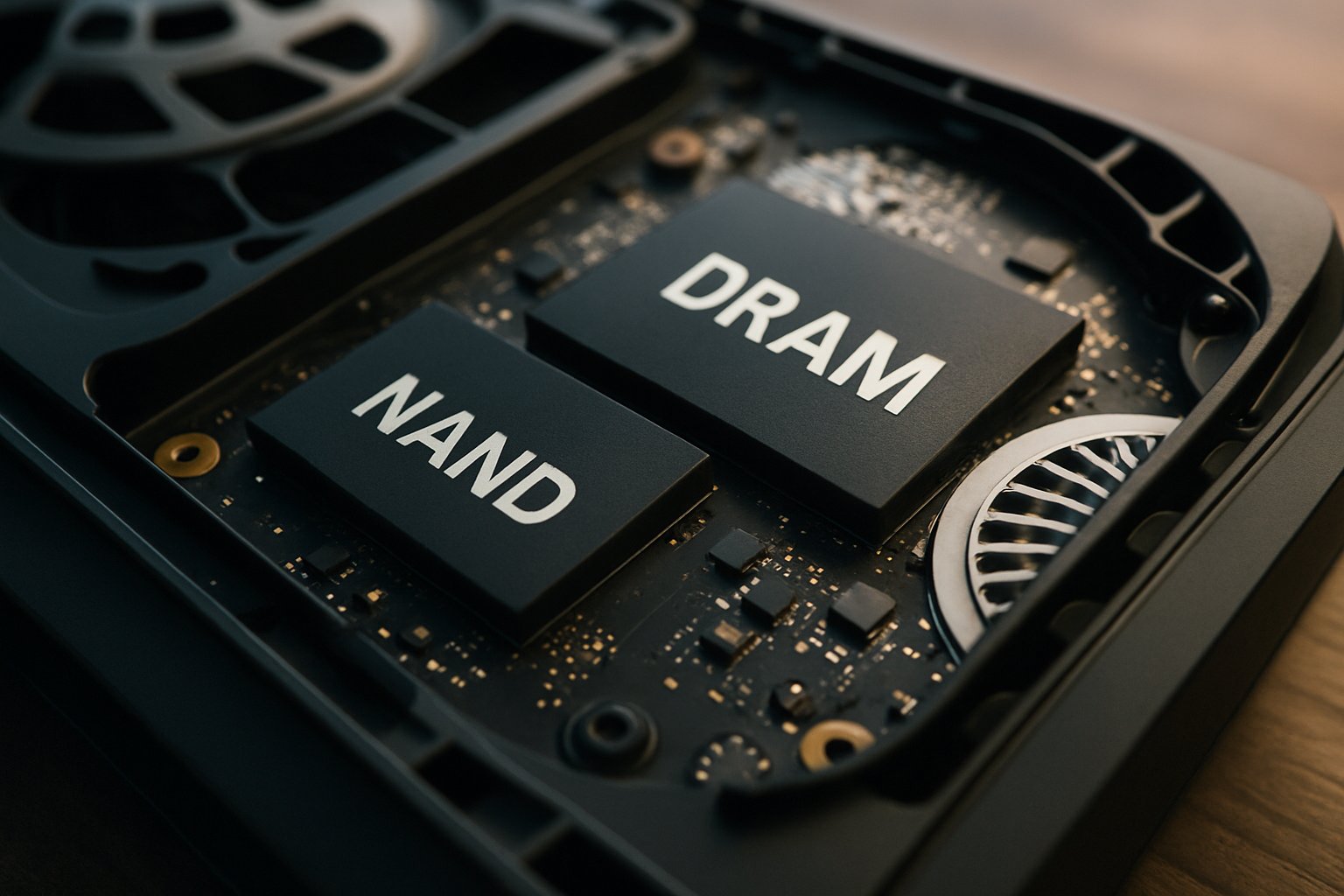
Such rapid repricing leaves console procurement teams scrambling. Nevertheless, suppliers prioritize enterprise contracts because those orders carry richer margins and long terms. Consequently, the console channel receives fewer confirmed shipments. These developments reveal a structural imbalance. However, more effects await examination in retail pricing trends.
Price Spirals Hit Consoles
Console BOMs carry heavy memory footprints. Sony and Microsoft allocate more than 35 percent of hardware cost to DRAM and NAND. Nintendo’s next handheld could see 23 percent, TrendForce estimates. When Memory Surges add 30 percent in one quarter, retail math changes overnight. Circana already records average console prices at record highs, while unit sales fell 27 percent in one recent month. Additionally, Reuters sources suggest upcoming systems might debut at prices 15 percent above internal targets.
Joost van Dreunen from NYU warns that every fifth PC dollar now funds memory alone. Consequently, spec downgrades look tempting. However, reducing RAM or SSD capacity risks poorer Gaming experiences. These financial knots push OEMs toward hard choices. Next we explore those strategic levers.
OEM Strategies Under Strain
Manufacturers confront four basic options. Firstly, they may lock multiyear supply contracts despite volatile rates. Secondly, they can raise shelf prices and pray demand holds. Thirdly, spec reductions—smaller SSDs, slower DDR—remain possible yet unpopular. Finally, launch delays buy time. Jacob Bourne at eMarketer suggests postponements appear likely if Memory Surges continue unabated.
Microsoft reportedly built buffer stock during early 2025. Nevertheless, that inventory depletes fast under holiday demand. Moreover, Micron’s withdrawal from consumer retail tightens SSD availability, shrinking alternatives for PC-centric Consoles like Valve’s Steam Machine. OEM finance teams therefore juggle rising costs against marketing calendars. In contrast, memory suppliers weigh whether to reallocate capacity back toward consumer lines. The standoff defines the present quarter.
Two quick statistics illustrate pressure:
- Kingston says NAND is up 246 percent since Q1 2025, with 70 percent in the last 60 days.
- Counterpoint forecasts another 20 percent DRAM hike for early 2026.
These jumps validate OEM fears. Nevertheless, some expect eventual normalization once new fabs ramp by late 2026. The following section reviews effects on shoppers.
Consumer Impacts And Trends
Gamers feel the shock quickly. Moreover, fewer promotions surface as retailers protect margins. DIY builders also lose access to affordable Crucial drives after Q2 2026. In contrast, enterprise buyers see strong allocations. The phrase Memory Surges now appears in mainstream Gaming forums as enthusiasts debate upgrade timing.
Additionally, second-hand markets grow as players skip new hardware. Circana data shows used console sales up double digits. Meanwhile, premium tiers like PlayStation Plus rely on fast SSD streaming; trimming storage could harm service revenues. Consequently, platform owners must balance short-term savings against ecosystem health.
These consumer signals highlight demand elasticity. However, market forecasts offer deeper context.
Forecasts And Market Outlook
TrendForce predicts console shipments will decline 4.4 percent in 2026. Counterpoint warns DRAM could double from early 2025 levels by next summer. Furthermore, suppliers hesitate to accelerate fab construction because AI demand may cool abruptly. Therefore, many researchers expect high volatility throughout 2026.
Nevertheless, some moderation may arrive once contracted HBM lines stabilize. TrendForce suggests NAND growth might slow to single digits by late 2026. Yet another Memory Surges cycle could emerge if generative AI adoption widens. Investors should monitor capex guidance from Samsung and SK Hynix for leading indicators.
These forecasts emphasize uncertainty. Consequently, upskilling becomes essential for professionals navigating supply chain risk.
Certification For Competitive Edge
Sourcing managers and technologists require sharper tools. Professionals can enhance their expertise with the AI Network Security™ certification. Moreover, the program covers threat models unique to high-bandwidth memory clusters and associated logistics. Graduates gain frameworks for cost modeling, vendor negotiation, and resilience planning. Memory Surges may persist, yet informed leaders can mitigate impacts.
Equipped analysts can also translate complex Supply metrics into clear executive dashboards. Consequently, organizations adapt faster when markets swing. This educational step complements traditional procurement tactics. However, knowledge only matters when applied. The conclusion summarizes immediate actions.
These insights reinforce the urgency of skill development. Meanwhile, closing thoughts appear below.
Conclusion
Memory market turbulence defines the current console landscape. AI data centers absorb capacity, and Memory Surges ripple through every consumer segment. Furthermore, Gaming hardware now faces unprecedented cost pressure. Console makers weigh price hikes, spec cuts, and launch delays. Consumers respond with slower upgrades and used-market shifts. Nevertheless, forecasts suggest volatility, not permanence. Therefore, strategic contracts, agile roadmaps, and professional education offer the best defenses. Explore the linked certification, monitor supplier guidance, and prepare procurement contingencies today.


