

AI CERTS
3 months ago
xAI Pentagon deal reshapes frontier AI adoption
Commercial-First Strategy Momentum
DoD leaders shifted procurement tactics in 2025 toward a commercial-first Partnership strategy. Furthermore, the Chief Digital and Artificial Intelligence Office awarded four identical contracts on 14 July. Each agreement carries a $200 million ceiling and targets agentic workflow development for operational missions. Google, OpenAI, Anthropic, and xAI received identical terms, ensuring competition and avoiding vendor lock-in.
Dr. Doug Matty stressed strategic advantage, stating, “The adoption of AI is transforming the Department’s ability…”. Nevertheless, critics note the contracts obligated minimal funds at signing, leaving future task orders decisive. These awards signaled unprecedented momentum for the xAI Pentagon collaboration and placed commercial models at the program's core. Meanwhile, subsequent platform choices would test whether the strategy delivers measurable results.
Frontier AI Contracts Scale
Reuters later revealed parallel awards, confirming OpenAI captured similar Defense work in June 2025. In contrast, xAI secured a separate General Services Administration vehicle during September, easing broader federal access. Consequently, acquisition officers now view the xAI Pentagon framework as a template for multivendor buys. Contracting officers now juggle multiple vehicles while aligning security, pricing, and sustainability requirements.
Scale also appears in user numbers. DoD Chief Technology Officer Emil Michael predicted AI access for three million personnel during December rollout briefings. Moreover, analysts observe that no internal development program previously promised comparable reach within six months. This scale underscores the Partnership ambition and financial scope. Therefore, attention shifted toward the enabling platform GenAI.mil.
GenAI.mil Platform Rollout
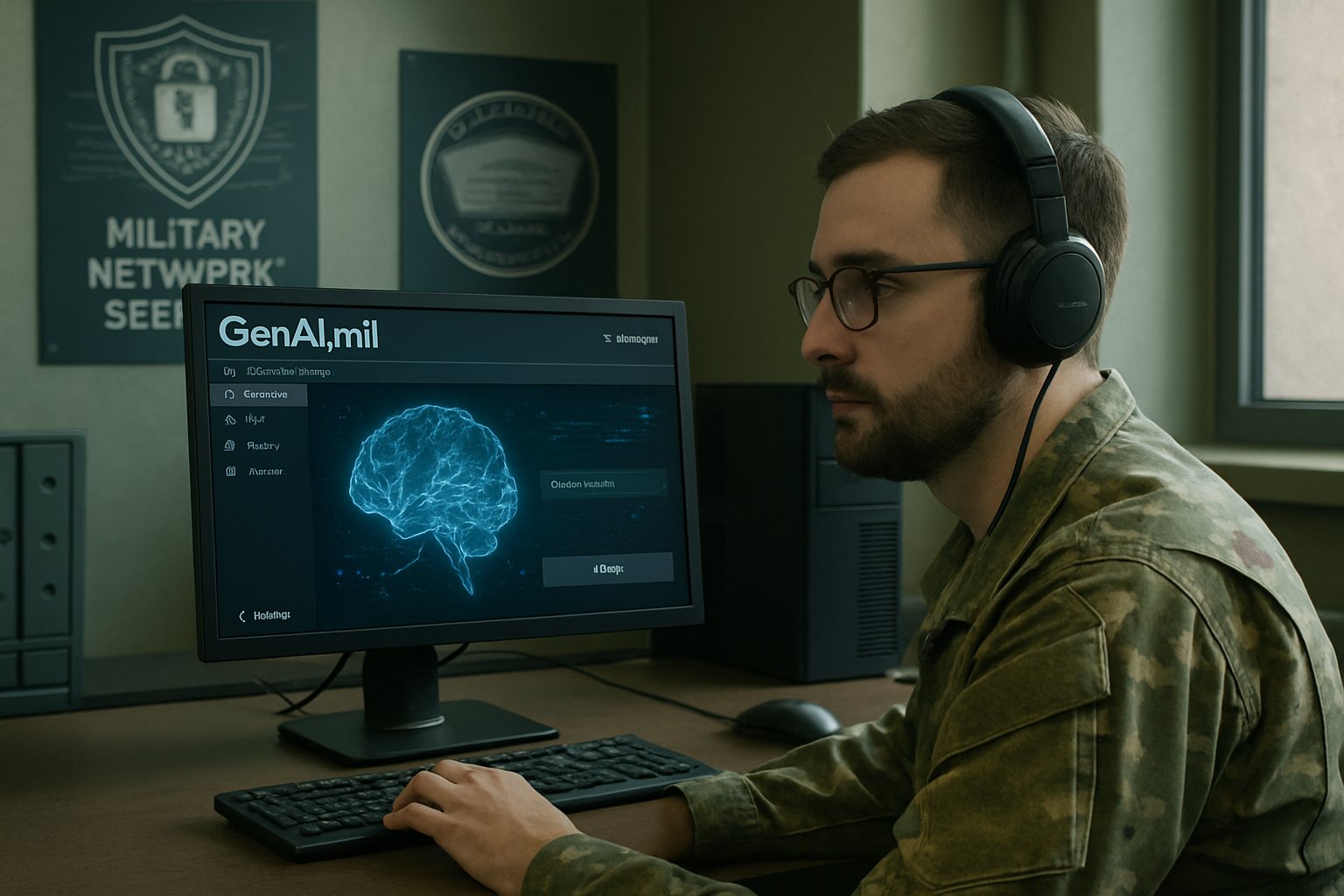
GenAI.mil launched on 9 December 2025 as the department’s first enterprise generative AI environment. Additionally, Google Cloud’s Gemini for Government became the inaugural model certified at Impact Level 5. IL5 allows controlled unclassified information, ensuring encryption, audit logging, and restricted network exposure.
Subsequently, desktop shortcuts appeared across unclassified workstations, fulfilling Michael’s promise. However, early testers reported mixed latency, prompting engineering teams to re-optimize network paths. Nevertheless, the rollout validated the commercial-first thesis and cleared an integration runway for other vendors. GenAI.mil set the operational foundation and delivered baseline security assurances. Consequently, xAI Pentagon integration will soon traverse these technical rails.
xAI Grok Integration Path
xAI publicly announced selection on 22 December, emphasizing Grok’s real-time knowledge from the X platform. Therefore, the company promised an Impact Level 5 deployment targeting Early 2026 for mission users. xAI Pentagon planners highlight three core objectives. First, they aim to embed Grok within document summarization workflows for acquisition officers. Second, retrieval-augmented generation will support intelligence analysts seeking current open-source insights. Third, customized agentic actions could automate routine cybersecurity incident triage across dispersed bases.
Professionals can enhance deployment success by mastering prompt design. Practitioners may pursue the AI Prompt Engineer™ certification to validate those skills. These objectives reflect a pragmatic focus on measurable productivity gains. Consequently, the xAI Pentagon roadmap remains tied to stringent Early 2026 milestones.
Risks And Governance Debates
Despite enthusiasm, governance challenges shadow the initiative. Reuters coverage documented Grok hallucinations and offensive outputs during public beta phases. Moreover, policy experts warn that bias within training data could distort operational plans.
Data governance raises additional flags. Google pledged no DoD data would feed public models; xAI has yet to publish equivalent language. Nevertheless, CDAO insists that IL5 controls, audit logs, and human-in-the-loop policies mitigate exposure.
- Model reliability testing and red teaming protocols
- Contractual liability for erroneous outputs
- Vendor compute supply chain disclosures
These governance debates spotlight unresolved accountability mechanisms. Meanwhile, contract oversight offices prepare additional clauses before the next task orders.
Opportunities By Early 2026
Opportunities expand as the calendar approaches Early 2026. Furthermore, CDAO expects several specialized agent bundles to leave pilot status by that date. In contrast, earlier AI pilots often lingered in test environments for years.
Analysts foresee near-term gains in acquisition speed, maintenance scheduling, and personnel training. Consequently, commanders may redirect saved labor toward higher-value planning tasks. Equally important, xAI Pentagon success could influence broader NATO Defense adoption models. The opportunity window remains narrow yet significant. Subsequently, measurable returns will shape budget renewals for Fiscal Year 2027.
Strategic Takeaways And Outlook
Several lessons emerge from the unfolding xAI Pentagon experiment. First, commercial contracts can scale faster than bespoke development when leadership aligns incentives. Second, unified enterprise platforms simplify accreditation burdens that once throttled innovation. Third, transparent governance frameworks will determine Partnership trust more than raw model size.
Additionally, early user feedback will refine deployment priorities before the broader Early 2026 offensive. Nevertheless, final success depends on sustained budget support across volatile political cycles. These strategic insights reveal both promise and caution. Therefore, stakeholders will monitor procurement data and mission outcomes closely through 2026.
Stakeholders have watched bold claims turn into code pushes over six short months. Consequently, the xAI Pentagon initiative now stands at a critical execution phase. Successful early workflows could reinforce the commercial-first Partnership model across wider Defense portfolios. In contrast, unresolved governance gaps could erode trust and stall renewals. Professionals should stay informed and refine prompt skills. They can explore the AI Prompt Engineer™ certification to remain competitive. Ultimately, the xAI Pentagon story will reveal if frontier models meet mission demands by Early 2026.


